
The rental market is competitive, and a clunky application process can cause great tenants to look elsewhere. Today’s renters are tired of paying separate application fees for every property and are more conscious than ever about their personal data. A frustrating experience can be a red flag for them, just as a spotty rental history is for you. By understanding the modern landscape of tenant screening services, you can offer a streamlined, fair, and secure process that attracts the best applicants. This article explores how different screening models work, helping you choose a solution that not only protects your property but also creates a positive experience for your future tenants from the very first interaction.
Tenant screening is the process you’ll use to get a clear picture of who is applying to live in your property. Think of it as doing your homework before signing a legally binding lease. It’s a standard part of the rental process that helps you evaluate an applicant's background to see if they’d be a responsible and reliable tenant. The main goal is to protect your investment and ensure a positive rental experience for everyone involved, minimizing the risk of late rent payments, property damage, or difficult evictions down the road. It’s one of the most important steps you can take to find someone who will treat your property with care.
A thorough screening process looks at several key areas of an applicant's history, including their financial health, past rental experiences, and any relevant criminal background. By reviewing this information, you can make a more confident and informed decision about who to trust with your asset. It’s not about being invasive; it’s about being diligent and making sure you’re following fair and consistent practices for every single applicant. This step is fundamental to managing your rental property effectively and finding a great match for your home. It sets the foundation for a professional and respectful landlord-tenant relationship from the very beginning.
The screening process is surprisingly straightforward, especially with modern online services. It typically starts after an applicant expresses interest in your property and you want to move forward. First, you’ll invite the prospective tenant to apply through your chosen screening platform, usually with a simple email link. The applicant then fills out their personal information, consents to the background check, and often pays the application fee directly to the service. Once they submit, the platform gets to work compiling the report. Within minutes or hours, you receive a comprehensive summary of their background, ready for your review. This streamlined system for landlords takes the guesswork out of gathering essential information.
Behind every tenant screening report are consumer reporting agencies, or CRAs. These are the companies, like Experian, TransUnion, and Equifax, that gather and maintain consumer data. Tenant screening services partner with these CRAs to pull the necessary information for their reports, such as credit histories and public records. This partnership ensures the data is accurate and comes from a reliable source. The whole system is regulated by the Fair Credit Reporting Act (FCRA), a federal law that sets standards for data privacy, accuracy, and fairness. This means both you and your applicants have important protections in place throughout the screening process.
A tenant screening report is your window into an applicant's background, giving you the information you need to choose a reliable renter for your property. Think of it as a comprehensive profile that pulls together several key pieces of data to paint a clear picture of a potential tenant. These reports are designed to be thorough, covering everything from financial habits to rental history, so you can feel confident in your leasing decisions.
While the exact format can vary between providers, a standard report typically includes four main components: a credit check, a criminal background check, a review of rental and eviction history, and income verification. Each piece gives you a different angle on the applicant, helping you assess their ability to pay rent on time and care for your property. Understanding what’s inside these reports is the first step to making a confident and informed choice.
A credit report gives you a snapshot of an applicant's financial responsibility. It includes their credit score, a history of their payments on loans and credit cards, their total debt, and any public records like bankruptcies or collections. This isn't about judging their spending habits; it's about understanding their track record with financial obligations. According to TransUnion, accurate credit and eviction reports are essential for assessing a tenant's reliability. A strong credit history often suggests that an applicant is consistent with their payments, which is a good sign for a future landlord.
A criminal background check helps you protect your property and ensure the safety of your community. This search scans national, state, and local databases for any criminal convictions. The goal is to find responsible tenants who will respect the property and their neighbors. As noted by Tenant Background Search, this process helps you find tenants who are less likely to break their lease or cause damage. It’s a crucial step for due diligence, but remember to always apply your screening criteria consistently and in compliance with Fair Housing laws.
Past behavior is often a good indicator of future actions, which is why rental history is so important. This part of the report shows where an applicant has lived previously and, most importantly, if they have any prior evictions on their record. An eviction is a major red flag, as it indicates a serious breach of a past lease agreement. A comprehensive background check will look into an applicant's past rental history alongside their financial habits, giving you a more complete view of how they manage their responsibilities as a renter.
Finally, you need to know if an applicant can comfortably afford the rent. Income verification confirms that the applicant's stated income is accurate and stable. Some advanced services can even analyze an applicant's financial data to see if their income claims match their actual cash flow. This check "can save landlords time and help ensure they select tenants who can afford to pay rent," which is a key part of reducing your risk of late or missed payments. Verifying income upfront gives you peace of mind that your tenant has the financial means to meet their monthly obligation.
When you start looking into tenant screening, you'll quickly realize there isn't a one-size-fits-all solution. The services available today differ quite a bit, especially in how they handle the process, who pays for the report, and most importantly, who controls the applicant's sensitive data. Understanding these differences is key to choosing a service that fits your needs as a landlord and creates a better experience for your potential tenants. Let's break down the main types of screening services you'll encounter.
Portable tenant screening reports are changing the game for both renters and landlords. Instead of filling out a new application and paying a fee for every apartment, a renter can order one comprehensive report and share it with multiple landlords. This approach makes the rental process faster and more affordable. More importantly, it puts the renter in control of their own information. They decide who sees their data and for how long. For landlords, this means you get a verified, compliant report without the administrative hassle, creating a more efficient and transparent onboarding process.
The more traditional approach involves the landlord or property manager initiating a background check for each serious applicant. While these reports are often thorough, they come with a few downsides. They can be expensive, and these costs are usually passed on to the applicant, who may end up paying multiple screening fees during their apartment search. This model also means renters are repeatedly handing over sensitive personal information. For landlords, sifting through these robust reports can sometimes be overwhelming, providing more data than is needed to make a confident decision about a prospective tenant, all while navigating fair housing laws.
You’ve probably come across some of the big names in traditional screening. Services like TransUnion SmartMove and Zillow Rental Manager are popular choices for landlords who want to run detailed background checks. These platforms typically provide in-depth reports covering everything from credit history to past evictions. They are designed to give landlords a comprehensive picture of an applicant's background. While effective, they operate on the one-applicant, one-report model, which stands in contrast to the reusable nature of portable screening reports. Understanding these different service models helps you choose the right fit for your rental business.
With so many screening services out there, it can be tough to know which one is right for you. The best choice will give you the detailed information you need to make a confident decision without creating unnecessary hurdles for you or your applicants. Think of it as finding a business partner—you want someone reliable, transparent, and easy to work with. As you compare your options, focus on a few key areas that separate the great services from the merely good ones. A solid service simplifies your workflow, protects your investment, and helps you build a positive relationship with your future tenant from day one.
The whole point of screening is to get a clear picture of who you’re renting to, so a thorough report is non-negotiable. Look for a service that pulls together all the essential pieces of the puzzle. This includes a full credit report, a nationwide criminal history check, and a search for any past evictions. A quality tenant screening service gives you a complete view of an applicant's financial responsibility and rental history. Piecing together information from different sources is time-consuming and can lead to mistakes, so finding a service that provides one consolidated, easy-to-read report is a huge advantage.
In a competitive rental market, speed is everything. You can’t afford to wait days for a background check to come back, as a great applicant might find another place in the meantime. The best screening services understand this and deliver reports almost instantly. Many platforms, like Zillow Rental Manager, make credit and background checks available as soon as the applicant submits their information. This efficiency allows you to review applications and make a decision quickly, so you can fill your vacancy with a qualified tenant before someone else does. Look for a service that promises a same-day, if not immediate, turnaround.
No one likes surprise fees. Before you commit to a screening service, make sure you understand its pricing structure completely. Some services charge the landlord a fee per screening, while others have the applicant pay. Many modern platforms are shifting toward a renter-paid model, which saves you money and empowers the applicant by giving them a report they can often reuse. Transparent pricing is a sign of a trustworthy service. Whether you pay, the tenant pays, or you split the cost, it should be clearly stated upfront so there are no awkward conversations or unexpected expenses down the line.
Your tenant screening process should be simple and straightforward. A good service will have a user-friendly platform that makes it easy to invite applicants and review their reports. You shouldn't need to be a tech expert to use it. Beyond just being easy, the service should also help you stay compliant with all relevant housing laws, including the Fair Credit Reporting Act (FCRA). The right tools will guide you in making fair, legal, and well-documented decisions. This is especially important for landlords who need to stay current on local and state regulations, which can change frequently.
As a landlord, your goal is to find a reliable tenant who pays rent on time and takes care of your property. But how can you be sure you're choosing the right person? Relying on a gut feeling or a brief conversation can be risky. This is where a tenant screening service comes in. It’s a professional, data-driven approach to vetting applicants that provides a clear, objective picture of their rental, financial, and criminal history. Instead of piecing together information yourself, a service does the heavy lifting, giving you a comprehensive report to guide your decision.
Using a screening service isn't about being distrustful; it's about making a smart business decision to protect your investment. It helps you move beyond the surface-level information on an application and verify the details that matter most, like income stability and past rental behavior. By establishing a consistent and fair process for every applicant, you not only find better tenants but also operate your rental business more professionally and efficiently. It sets the stage for a secure and positive rental experience for everyone involved, right from the start, and gives you peace of mind knowing you’ve done your due diligence.
Your rental property is a significant asset, and protecting it is your top priority. Tenant screening is one of the most effective ways to minimize potential problems down the road. A comprehensive report helps you identify applicants with a history of late payments, property damage, or evictions, which are major red flags. By verifying an applicant's background, you can avoid the immense stress and financial cost of an eviction, which can easily run into thousands of dollars. Think of it as due diligence. It helps you select responsible tenants who are more likely to treat your property with respect, ensuring your investment remains safe and profitable.
In a competitive rental market, speed is essential. But moving fast shouldn't mean cutting corners. A tenant screening service streamlines the application process by gathering all the critical information you need in one place. Instead of spending hours calling references and verifying employment, you get a consolidated report delivered quickly. This allows you to make good decisions based on verified data, not just an application form. With a clear view of an applicant's credit history, income, and rental background, you can confidently approve a qualified tenant and fill your vacancy faster, reducing the time your property sits empty and unproductive.
Navigating the web of federal, state, and local housing laws can be complex, and a misstep can lead to serious legal trouble. Using a professional screening service helps you stay compliant with regulations like the Fair Housing Act by providing a consistent, objective standard for evaluating every applicant. This ensures you are making decisions based on legitimate business reasons, not personal biases. Furthermore, as more states adopt specific regulations like portable tenant screening laws, using a compliant service is more important than ever. It helps you follow the rules, treat all applicants fairly, and protect yourself from potential discrimination claims.
Tenant screening is a fundamental part of managing a rental property, but it’s also surrounded by a lot of confusion. Believing some of the common myths can lead you to make inconsistent decisions, overlook great applicants, or even violate fair housing laws. Let's clear up a few of the biggest misconceptions so you can approach your next screening with confidence and clarity. Understanding the reality behind the process helps you use screening reports as they were intended: as a powerful tool for making informed, fair, and data-driven decisions for your property.
It’s easy to assume that one background check is just like any other, but that’s far from the truth. The quality, depth, and relevance of the information can vary dramatically between providers. Some traditional reports are overloaded with data that isn’t particularly useful for a landlord—like old parking tickets—while missing key details. Others might pull from outdated databases, giving you an incomplete picture. Modern solutions, like a Portable Tenant Screening Report, are designed specifically for the rental process. They focus on the most critical information: credit history, nationwide criminal and eviction records, and income verification, all in one compliant package.
A credit score is a helpful indicator of financial responsibility, but it’s only one piece of the puzzle. A high score doesn't automatically make someone a perfect tenant, just as a lower score doesn't automatically disqualify them. An applicant could have an excellent credit score but a history of late rent payments or property damage. That’s why a comprehensive report is so important. You need to look at the full context, including their rental history, income stability, and criminal background. Relying on a single number can cause you to miss red flags or pass on an otherwise fantastic renter. Always use consistent criteria and abide by Fair Housing laws when evaluating applicants.
Wouldn't it be nice if a screening report could act as a crystal ball? Unfortunately, it can't. Tenant screening is a risk management tool, not a guarantee of future behavior. Its purpose is to help you make an educated decision based on past actions and current financial health, which significantly reduces the likelihood of issues like non-payment or evictions. However, life is unpredictable, and even a well-vetted tenant can face unexpected job loss or personal hardship. The goal of screening isn't to find a "perfect" person but to find a reliable applicant who meets your established criteria, helping you protect your investment and maintain a stable rental business.
While tenant screening is a non-negotiable step for protecting your investment, the traditional process isn’t exactly a walk in the park. For years, both landlords and renters have had to deal with a system that can be inefficient, costly, and frankly, a little invasive. If you're a landlord, you know the headache of sifting through multiple applications, running different reports, and trying to make a fair comparison. For renters, the experience is just as frustrating—paying separate application fees for every apartment and handing over their most sensitive information again and again.
The good news is that the industry is finally catching up. Understanding the common pitfalls of older screening methods can help you choose a modern service that respects everyone’s time, budget, and privacy. From the accuracy of the data itself to the costs involved, it’s worth taking a closer look at where the process can go wrong and how to get it right.
One of the biggest myths in property management is that a high credit score automatically means you’ve found a responsible tenant. While financial health is important, it’s only one piece of the puzzle. A credit report doesn't tell you if an applicant will pay rent on time, respect the property, or be a good neighbor. Relying too heavily on a single number can cause you to overlook an excellent applicant or approve a less-than-ideal one. It's crucial to thoroughly vet all applicants and look at the complete picture—including their rental history, income verification, and background check—to make a well-rounded decision.
Tenant screening involves a lot of sensitive personal information, from Social Security numbers to financial histories. In a traditional setup, a renter might apply to five different apartments, handing over their data to five different landlords using five different platforms. This creates multiple opportunities for data to be mishandled or exposed. Landlords also carry the responsibility of protecting this information, and a slip-up can lead to serious legal issues. Modern screening platforms give renters control over their own data, allowing them to share their report securely and revoke access when it's no longer needed. This provides peace of mind for everyone involved.
If you’re an independent landlord, the cost of screening can add up fast. Traditional background checks can be expensive, and these fees multiply with every applicant for a vacant unit. When you’re trying to fill a property quickly, you might screen several people, turning a small expense into a significant one. This financial pressure can sometimes lead to cutting corners, which is a risky move. Finding a screening service with a clear and fair pricing model is key. Solutions where the applicant purchases a reusable report not only save you money but also create a more equitable and efficient process for renters.
This is one of the first questions landlords ask, and the answer is: it depends. The cost of a tenant screening report isn't standardized and can vary widely based on the provider and the depth of the information you need. Think of it as an investment in protecting your property. A small upfront cost can save you from the much larger financial headache of a difficult tenancy, from unpaid rent and legal fees to property damage. It’s a crucial step in finding a reliable tenant who will treat your property with respect. The good news is that there are many affordable and transparent options available, so you can find a service that fits your budget without sacrificing quality. Understanding the pricing structures and who covers the cost will help you set up a fair and efficient application process. Let's break down what you can expect to pay and who typically foots the bill.
The price of a screening report is directly tied to how much information it contains. A basic criminal background check might cost as little as $20, while a more detailed report can run closer to $100 per applicant. Most services offer tiered packages, allowing you to choose the level of detail you need. For example, a standard report might include a nationwide criminal and sex offender search, while a comprehensive option adds a full credit report and eviction history. The price for these background checks often reflects the number of databases searched and the speed of the turnaround.
You have two main options here: you can cover the cost yourself, or you can have the applicant pay for it as part of their application fee. It’s very common for landlords to pass this cost on to the prospective tenant. This practice not only covers your expenses but also helps ensure you’re dealing with serious applicants. Some platforms streamline this by charging renters a single fee that allows them to apply to multiple properties for a set period. This is the core idea behind a Portable Tenant Screening Report, which empowers renters with a single, reusable report they control, saving everyone time and money.
Once you’ve chosen a screening service, the next step is to use it effectively and ethically. A screening report is full of sensitive information, and how you handle it matters—not just for finding a great tenant, but for staying on the right side of the law. Following a few key best practices will help you make fair, informed decisions while protecting both your investment and your applicants' rights. It’s about creating a consistent process you can rely on every time you have a vacancy to fill.
Before you run a background check on anyone, you absolutely must get their written permission. This isn't just a courtesy; it's a legal requirement under the Fair Credit Reporting Act (FCRA). Your rental application should have a clear section where the applicant authorizes you to perform a background and credit check. Be transparent about what the screening entails and who pays for it. Landlords can typically pass the cost of the report to the applicant, but this should be clearly stated upfront. Services like Portable Tenant streamline this process, as the renter initiates the report and securely shares it, which serves as explicit consent.
To protect yourself from potential discrimination claims, it’s critical to screen every single adult applicant who will be living in the property. You might think screening only the primary applicant is enough, but this can cause problems if another tenant stops paying rent or moves out unexpectedly. The best approach is to establish a standard set of rental criteria—like income requirements and credit thresholds—and apply it consistently to everyone. This ensures you’re complying with Fair Housing laws and treating all potential tenants with the same level of scrutiny. A consistent process is your best defense against accusations of bias.
It’s easy to think a high credit score automatically means you’ve found a great tenant, but that’s not always the case. While a credit report is a valuable tool, it doesn’t tell the whole story. A high score doesn't guarantee a person will be a responsible and respectful tenant. That’s why it’s so important to look at the complete picture provided in a comprehensive screening report. Review their rental history for patterns of late payments or evictions, verify their employment and income to ensure they can afford the rent, and check their criminal history for relevant offenses. A holistic review gives you the context you need to make the best decision.
What should I do if a great applicant has a low credit score? A low credit score isn't an automatic deal-breaker. It’s important to look at the entire report to understand the story behind the number. For instance, a score might be low due to past medical debt or student loans, which is very different from a history of missed rent or car payments. Look for patterns in their rental and payment history and consider their income stability. The best approach is to establish your rental criteria ahead of time and apply it consistently to every applicant. This ensures you make a fair, business-based decision rather than relying on a single number.
As a renter, what can I do to make sure my screening goes smoothly? Being prepared is your best strategy. Before you start applying, it’s a good idea to review your own credit report so you know what landlords will see. If there are any blemishes, be ready to explain them honestly. Have all your necessary documents, like your ID, pay stubs, and references, organized and ready to go. Using a service that offers a portable report can also make the process much easier, as you fill out your information just once and can share your verified report with multiple landlords, saving you time and money on application fees.
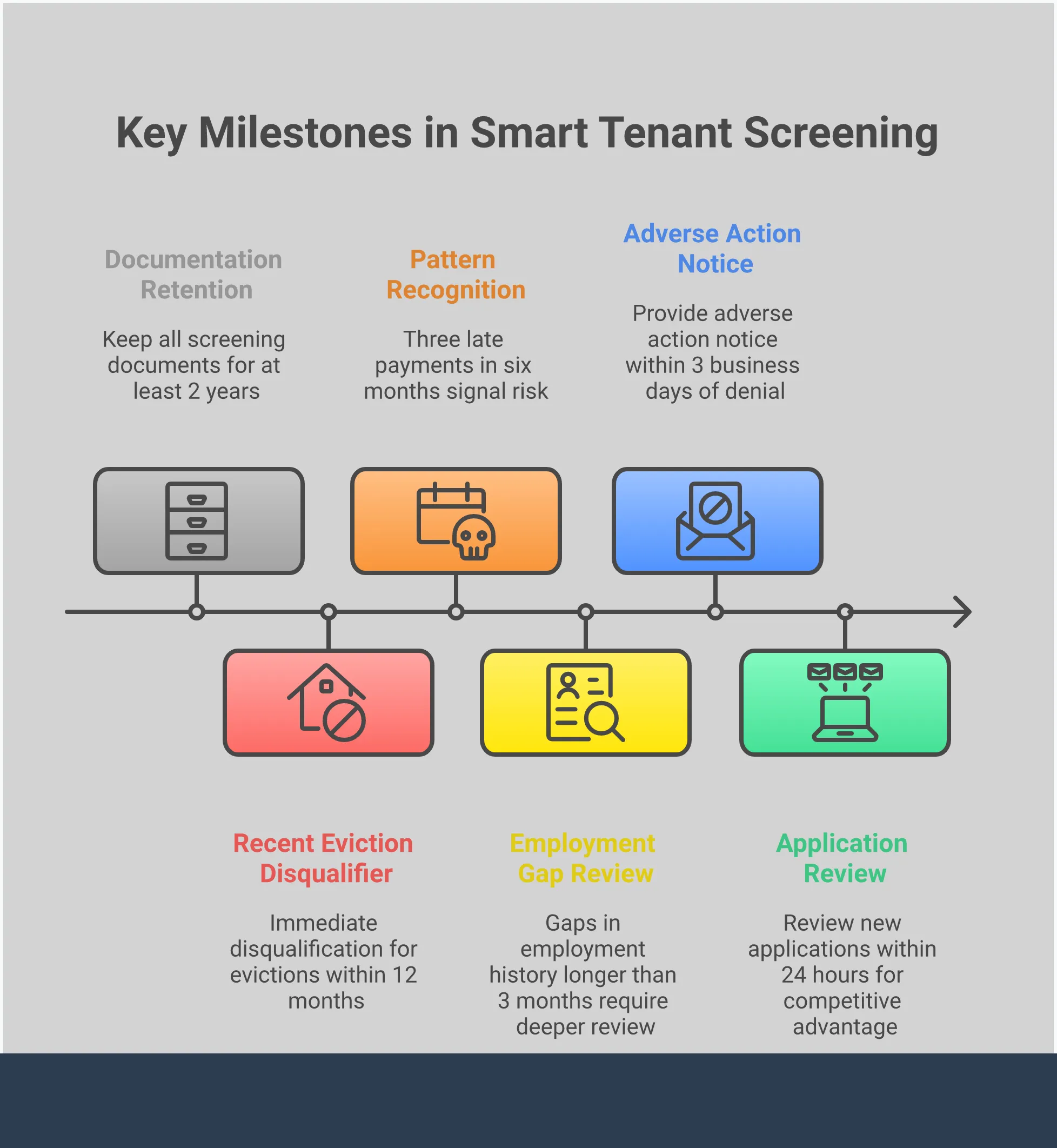
Is it legal for me to deny an applicant based on what's in their screening report? Yes, you can deny an applicant based on information found in their screening report, as long as your decision is based on legitimate business reasons and not on discriminatory factors. If you decide to deny someone because of their credit, criminal, or rental history, you are legally required by the Fair Credit Reporting Act (FCRA) to provide them with an "adverse action notice." This notice informs them of the decision, provides the name of the screening company you used, and explains their right to obtain a free copy of the report to dispute any inaccuracies.
How is a portable screening report different from the one my last landlord ran? The biggest difference comes down to control and efficiency. With a traditional screening, the landlord initiates the check, and you pay a fee for a report that only they can see. A portable report flips that model. You, the renter, order your own comprehensive screening report and then securely share it with any landlord you choose. This means you aren't repeatedly paying fees or handing over your sensitive data. For landlords, it streamlines the process by providing a verified, compliant report directly from a serious applicant.
How long does it take to get a screening report back? Gone are the days of waiting around for a background check to clear. Most modern online screening services are incredibly fast. Once an applicant fills out their information and gives their consent, the comprehensive report is typically generated and delivered to you within minutes. This speed allows you to review applications and make a decision quickly, so you can fill your vacancy with a qualified tenant without losing them to another property.