
As a landlord, your time is your most valuable asset. A vacant property costs you money every single day, so an efficient application process is essential. However, speed can't come at the expense of diligence. You need a screening service that delivers fast, reliable results without creating headaches for you or your potential tenants. The modern rental market demands a smarter approach—one that respects the applicant's time and data while giving you the insights you need. This is where finding the best background check for landlords becomes critical, helping you fill vacancies faster with qualified people you can trust.
Picking a tenant screening service is a big decision. The right partner helps you find reliable tenants and protect your property, while the wrong one can cause major headaches and legal risks. To make the choice easier, focus on a few key areas that separate the great services from the merely adequate ones.
The whole point of a background check is to get a clear, complete picture of your applicant. A quality service should provide all the essential pieces in one easy-to-read report. This includes a full credit report from a major bureau, a nationwide criminal history search, and a thorough eviction history. A truly comprehensive background check verifies that applicants are who they say they are, giving you the confidence to make an informed and fair decision. Vague or incomplete data just doesn’t cut it.
You’re a busy landlord, not a private investigator. The screening platform you choose should be simple, intuitive, and fast. If you have to click through a dozen screens or can’t figure out how to read the final report, it’s not the right fit. You’ll be using this service for every vacancy, so it should be a tool that saves you time and streamlines your process, not one that adds another complicated task to your to-do list. The experience should be just as smooth for your applicants.
This one is non-negotiable. Handling an applicant's sensitive personal information is a huge responsibility. The service you choose must be fully compliant with federal laws like the Fair Credit Reporting Act (FCRA), as well as any specific state and local regulations. A service that prioritizes bank-level security and data protection not only protects you from legal trouble but also shows respect for your potential tenants by keeping their information safe.
Don't get caught by surprise fees or confusing subscription models. Look for a service with a transparent pricing structure. Some services charge landlords per report, others have the applicant pay, and some offer a mix. Understand exactly what you’re paying for and what’s included in the report. A straightforward, pay-per-use model is often the simplest and prevents you from getting locked into a service you don’t love. A trustworthy company will be upfront about its costs.
Find out what other landlords are saying. A quick search for reviews and testimonials can tell you a lot about a company's reliability and the quality of its reports. Beyond reputation, consider the support system. What happens if you have a question or run into an issue? Make sure the service offers responsive and helpful customer support. Knowing you can get a real person to help you when you need it provides invaluable peace of mind.
Finding the right tenant screening service can feel like a job in itself. With so many options out there, it’s tough to know which one will give you the accurate, compliant information you need without creating a headache for you or your applicants. The best services are more than just data providers; they offer a smooth experience, clear reports, and the peace of mind that comes with knowing you’ve done your due diligence.
We’ve reviewed the top players in the market to help you find the perfect fit for your rental business. Whether you manage one property or one hundred, prioritize in-depth credit data, or need a streamlined, all-in-one platform, there’s a service here for you. We focused on accuracy, ease of use, compliance with laws like the Fair Credit Reporting Act (FCRA), and overall value. Let’s look at the services that stand out from the crowd.
Portable Tenant flips the traditional screening model on its head by empowering renters. With this service, applicants purchase a single, comprehensive screening report that they can share with multiple landlords. This is a game-changer in states with portable tenant screening laws and beyond as it saves everyone time and money. For landlords, you receive a complete, Experian-powered report covering credit, criminal, and eviction history along with additional documentation tailored to the renter's situation at no cost to you. The process is renter-driven, which means applicants have control over their personal data and can instantly revoke access. It’s a modern, efficient, and fair approach that streamlines applications and ensures you get verified, high-quality information.
If a deep dive into an applicant's financial history is your top priority, TransUnion SmartMove is a fantastic choice. Because it’s owned by TransUnion, one of the three major credit bureaus, the service pulls credit data directly from the source. This gives you access to a detailed credit report and a ResidentScore, which is specifically designed to predict rental eviction risk more effectively than a generic credit score. Landlords get a comprehensive picture of an applicant's financial responsibility, while the applicant’s credit score isn’t harmed by the inquiry. It’s a reliable and trusted option for making well-informed decisions based on robust financial data.
For landlords who list their properties on Zillow, the built-in screening tool is incredibly convenient and cost-effective. Zillow Rental Manager is free for landlords; the applicant pays a flat fee of around $35 for their application and screening report, which they can then use for any Zillow listing for 30 days. This "portable" feature is a huge plus for renters. The report includes a credit check from Experian, a background check from Checkr, and an eviction history. It’s an excellent, integrated solution for landlords who are already using the Zillow ecosystem to manage their listings and want to keep the entire process in one place without any direct cost.
RentPrep stands out by adding a human element to the screening process. While many services are fully automated, RentPrep employs FCRA-certified screeners to review reports, ensuring accuracy and helping to clarify any ambiguous information. This human touch can be invaluable for catching discrepancies or details that an algorithm might miss. They offer a couple of different packages, so you can choose the level of detail you need. If you value the extra assurance that comes from having a real person double-check the data, RentPrep offers a great balance of technology and hands-on verification that provides serious peace of mind.
If you’re looking for a single platform to manage your entire rental process, TurboTenant is a top contender. It’s designed to be a comprehensive solution for independent landlords, offering everything from marketing your vacancy and managing leads to screening applicants and collecting rent. The screening reports are powered by TransUnion and include credit, criminal, and eviction history. The platform is free for landlords, with applicants covering the screening fee. For landlords who want to simplify their workflow and use one dashboard for all their property management tasks, TurboTenant provides a user-friendly and powerful set of tools.
The American Apartment Owners Association (AAOA) offers robust and highly detailed screening packages suitable for landlords who want thorough, customizable reports. As a leading organization for landlords, their services are built with property owners' needs in mind. You can choose from various options, from a basic credit check to a comprehensive report that includes credit history, nationwide criminal and eviction data, and even previous address history. This flexibility allows you to tailor the screening to your specific criteria. AAOA is a trusted resource for landlords who need in-depth, reliable information to protect their investment.
Think of tenant screening not as a cost, but as an investment in protecting your property. When you consider that the average eviction can set you back around $3,500, spending a small amount upfront to find a reliable tenant makes perfect financial sense. The good news is that thorough screening is quite affordable, and the cost is often covered by the applicant.
Screening fees typically range from $25 to $75, depending on the provider and the depth of the report. Many popular platforms have made it standard for the renter to pay this fee directly. For example, with Zillow Rental Manager, the service is free for landlords, while applicants pay a $35 fee that allows them to apply to multiple properties on the site for 30 days. Other services, like the American Apartment Owners Association (AAOA), offer tiered packages for landlords that range from about $20 to $50.
This is where portable screening reports are changing the game for both renters and landlords. Instead of paying a separate fee for every application, a renter can purchase one comprehensive report to share with multiple landlords. This model saves applicants money and reduces friction, which can help you attract more qualified tenants. At Portable Tenant, we offer a single, detailed report for a one-time fee, giving renters control and providing you with the verified information you need, instantly.
Running a background check might seem complicated, but it’s a straightforward process when you break it down. Following these steps will help you gather the information you need while ensuring you treat every applicant fairly and stay on the right side of the law. Think of it as your roadmap to finding a great tenant for your property.
Before you do anything else, you absolutely must get the applicant's permission to run a background check. This isn’t just a courtesy; it’s a legal requirement. The best way to do this is to include a clear authorization statement right in your rental application. This statement should explicitly say that by signing, the applicant agrees to a background and credit check. Having this signed consent on file is your first and most important step in a compliant tenant screening process. It protects both you and the applicant by making the process transparent from the start.
Next, you’ll need to select a screening service to run the check. There are many options out there, from traditional services to modern platforms. A service like Portable Tenant simplifies this by allowing renters to purchase one comprehensive report and share it with multiple landlords. This approach saves everyone time and money. When choosing a service, make sure it’s FCRA-compliant and provides the specific reports you need, such as credit history, criminal records, and eviction history. The right service acts as your partner in finding qualified tenants efficiently and legally.
Once you’ve chosen a service, the next step is to initiate the screening. With most modern platforms, you’ll simply invite the applicant via email to complete the process online. The applicant then fills out their information securely. This process is often renter-driven, meaning the applicant pays for the report and consents to share it directly with you. This not only streamlines the workflow but also puts the applicant in control of their personal data, which is a huge plus. It removes the need for you to handle sensitive information like Social Security numbers, adding a layer of security to your process.
After the applicant completes the screening, the reports are sent directly to you. Now it’s time to review the information against the rental criteria you’ve already established. Look at the credit report, eviction history, and criminal background to see if the applicant meets your standards. If you decide to deny an applicant based on information in their report, you are legally required to send them an "adverse action" notice. This notice should explain why they were denied and provide them with the contact information for the screening company that provided the report.
To ensure you’re being fair and consistent, it’s wise to develop a written policy for how you use screening reports in your decisions. This policy should outline your criteria for income, credit history, and criminal background. For example, what specific offenses would disqualify an applicant? Having a clear, documented policy helps you apply the same standards to every applicant, which is crucial for avoiding discrimination claims and upholding fair housing practices. This isn't just good business—it's a key part of your legal and ethical responsibility as a landlord.
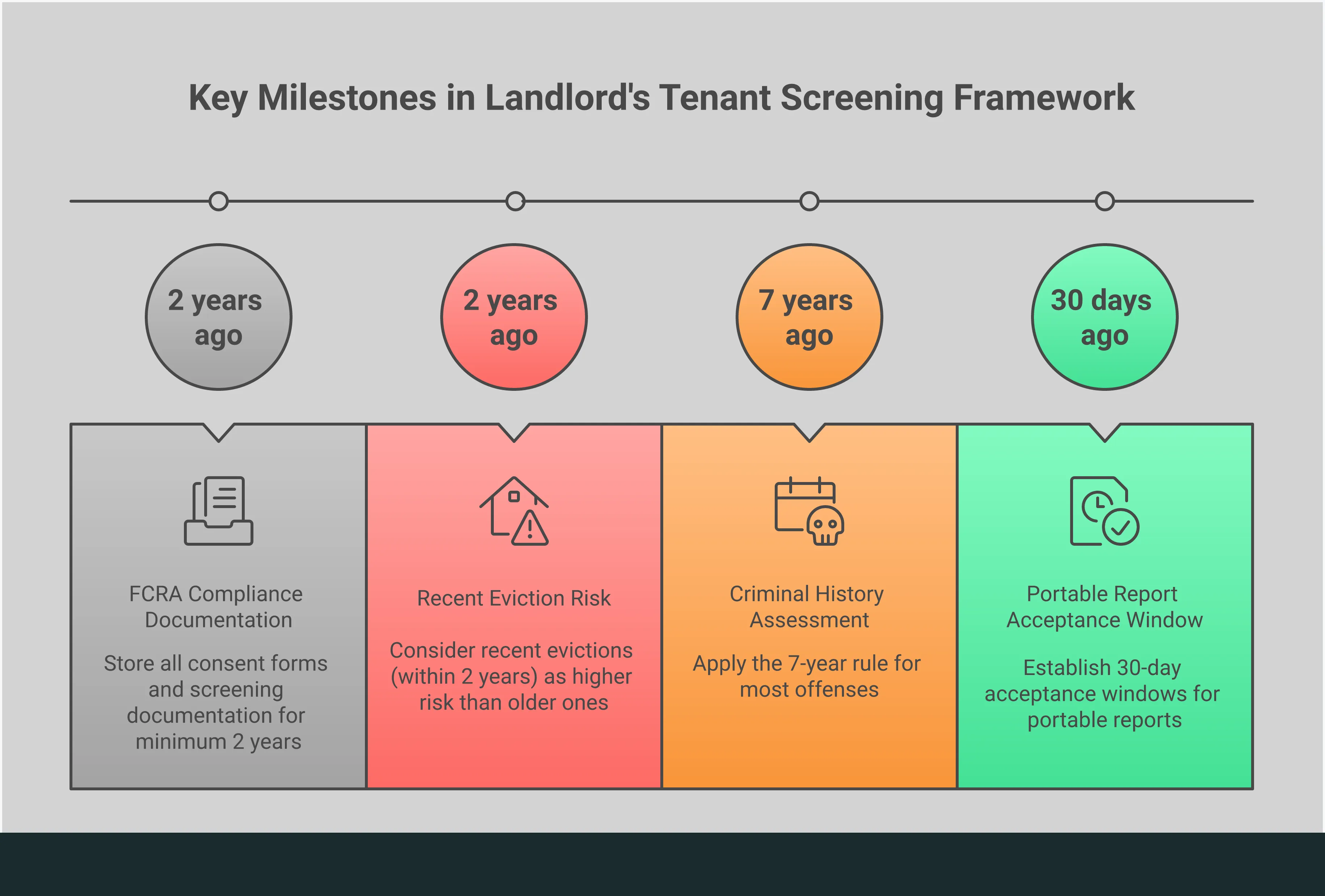
Running a background check isn't as simple as just picking a service and clicking "go." As a landlord, you're handling sensitive personal information, and that means you have a legal responsibility to do it correctly. A web of federal, state, and local laws governs the tenant screening process, all designed to protect applicants from discrimination and ensure fairness. Getting this wrong can lead to serious legal trouble and hefty fines, so it’s something to take seriously from day one. These regulations aren't just suggestions; they are firm rules that dictate how you can use an applicant's history to make your decision.
The good news is you don’t have to become a legal expert overnight. The key is to understand the basic principles and partner with a screening service that builds compliance into its process. These laws are in place to ensure you’re making decisions based on legitimate business reasons, not personal biases. By following a consistent, fair, and well-documented screening process, you not only protect yourself legally but also build a reputation as a trustworthy and professional landlord. Using a compliant screening service can help you manage these requirements with confidence, ensuring you have the information you need without crossing any legal lines. It's about creating a system that is both effective for your business and equitable for every person who applies.
The Fair Housing Act (FHA) is a cornerstone of rental law. At its core, it prohibits discrimination in housing based on seven protected classes: race, color, national origin, religion, sex, familial status, and disability. When it comes to screening, this means your criteria must be applied equally to every single applicant. You can't have different standards for different people.
A common area where landlords can unintentionally violate the FHA is with criminal background checks. While protecting your property is important, having a blanket policy like "no applicants with a criminal record" can be considered discriminatory. This is because it may disproportionately affect certain protected groups. To stay compliant, it's best to develop a written policy that considers the nature and severity of the offense and how much time has passed. This shows you're making an individualized assessment rather than applying a broad, potentially unfair rule.
If you use a third-party service to check an applicant's credit or background history, you must follow the rules of the Fair Credit Reporting Act (FCRA). This federal law is all about ensuring the information used in these reports is accurate and handled confidentially. First and foremost, you must get the applicant's written consent before you run the report. This isn't a step you can skip—it’s a firm legal requirement.
The FCRA also dictates what you must do if you decide to take "adverse action" based on the report's findings. This could mean denying the application, requiring a co-signer, or charging a higher security deposit. If you do this, you are required to provide the applicant with an adverse action notice. This notice must include a copy of the report you used and a summary of their rights under the FCRA, including their right to dispute any inaccurate information with the reporting agency.
While the FHA and FCRA are the major federal laws to know, they are just the starting point. Many states, counties, and cities have their own layers of regulation that can be even stricter. For example, some locations limit how far back you can look into an applicant's criminal or eviction history. Others have specific rules about what you can and can't consider when making a rental decision.
This is especially true in states like Colorado, Washington, and California, which have pioneered laws around portable tenant screening reports. These laws empower renters by allowing them to purchase one comprehensive report and reuse it for multiple applications, saving them time and money. As a landlord, it’s essential to know the specific regulations in your area. Using a screening service that is designed to comply with these varied and evolving laws can simplify the process and give you peace of mind that you're doing everything by the book.
Once you have a screening report in hand, the next step is knowing how to read it. A thorough tenant background check gives you a full picture of a potential renter, including their past rental history, credit report, and criminal records. But these reports are full of data, and it’s easy to get overwhelmed. The key is to look for patterns and potential red flags that might indicate a risk to your property or your ability to collect rent.
Remember, the goal isn’t to find a “perfect” tenant—everyone has a history. Instead, you’re looking for a reliable person who will pay rent on time and take care of your property. Having a consistent, fair process for reviewing every application will help you make the best decision while staying compliant with housing laws.
A credit report tells a story about a person's financial responsibility. While the three-digit credit score is a useful snapshot, the details are what really matter. An applicant's credit history shows if they pay their bills on time and can truly afford the rent. Look for patterns of late payments, especially on rent or utilities, as this could be a major red flag. Also, check for accounts in collections or a high debt-to-income ratio, which might suggest the applicant is financially overextended. A low score isn't always a dealbreaker if it's due to something like medical debt or a past mistake, but consistent financial irresponsibility is a valid concern.
Reviewing an applicant's criminal history requires careful and fair consideration. Landlords may not realize that they can expose themselves to liability under the Fair Housing Act by basing decisions on an applicant’s criminal background. A blanket policy of rejecting anyone with a criminal record can be seen as discriminatory. Instead, it’s best to develop a written policy that governs how you use criminal history in your rental decisions. Consider the nature and severity of the offense, how long ago it occurred, and whether it poses a direct threat to the property or other tenants. This approach helps you make an individualized assessment and remain compliant.
Past evictions are one of the strongest predictors of future rental problems. An applicant's eviction history looks for past filings and judgments, which can signal issues with paying rent or following lease terms. While a single eviction from many years ago might be explainable, a recent or repeated pattern of evictions is a serious red flag. Running a background check helps you pick good renters, which ultimately protects your property and keeps your other tenants safe. Always look for judgments from previous landlords, as this indicates the applicant left on bad terms and may owe money.
When you have a vacant property, every day counts. You need to find a reliable tenant quickly, but you also can’t afford to skip the crucial step of a thorough background check. So, how long does the screening process actually take? The answer depends on the service you use and the depth of the report you need.
For many landlords, the wait is surprisingly short. Modern tenant screening services have streamlined the process so that you can get results almost immediately. In many cases, you’ll create an account, send an invitation to the applicant, and receive their credit and background reports as soon as they complete their side of the application. This speed allows you to make informed decisions without losing valuable time.
However, for more comprehensive, FCRA-compliant checks, you should plan for a slightly longer timeline. While a basic search can take just a few minutes, a detailed report that pulls from multiple databases and verifies information might take anywhere from one to five business days to complete. This extra time is often necessary to ensure accuracy, especially when confirming criminal or eviction histories from various county courts.
The biggest factor influencing turnaround time is often the applicant themselves. The clock doesn’t truly start until they’ve received your request, filled out their information, and given their consent. Clear communication can help move things along, so be sure to let your prospective tenants know what to expect and what you need from them. By understanding these timelines, you can set realistic expectations for yourself and your applicants, creating a smoother rental process for everyone involved.
Portable tenant screening reports (PTSRs) are a game-changer for both renters and landlords, making the whole application process way more efficient. The biggest win is for renters. Instead of paying a new fee every single time you find a place you love, you can order one comprehensive report and share it with as many landlords as you need. This saves a ton of time and money, taking a lot of the stress out of the apartment hunt.
This isn't just a perk for renters, though. Landlords benefit, too. These reports give you a complete picture of an applicant, covering all the essentials you need to make a confident decision. You'll get a clear look at their credit history, criminal background, and rental history, all in one standardized format. This helps you vet potential tenants thoroughly and quickly, without having to manage a flood of separate, inconsistent background checks from different services.
Plus, in some states, accepting these reports isn't just a good idea—it's the law. For instance, Colorado landlords are now legally required to accept portable rental applications in most situations. This legal shift shows just how valuable and reliable these reports have become. Ultimately, portable screening reports create a smoother, more transparent, and fair process for everyone involved, bringing a much-needed update to the traditional rental application grind.
With so many tenant screening services available, picking the right one can feel like a big decision. The best approach is to think of it less as a one-time purchase and more as choosing a partner for your rental business. The right service not only protects your investment but also helps you build a great reputation with tenants. By focusing on a few key areas, you can confidently find a service that fits your needs perfectly, ensuring a smooth and compliant screening process every time.
Before you even look at pricing, make a list of your non-negotiables. What information do you absolutely need to make an informed decision? For most landlords, this includes a comprehensive tenant background check covering credit history, nationwide criminal records, and past evictions. Think about your specific property and market. Do you need income verification? Are you managing multiple properties and need a service that can scale with you? Nailing down your core requirements first will help you quickly filter out the services that aren’t a good fit.
Once you know what you need, you can start comparing the details. Look beyond the sticker price and understand the fee structure. Does the landlord pay, or is the cost passed to the applicant? Some services charge per report, while others might offer a subscription. Also, consider the user experience. A clunky, confusing platform will only add frustration to your day. Look for a clean interface, helpful customer support, and features that simplify your workflow, not complicate it. A service that’s easy to use is one you’ll actually stick with.
This is a big one. The screening service you choose must be fully compliant with federal laws like the Fair Credit Reporting Act (FCRA) and the Fair Housing Act. Non-compliance can lead to serious legal trouble, so this is not the place to cut corners. A reputable service will provide legally sound reports and offer resources to help you understand your obligations as a landlord. It’s also crucial to choose a partner that stays on top of evolving state and local screening laws, which can change how you handle applications and reports.
A complicated and expensive application process can turn away highly qualified renters. Think about the experience from their side. Is the platform secure and easy for them to use? Great applicants have options, and they’ll gravitate toward landlords who make the process straightforward and respectful. Services that offer a portable screening report are a huge plus, as they save renters time and money on multiple application fees. This small consideration can make your property stand out and help you attract the best tenants in your market.
What should I do if a great applicant has a low credit score? A low credit score isn't always an automatic dealbreaker. Instead of just looking at the number, review the details of the credit report to understand the story behind it. A score might be low due to past medical debt or student loans, which is very different from a recent pattern of missed rent or utility payments. The key is to establish a consistent, written policy for how you evaluate credit and apply it to every applicant to ensure you are being fair and compliant.
Is it really necessary to get written consent before running a background check? Yes, absolutely. Getting an applicant's signed permission is a non-negotiable legal requirement under the Fair Credit Reporting Act (FCRA). This step protects both you and the applicant by ensuring the process is transparent. Most modern rental applications include a clear authorization clause, so by signing the application, the prospective tenant gives you the consent you need to proceed with the screening.
How do I handle an applicant's criminal history fairly? This is an area where you need to be careful to avoid discrimination. A blanket policy that rejects anyone with a criminal record is not a good practice and can lead to legal issues. A better approach is to create a written policy that considers the specifics of an offense, such as its nature, how long ago it happened, and whether it poses a genuine threat to your property or other residents. This shows you are making an individualized assessment for each applicant.
What’s the real benefit of a service where the applicant pays for the screening? Having the applicant pay the screening fee has become a common and efficient practice. It simplifies the process for you, as you don't have to handle payments. More importantly, it often gives renters access to a portable report they can use for multiple applications, which saves them money and reduces friction. This can make your property more attractive to a wider pool of qualified tenants who appreciate a modern, streamlined process.
Are portable tenant screening reports only useful in states where they are required by law? While states like Colorado now legally require landlords to accept them, portable reports offer major advantages everywhere. They provide you with a comprehensive, verified report at no cost and streamline your application process. For renters, the ability to buy one report and share it multiple times is a huge relief. Offering this option can make your listing stand out and help you attract responsible, organized applicants who are serious about their search.