
Many landlords believe a credit report tells them everything they need to know about an applicant's financial responsibility. However, here’s a critical fact that often gets missed: evictions no longer appear on standard credit reports from the major bureaus. This means if you’re only looking at credit scores, you’re missing a huge piece of the puzzle. To get a complete view of an applicant's rental background, you must take the separate, crucial step to check tenant eviction history. A past eviction is one of the strongest predictors of a future one, and this guide will show you how to get that information reliably.
An eviction history is a record of any formal legal actions a previous landlord has taken to remove a tenant from a property. Think of it as a crucial part of an applicant's rental background. When you're screening potential tenants, this history offers a direct look into how they've handled their rental responsibilities in the past, which can be a strong indicator of how they’ll be as a tenant in your property.
Understanding this history isn't just about finding a black mark on a record; it's about protecting your investment and fostering a stable, positive relationship with your tenants. A thorough screening process that includes an eviction check helps you find reliable renters who are likely to pay on time and care for your property. It’s a critical step for any landlord looking to minimize risk and avoid the costly, stressful process of an eviction down the road. Using a comprehensive screening report gives you the clear, detailed information you need to make a confident decision.
So, what exactly will you see on an eviction record? It’s more than just a simple "yes" or "no." Because these are public court documents, they contain specific details about the legal proceedings. An eviction report will typically show the tenant's full name, the name of the landlord or property management company who filed the case, and the address of the rental property in question. You’ll also see key dates, like when the eviction was filed, which court handled the case, and the final judgment. This level of detail is important because it helps you confirm you’re looking at the right person and understand the official outcome of the dispute—whether the eviction was granted, dismissed, or settled out of court.
Checking an applicant's eviction history is all about managing risk. Past rental behavior is often one of the best predictors of future actions. A prior eviction can be a red flag for potential issues, like consistent late payments or serious lease violations. The reality is that evictions are incredibly expensive and time-consuming for landlords, with the average cost hovering around $3,500. By reviewing an applicant's eviction history, you’re taking a proactive step to find a responsible tenant who will pay their rent and treat your property with care. It’s a fundamental part of a fair and thorough screening process that protects your business and gives you peace of mind.
An eviction report isn’t just a simple yes-or-no answer. It’s a detailed legal record that tells the story of a court case between a tenant and a previous landlord. Think of it less as a final verdict and more as a collection of facts that provide crucial context. Understanding what these details mean is the key to making a fair and well-informed decision about an applicant. A comprehensive tenant screening service will pull this public record information for you, but it’s your job to interpret it correctly. Let’s break down exactly what you’ll see and what it all means.
The first thing you’ll notice are the basic facts of the case, which act as the foundation of the report. This section typically includes the full names of both the plaintiff (the landlord) and the defendant (the tenant), the address of the rental property in question, and the date the eviction was originally filed. You’ll also see which court handled the case and the official case or docket number. These details are essential for confirming the record’s legitimacy and understanding the timeline. The filing date, for instance, tells you how recent the issue was, which can be a critical factor in your evaluation.
This is arguably the most important part of the report because it tells you how the case concluded. It’s vital to remember that an eviction filing is not the same as a completed eviction. The outcome will tell you what actually happened. For example, you might see that the case was dismissed or canceled, which often means the tenant paid the overdue rent or reached an agreement with the landlord. On the other hand, a “judgment” indicates the court sided with the landlord. Another common outcome is a “writ of restitution,” which is a court order for the tenant to vacate the property. Understanding these legal terms helps you see the full picture.
This section helps you verify that the eviction record actually belongs to your applicant. It will clearly list the tenant’s full name and the address of the property where the dispute occurred. Your first step should always be to cross-reference this information with the details provided on the rental application. Does the name match exactly? Does the property address line up with the rental history your applicant provided? This simple verification step is crucial for preventing mix-ups with individuals who have similar names and ensures you are making a decision based on the correct person’s history. It’s a fundamental part of a fair and accurate screening process.
Checking an applicant's eviction history is a standard part of the screening process, but it comes with serious legal responsibilities. You can't just pull up records however you want. Following the rules isn't just about being fair—it's about protecting your business from costly lawsuits and fines. The good news is that the legal framework is straightforward. By understanding a few key laws, you can gather the information you need while treating every applicant with respect and staying on the right side of the law. Let's walk through the three main pillars of legal tenant screening.
The Fair Credit Reporting Act (FCRA) is the primary federal law that governs how consumer information, including tenant screening reports, is collected and used. When you run a background check, you must follow its guidelines. The easiest way to do this is by using a screening service that is FCRA-certified. This certification means the provider follows strict procedures to ensure the data is accurate, up-to-date, and handled securely. Using a compliant service like Portable Tenant helps you make informed decisions based on reliable information and shields you from legal headaches that can arise from using inaccurate or illegally obtained data.
The FCRA also sets limits on what information can be reported. When it comes to evictions, there's a clear seven-year rule: you cannot use eviction records that are more than seven years old as a basis for denying a rental application. This rule ensures that applicants aren't perpetually penalized for past financial hardships or mistakes that happened long ago. A reputable screening service will automatically filter out these older records, but it's a critical rule for you to know. Sticking to this timeline is a key part of a fair screening process and demonstrates that you're evaluating candidates on their recent history, not ancient events.
Beyond the FCRA, you must always adhere to the federal Fair Housing Act, which prohibits discrimination based on race, color, religion, sex, disability, familial status, or national origin. A crucial part of this is treating all applicants consistently and transparently. You cannot access a potential tenant's rental history or credit report without their explicit written permission. This consent is a non-negotiable first step. It shows you respect their privacy and are committed to an ethical screening process. By getting consent and applying your screening criteria equally to everyone, you build trust and ensure your practices align with Fair Housing Laws.
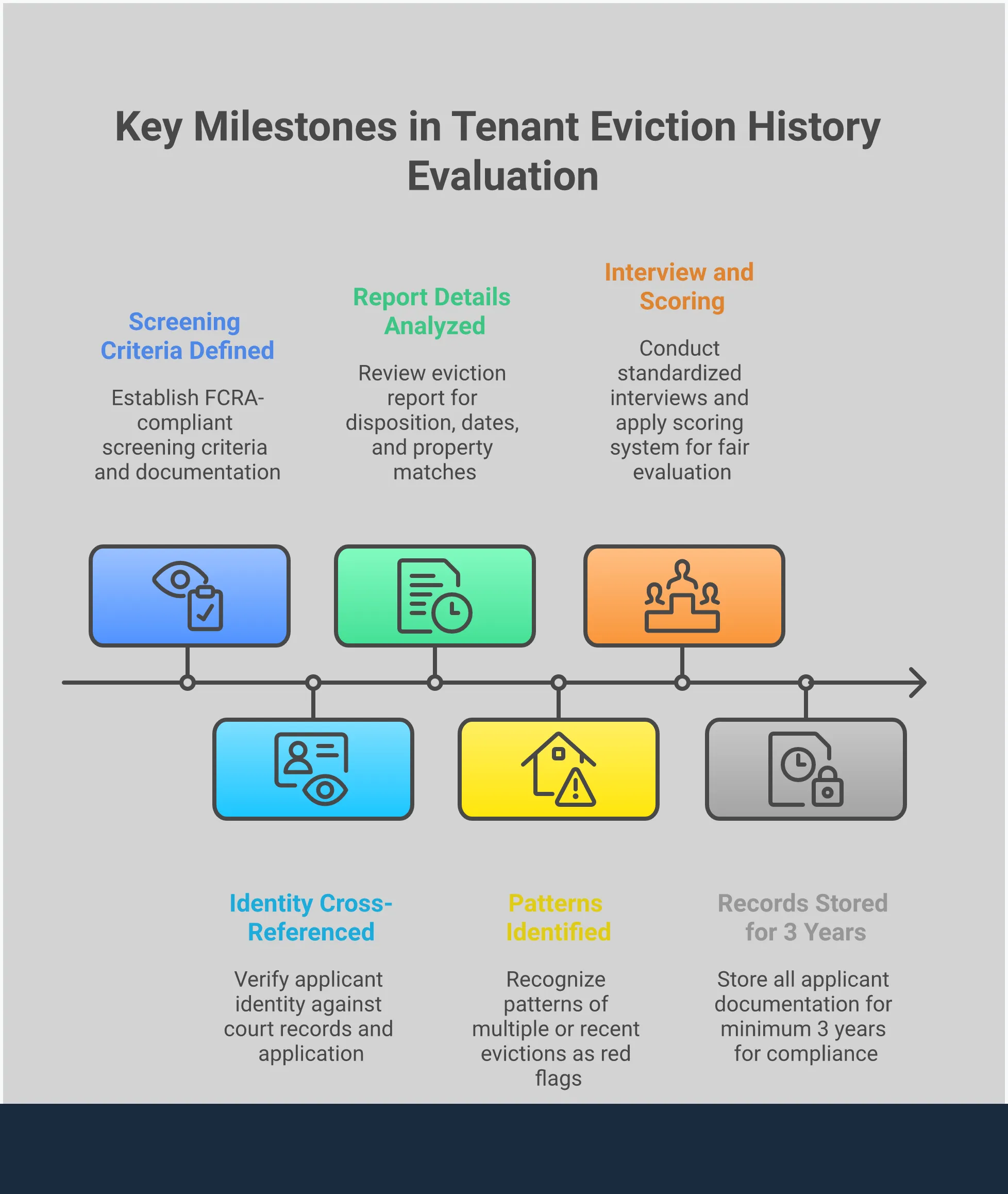
Once you know the rules, you can choose the right method for checking an applicant's eviction history. There are a few reliable ways to get this information, ranging from all-in-one services to hands-on public records searches. The best approach for you will depend on how much time you have and how comprehensive you need the report to be. Let's walk through the most common and effective options.
Using a professional tenant screening service is usually the most efficient and reliable way to check for evictions. These platforms do the heavy lifting for you, running a national eviction search alongside credit reports and criminal background checks. This gives you a complete and easy-to-read summary of an applicant's history. Services like Portable Tenant provide a comprehensive screening report that is not only thorough but also fully compliant with laws like the FCRA. By using a dedicated service, you save time, reduce the risk of errors, and ensure you’re making decisions based on accurate, verified information.
If you prefer a more hands-on approach, you can search for public records on your state's court websites. Most states provide online access to their case files, allowing you to look up eviction proceedings directly. To be thorough, you’ll need to search for all possible names the applicant might have used, including maiden names, married names, or common nicknames. While this method is often free, it can be time-consuming. You may need to search through multiple county or state databases, especially if the applicant has lived in different areas. The National Center for State Courts offers a helpful directory of state court websites to get you started.
For the most detailed information, you can conduct a manual search at the local courthouse. This involves visiting in person or contacting the court clerk to request the full court record for a specific eviction case. This can give you the complete story behind a filing, including documents and judgments that might not be available online. However, this is the most labor-intensive option. You may need to pay a fee for copies of the records and wait for them to be processed. This method is typically used when you need to clarify details from a report or when online records are incomplete.
Once you have an eviction report in hand, it can feel a little overwhelming. It’s packed with legal terms and court details that aren’t always straightforward. But don’t worry—learning to read one is simpler than it looks. The key is to approach it systematically, looking for specific pieces of information that tell the full story of what happened. Think of yourself as an investigator piecing together a timeline.
Your goal isn't just to see if the word "eviction" appears on the page. It's to understand the circumstances, the outcome, and whether it's relevant to your decision-making process today. A thorough review helps you make a fair assessment while protecting your investment. Using comprehensive screening reports that pull this data for you is the first step. The next is knowing what to look for. We’ll walk through the three most important parts of the report: confirming the applicant's identity, understanding the context of the case, and knowing the difference between a filing and a final judgment.
Before you analyze any details, your first step is to confirm the eviction record actually belongs to your applicant. This might sound obvious, but mix-ups happen all the time, especially with common names. A record for "John Smith" in a large city could belong to dozens of different people.
Carefully compare the name on the report with the one on the application, looking for matching middle names or initials. Cross-reference other identifying information like date of birth and previous addresses listed on the application with the details in the court record. If the information doesn’t line up perfectly, you can’t assume it’s your applicant. Making a decision based on someone else’s record is not only unfair but could also put you in legal trouble.
An eviction filing on a report doesn't automatically mean the applicant is a risky tenant. It’s crucial to remember that a filing is just the start of a legal process, not always the end result. A landlord might file for eviction as a first step, but the situation could have been resolved long before a court date.
For example, the tenant may have paid the late rent immediately after the filing, or perhaps there was a misunderstanding that was quickly cleared up. In these scenarios, the case might have been dismissed or withdrawn. The report should indicate the case's final disposition, which tells you how it concluded. Looking at the context helps you see the difference between a one-time issue that was resolved and a pattern of serious problems.
Understanding the legal terminology on the report is essential for grasping the severity of the situation. Not all eviction records carry the same weight. The outcome, or "disposition," of the case will tell you what actually happened.
Here are a few common terms you’ll see:
Finding an eviction on an applicant's record can feel like a dealbreaker, but it’s rarely that simple. An eviction history is a serious data point, but it’s just one piece of the puzzle. How you proceed requires a careful, consistent, and legally compliant approach. Instead of making a snap judgment, take a moment to gather all the facts. This will help you protect your property while still giving every applicant a fair shot. The following steps can guide you through the process of evaluating an applicant with an eviction on their record.
First, it's crucial to understand what the record actually says. An eviction filing isn't the same as a completed eviction. Just because a previous landlord started the process doesn't mean the tenant was actually forced to leave. The case might have been dismissed, or the two parties could have reached a settlement. A comprehensive tenant screening report will show you the outcome of the case. Look for details like the reason for the filing—was it for non-payment of rent or another lease violation? Understanding the context behind the record is the first step toward making a well-rounded assessment of the applicant's rental history.
Once you understand the details of the eviction record, the next step is to talk to the applicant. This isn't about confrontation; it's about clarification. Give them an opportunity to share their side of the story. There could be extenuating circumstances you’re not aware of, like a sudden job loss, a medical emergency, or a dispute with a landlord that has since been resolved. When you review the results, try to understand the full story, not just the fact that a case was filed. This conversation can provide valuable insight into their responsibility and current financial stability, helping you see them as a person, not just a name on a report, while upholding fair housing principles.
Ultimately, you need to make a decision that protects your investment. Evictions are incredibly costly and stressful for landlords, averaging around $3,500 per incident. Past behavior can be an indicator of future actions, so an eviction history is a legitimate concern. However, your final choice should be based on your complete, pre-established screening criteria, not just this one factor. Weigh the eviction against the rest of their application: their credit history, income verification, and references. Does their explanation seem credible? Have their circumstances changed for the better? By making a fair and informed decision, you can find a reliable tenant while staying compliant with all relevant laws.
When you’re reviewing an applicant’s rental history, it’s easy to get tripped up by misinformation. Believing common myths about eviction records can lead to misunderstandings, unfair screening decisions, and even legal trouble. To make sure you’re evaluating every applicant fairly and accurately, it’s important to separate fact from fiction. Let’s clear up a few of the most persistent misconceptions so you can screen potential tenants with confidence and clarity. Understanding these distinctions will help you build a more effective and compliant screening process.
This is one of the most common and critical misunderstandings. For years, eviction-related judgments were included in credit reports, but that changed in 2017. Now, evictions do not show up on standard credit reports from the major bureaus. This means if you’re only pulling a credit report, you’re missing a huge piece of the puzzle. To get a complete view of an applicant's rental background, you need a separate, dedicated eviction history check. A comprehensive screening service will pull this information from court records, giving you the information you need to make a well-rounded decision.
Seeing an eviction filing on a report can seem like a major red flag, but it doesn't always tell the whole story. Just because a landlord filed an eviction case doesn't mean the tenant was actually removed from the property. The case could have been dismissed if the tenant paid the rent they owed, or the two parties might have reached a private agreement. The tenant may have even won the case. It’s essential to look beyond the initial filing and find the final judgment or disposition to understand what really happened. This context is key to making a fair assessment.
Landlords must follow federal law when screening tenants, and that includes rules about how far back you can look. Under the Fair Credit Reporting Act (FCRA), you cannot use eviction records that are more than seven years old to deny a rental application. Using outdated information is a serious compliance violation that can lead to legal penalties. This is another reason why working with a professional screening service is so important—they ensure the reports you receive only include information you are legally allowed to consider, protecting both you and the applicant.
Finding an eviction on an applicant's record isn't an automatic 'no.' Context is everything. But some situations are more concerning than others and can signal a higher risk. When you review an eviction history, you're looking for patterns of behavior that could impact your property. Paying attention to the frequency, recency, and reasons behind a filing will help you see the bigger picture and make a more confident decision. Here are a few key red flags to keep in mind.
One eviction from several years ago might be explainable—life happens. But a report showing two or more evictions within the last few years is a significant red flag. This pattern suggests a recurring issue with maintaining tenancy, not just a one-time crisis. Past behavior is often a strong indicator of future actions, and multiple recent evictions can point to a history of instability that you don't want to inherit. As a landlord, your goal is to find a reliable tenant who will stay for the long term. A history of frequent moves forced by eviction proceedings runs counter to that goal and is a sign that you should proceed with caution.
The most common reason for eviction is failure to pay rent, and it’s a serious concern for any landlord. While a single instance could be tied to a specific hardship, a pattern of non-payment is a major warning sign. If an applicant’s report shows multiple eviction filings for unpaid rent across different properties, it indicates a potential ongoing issue with financial responsibility. This directly threatens your rental income and business stability. When you see this, it’s wise to cross-reference it with their income verification and credit report. A comprehensive tenant screening service provides all this information in one place, giving you a complete financial picture to assess the risk accurately.
Evictions aren't always about money. A history of filings for other lease violations—like causing significant property damage, having unauthorized occupants, or engaging in illegal activities — is just as serious. These issues show a disregard for the terms of the lease and respect for the property. It’s also important to understand the outcome of these cases. Sometimes a case is filed, but the tenant corrects the violation and is not ultimately removed. However, a pattern of repeated filings, even if dismissed, suggests a tenant who may consistently create conflict. This is why it's crucial to uphold fair housing laws while consistently applying your screening criteria to every applicant.
Finding the right tenant goes beyond just checking for an eviction history. It’s about building a fair, consistent, and transparent process that protects you and respects your applicants. When you have a clear system in place, you not only comply with fair housing laws but also set the stage for a positive landlord-tenant relationship from day one. A thoughtful screening process helps you find reliable tenants who will care for your property and pay rent on time, making your life as a landlord much easier.
Before you even list your property, decide on your rental criteria and write them down. This document will be your guide for evaluating every single applicant, ensuring you treat everyone equally. Your criteria should be objective and directly related to a tenant's ability to pay rent and care for the property. This might include a minimum credit score, a specific income-to-rent ratio, and policies on smoking or pets. Checking a tenant's eviction history is a key part of this, as it helps you find people who will stay longer and maintain a stable tenancy. Having these standards established beforehand is the best way to uphold fair housing laws and make confident, unbiased decisions.
Meticulous record-keeping is your best friend. From the initial application to your final decision, keep a paper trail for every applicant. This includes their application, your communications, and the screening reports you run. A comprehensive report will show the tenant's full name, the landlord's name, the property address, when an eviction was filed, which court handled it, and what the court decided. Using a service like Portable Tenant ensures you receive standardized, detailed information for each applicant. This documentation proves you followed your consistent criteria and serves as crucial evidence if your decision is ever questioned. It’s not about being rigid; it’s about being fair and protecting your business.
Creating a space for open communication can make a world of difference. While you need to stick to your criteria, you can also let applicants know that you’re willing to consider context. On your application or during initial conversations, you can invite them to share any additional information they think is relevant. Many renters with a past issue appreciate the chance to explain their situation. If an applicant has a negative mark on their record, being open to hearing their side of the story can reveal that it was a one-time issue, like a medical emergency or a job loss they’ve since recovered from. This approach fosters trust and can help you find a great, responsible tenant who others might have overlooked.
Is an eviction filing the same as a completed eviction? Not at all. An eviction filing is simply the first step a landlord takes in the legal process. It doesn't automatically mean the tenant was removed from the property. The case could have been dismissed after the tenant paid their rent, or the two parties might have reached an agreement. It's essential to look at the final outcome, or "disposition," of the case to understand what actually happened.
Why don't I see evictions on a standard credit report? This is a common point of confusion. The major credit bureaus stopped including eviction judgments on their reports back in 2017. This means if you only run a credit check, you're missing a critical piece of an applicant's rental history. You need a separate, dedicated eviction search to get a complete picture of their background.
How far back can I legally look at an applicant's eviction history? The Fair Credit Reporting Act (FCRA) has a clear seven-year rule. You cannot use an eviction record that is more than seven years old as a reason to deny a rental application. This law ensures that people aren't endlessly penalized for past mistakes. A professional screening service will automatically filter out these older records for you, keeping your process compliant.
What should I do if an applicant has an eviction on their record? Finding an eviction doesn't have to be an automatic rejection. First, look at the context—how long ago did it happen, and what was the final outcome? Then, give the applicant a chance to explain the situation. A past job loss or medical emergency tells a very different story than a pattern of non-payment. Your final decision should be based on your entire set of screening criteria, not just this one piece of information.
Can I just ask an applicant about their eviction history instead of running a report? While you can certainly ask, relying only on an applicant's answer isn't a consistent or reliable screening practice. A formal report provides verified, third-party information that ensures you have the correct facts. Using a professional screening service for every applicant also helps you maintain a fair and documented process, which protects your business and ensures you treat everyone equally.