
Thinking about subletting your apartment for the summer or renting a room from a friend? It seems like a straightforward way to save money and add flexibility to your life. But before you hand over the keys or sign a casual agreement, it’s crucial to understand the legal difference between a subtenant vs tenant. When you sublet, you essentially become a landlord, taking on a whole new set of risks and responsibilities. Your original lease doesn't just disappear. You are still the one ultimately on the hook for rent payments and any damages. Knowing your exact legal standing is essential for protecting your finances, your rental history, and your peace of mind. Let's explore what you need to know before making a move.
When you’re renting, the terms “tenant” and “subtenant” might seem interchangeable, but they carry very different legal weights. Understanding which role you fill is crucial because it defines your rights, your responsibilities, and who you answer to if something goes wrong. Whether you’re thinking of renting out a spare room or moving into a place with existing roommates, knowing the distinction is the first step to protecting yourself and maintaining a good relationship with everyone involved. It all comes down to one key document: the lease agreement.
A tenant is the person who signs the primary lease or rental agreement directly with the landlord or property management company. If your name is on that main contract, you have a direct legal relationship with the property owner. This means you are the one officially responsible for upholding all the terms of the lease, from paying rent on time to ensuring the property is cared for. All official communication, maintenance requests, and rent payments flow directly between you and the landlord. In short, you’re the main point of contact and the one ultimately on the hook.
A subtenant, on the other hand, is someone who rents all or part of the property from the original tenant, not the landlord. Their contract, known as a sublease, is with the tenant. A subtenant has no direct legal relationship with the landlord. For example, if you decide to study abroad for a semester and have a friend take over your apartment, that friend would be your subtenant. They pay rent to you, and if they have an issue like a leaky faucet, they report it to you. You are then responsible for passing that information along to the landlord.
The core difference lies in the chain of responsibility. The tenant acts as a middleman between the landlord and the subtenant. While the subtenant is responsible to the tenant for paying their share of the rent and following the rules, the original tenant is still fully responsible to the landlord for the entire rent payment and any damages to the property. If your subtenant fails to pay you, you still have to pay the full rent to the landlord. The tenant essentially becomes a landlord to the subtenant, which is why having a clear sublease agreement is so important.
Understanding your role in a rental agreement is the first step to protecting yourself. Whether you’re the one on the original lease or you’re renting from another tenant, your rights and responsibilities look very different. It all comes down to who you have a direct legal relationship with. Let's break down what it means to be a tenant versus a subtenant so you know exactly where you stand.
As a tenant, you are the person who signs the lease or rental agreement directly with the landlord. This creates a direct legal connection, often called "privity of contract," between you and the property owner. You are fully responsible for upholding the terms of that lease. This includes paying rent on time, keeping the property in good condition, and following all the rules outlined in your agreement, like policies on pets or noise. In return, you have a direct line to the landlord for maintenance requests and other issues. This direct relationship defines all your legal rights as a renter and what the landlord expects from you.
A subtenant, on the other hand, rents from the tenant, not the landlord. Your agreement, whether it’s a formal document or a verbal understanding, is with the person on the original lease. In this scenario, the original tenant essentially becomes your landlord. You pay your rent to them, and you bring any issues or repair needs to their attention. While you have to live by the rules of the master lease, your legal obligation is to the tenant you sublet from. You don’t have a direct legal relationship with the property owner, which is a key distinction that impacts how problems are handled.
This is where things can get tricky. The landlord’s official relationship is only with the primary tenant—the person who signed the original lease. If a subtenant fails to pay rent or causes damage to the property, the landlord will hold the original tenant responsible for the financial loss and repairs. The tenant is the one on the hook for any lease violations, even if the subtenant caused them. The landlord deals exclusively with the tenant, and the tenant must then deal with the subtenant. This is why having a solid sublease agreement in place is so critical for protecting the primary tenant.
Subletting your apartment can feel like a perfect solution. Maybe you landed a three-month work project in another city, or you’re planning an extended trip to visit family. Finding someone to cover your rent while you’re away seems like a smart financial move, and often, it is. But it’s not as simple as just handing over your keys to a friend or a stranger from the internet. When you sublet, you’re essentially becoming a landlord yourself, and that comes with a whole new set of responsibilities and potential risks.
Before you post that "apartment for sublet" ad, it's crucial to do your homework. The original lease you signed with your landlord is still in effect, and you are ultimately the one responsible for the rent and the condition of the apartment. If your subtenant stops paying or causes damage, your landlord will be looking to you to make it right. A successful sublet requires careful planning and clear communication with everyone involved: your landlord, your subtenant, and yourself. To protect your finances, your rental history, and your peace of mind, there are five essential steps you need to take. We’ll walk through each one to make sure you’re setting yourself up for a smooth and stress-free experience.
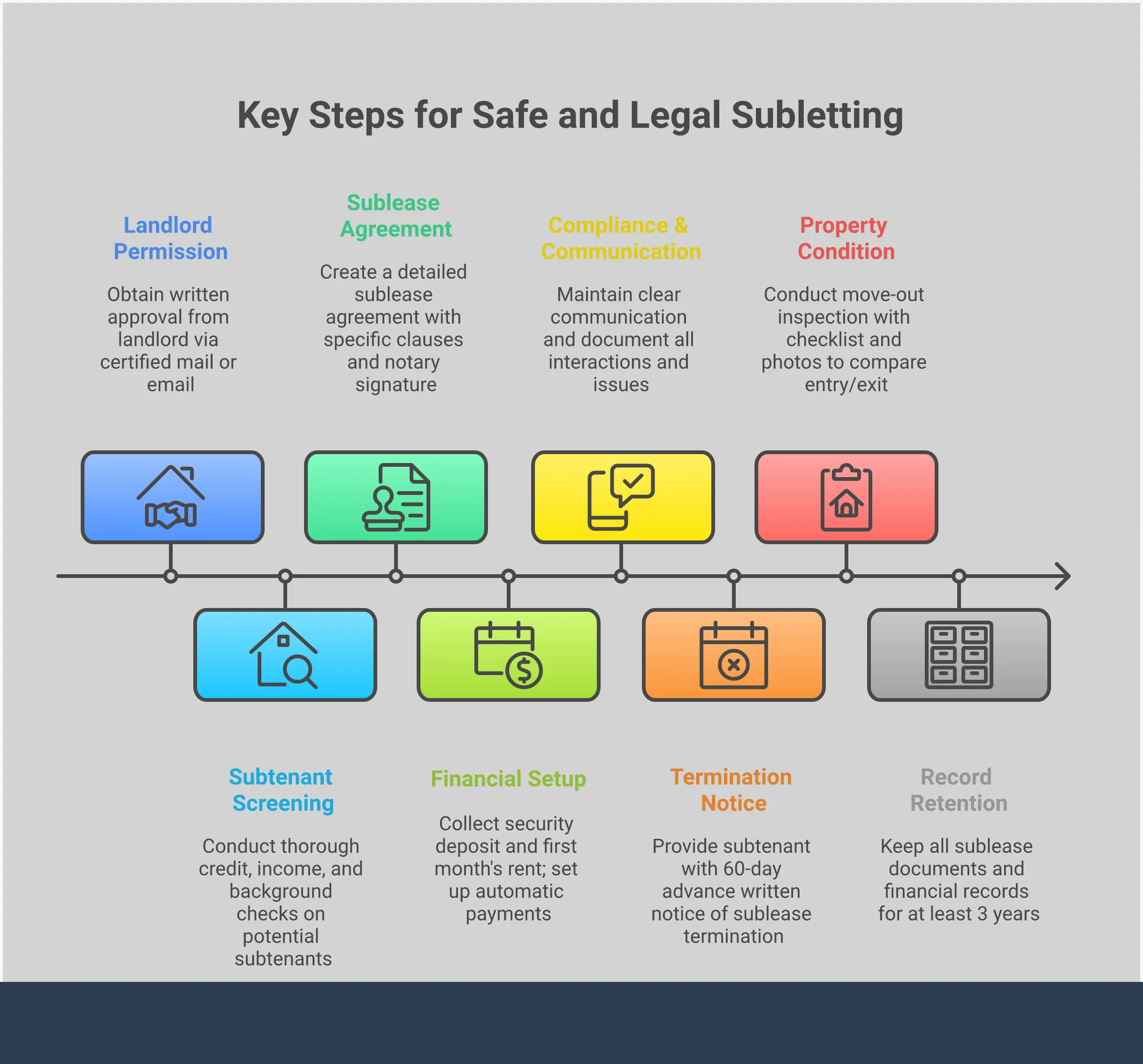
Before you even think about finding a subtenant, your first move is to grab your original lease agreement. Think of it as your official rulebook. Buried in the legal text, you’ll find a section on subletting, sometimes called "subleasing" or "assignments." Some leases have a strict no-subletting policy, and breaking that rule can be grounds for eviction. Others might allow it but with specific conditions, like getting your landlord’s approval or limiting the duration of the sublet. Understanding these terms in your lease upfront will save you a massive headache later. If the language is confusing, don't hesitate to ask your landlord or property manager for clarification.
Found a clause that allows subletting? Great! But don't start celebrating just yet. Your next step is to talk to your landlord and get their permission in writing. A verbal "okay" over the phone isn't enough to protect you. You need a formal, written confirmation that they approve of the sublet and the specific person you’ve chosen. This document is your proof that you followed the rules. Without it, you could find yourself in a tricky situation if any issues arise, potentially even facing eviction proceedings for having an unauthorized occupant. Getting everything in writing ensures that you and your landlord are on the same page and that you’re fully covered.
Let's talk about money, because this is where things can get messy. When you sublet, you become a landlord of sorts, but you're still the original tenant in your landlord's eyes. This means you are 100% responsible for the rent being paid on time, every month. If your subtenant pays late or stops paying altogether, you have to cover the full amount. The same goes for damages. If they break something or cause damage beyond normal wear and tear, that cost comes out of your security deposit. You are ultimately on the hook for everything, so it's a financial risk you need to be prepared for.
You wouldn't hand your keys over to a stranger without knowing a bit about them, right? The same principle applies here. You should screen potential subtenants just as a landlord would. This includes running credit and background checks to ensure they’re reliable and have a history of paying on time. Using a service that provides a comprehensive, renter-controlled report can simplify this. A portable screening report allows applicants to share their verified information securely, giving you peace of mind without the hassle of handling sensitive data yourself. Proper screening is your best defense against future problems.
A handshake and a promise won't cut it. To protect both yourself and your subtenant, you need a formal sublease agreement. This is a legally binding contract that outlines all the important details: the rent amount and due date, the length of the sublet, rules about guests, and what happens if something goes wrong. It clarifies everyone's responsibilities and provides a clear course of action if a dispute comes up. You can find many sublease agreement templates online that you can adapt to fit your specific situation. Don't skip this step—it’s your most important safety net.
Subletting can feel like a perfect solution when you need to leave your apartment for a few months without breaking your lease. It offers flexibility for work, travel, or life changes. But before you hand over the keys, it’s crucial to understand that you’re not just getting a temporary rent-payer; you’re taking on the legal responsibilities of a landlord. Weighing the benefits against the potential headaches is the first step to making a smart decision for your home and your finances.
The biggest draw of subletting is flexibility. If you land a short-term job in another city or decide to travel for the summer, finding a subtenant means you can cover your rent without having to break your lease and face hefty fees. This arrangement can save you a significant amount of money and give you peace of mind knowing your apartment is occupied. For many, it’s a practical way to handle a temporary relocation. However, as legal experts point out, this flexibility comes with some serious legal responsibilities for you, the original tenant. It’s not just about finding someone to pay rent; it’s about managing a new legal relationship.
While subletting can solve a short-term problem, it also opens the door to major risks. The most important thing to remember is that your agreement with your landlord remains fully intact. You are still the person responsible for the apartment and the full rent payment. According to the Tenant Resource Center, if your subtenant damages the property or simply stops paying rent, you’re the one on the hook for the bill. Your landlord will come to you for payment and repairs, not your subtenant. This puts you in a tough financial position, as you could end up paying rent for two places or covering costly repairs for damage you didn’t cause.
Clear communication and a solid agreement are your best defense against potential conflicts. Never rely on a verbal agreement. Always create a formal, written sublease agreement that outlines every detail: rent amount, due dates, utility responsibilities, and rules of the apartment. This document protects both you and your subtenant. To avoid issues in the first place, you should screen potential subtenants as thoroughly as a landlord would. This includes running credit and background checks to ensure they are reliable and financially stable. Using a portable tenant screening report can make this process simple and secure, giving you the confidence that you’re choosing a responsible person for your home.
Your original lease is the master document that governs everything, and subletting doesn’t change that. You are ultimately responsible for ensuring the full rent is paid to your landlord on time every month, even if your subtenant pays you late or not at all. As legal resource Rocket Lawyer explains, the primary tenant carries the full financial burden. Furthermore, your subtenant has no direct legal relationship with your landlord. If they want to stay in the apartment after your lease is up, they can’t simply take it over. They will need to apply like any new tenant and sign a brand-new lease directly with the landlord, pending the landlord’s approval.
No one likes thinking about eviction, but knowing the process is crucial for both tenants and subtenants. The main difference is your legal agreement. A tenant’s contract is with the landlord, while a subtenant’s is with the tenant. This distinction completely changes how an eviction unfolds and who is held responsible. Understanding where you stand can help you protect yourself if things go wrong, as it all comes down to that chain of command: the landlord deals with the tenant, and the tenant deals with the subtenant.
As the primary tenant, your agreement is directly with the landlord. You’re responsible for paying rent, maintaining the property, and following all rules. If you violate the lease, the landlord can start eviction proceedings against you. This typically begins with a formal notice and can lead to court if the issue isn’t resolved. Because you signed the lease, you are accountable for the unit and anyone living in it, including a subtenant. Your name is on the line, so any problems ultimately fall on your shoulders.
A subtenant’s right to live in a property is tied to the primary tenant’s lease. If the tenant gets evicted for any reason, the subtenant usually has to leave as well, even if they’ve done nothing wrong. Your sublease agreement is secondary to the original lease and cannot outlast it. The landlord serves the eviction notice to the tenant, and the tenant is then responsible for making sure you, the subtenant, move out. This can put you in a vulnerable position with little direct recourse against the landlord.
The lines of authority here are clear: a landlord can only evict the tenant they have a contract with. They cannot directly evict a subtenant. If a subtenant causes problems like not paying rent or damaging the property, the landlord holds the primary tenant responsible. It then falls on the tenant to legally evict their subtenant. When you sublet your space, you take on the role and risks of being a landlord for your subtenant, which includes handling any potential legal disputes.
Eviction laws and required notice periods vary widely by state. It’s critical to understand the specific rules in your area, especially regarding subletting. For instance, a long-term guest could unintentionally become an unauthorized subtenant, giving your landlord grounds to evict you. Before making any decisions, always check your local and state landlord-tenant laws to understand the correct procedures and timelines that apply to your situation. This knowledge is your best defense in a difficult situation.
Subletting can get complicated, and a lot of that complexity comes from simple misunderstandings. Let's clear up some of the most common myths about the tenant and subtenant relationship so you can move forward with confidence, whether you're the one signing the original lease, moving into a sublet, or managing the property.
This is probably the most dangerous myth out there. Even with a subtenant in place, you, the original tenant, are still the one legally bound by the original lease. Think of yourself as the subtenant’s landlord. This means the primary tenant is ultimately responsible for paying the full rent to the property owner on time, every month. If your subtenant pays late or stops paying altogether, you are still on the hook for the entire amount. The same goes for any damages they cause. Your name is on the original lease, and that’s what matters most to your landlord.
It might seem logical for the person living in the unit to communicate with the property manager, but that’s not how a sublease works. A subtenant is someone who rents all or part of the property from the tenant, not directly from the landlord. The subtenant’s agreement is with you, the primary tenant. Therefore, you are the middleman. All communication, from maintenance requests to questions about the rent, should flow from the subtenant to you, and then from you to the landlord. This keeps the lines of communication clear and respects the legal agreements everyone has signed.
Having a friend or partner stay over is one thing, but when does a guest become an unauthorized subtenant? The line can be blurry, but it usually comes down to duration and contribution. If someone stays for short, infrequent visits, they are typically considered a guest. However, if they start contributing to rent, receive mail at your address, or have essentially moved in without being on the lease, you’ve likely crossed into subtenant territory. Most leases have specific clauses about guest stays, so always check your agreement to avoid accidentally violating its terms.
Collecting a security deposit from your subtenant is a smart and necessary step, but it’s not a magic shield against all potential issues. A deposit can cover minor damages or a small amount of unpaid rent, but it may not be enough to handle a major problem. If your subtenant causes significant damage or skips out on several months of rent, you could be stuck with the bill. Your landlord will hold you responsible for the full cost, and you’ll have to pay out of pocket while trying to recover the funds from your subtenant, which can be a difficult and lengthy process.
What happens if my subtenant stops paying rent? This is a tough situation, and unfortunately, you are still responsible for paying the full rent to your landlord. Your lease agreement is with the landlord, and they will hold you accountable for the entire payment, regardless of your arrangement with a subtenant. You would need to cover the missing amount yourself and then take steps to recover the money from your subtenant, which might involve using the sublease agreement you both signed.
As a subtenant, can I contact the landlord directly for repairs? It’s best to go through the primary tenant for any issues, including maintenance requests. Your legal agreement is with the tenant, not the landlord, so the tenant acts as the official point of contact. They are responsible for passing along your request to the property owner or manager. This keeps the lines of communication clear and respects the legal relationships everyone has agreed to.
Is a roommate the same thing as a subtenant? Not necessarily, it all depends on the lease. If you and your roommate both sign the original lease with the landlord, you are co-tenants and share equal responsibility. However, if you are the only one on the original lease and your roommate pays you rent based on a separate agreement, then they are considered your subtenant.
If I sublet, can my subtenant just take over the lease when I'm ready to move out permanently? No, a subtenant has no automatic right to take over your lease. Their right to live in the apartment is tied to your tenancy. When your lease ends, their sublease ends too. If they want to stay, they would need to go through the formal application process with the landlord, including screening, and sign a brand new lease of their own, assuming the landlord approves them.
What's the single most important document I need when subletting? A written sublease agreement is absolutely essential. This is the contract between you and your subtenant that outlines all the rules, responsibilities, rent amount, and due dates. It protects both of you by creating a clear, legally recognized understanding of the arrangement. Never rely on a verbal agreement, as a formal document is your best tool for preventing and resolving any potential disputes.