
For years, a high credit score was seen as the golden ticket for a rental application. But a credit score doesn't tell the whole story about an applicant's potential as a renter. It was never designed to predict rental success. A tenant scorecard, on the other hand, is built specifically for this purpose. It analyzes factors that are directly relevant to a tenancy, like payment history to previous landlords and eviction records. This specialized approach provides a much sharper, more accurate assessment of risk, helping you look beyond a single number to see a complete profile of your applicant.
If you’ve ever felt overwhelmed staring at a dense credit report, trying to decide if an applicant is the right fit, you’re not alone. A tenant scorecard is a tool designed to make that process much simpler for landlords. Think of it as a translator that takes all the complex information from a background check and turns it into a clear, actionable recommendation. It helps you screen potential tenants efficiently by automating the review process, allowing you to make informed and consistent decisions without spending hours on manual checks.
Instead of subjectively weighing different parts of an application, a scorecard uses a pre-set, objective set of criteria to evaluate every applicant equally. This not only saves you time but also helps you maintain fair and compliant leasing practices. By standardizing your evaluation, you can confidently compare applicants and choose the most qualified person for your property. It’s a core component of a modern tenant screening process that removes guesswork and reduces risk, giving you peace of mind.
A tenant scorecard works by automating the screening process based on rules you establish. First, you customize your screening criteria, setting the specific benchmarks that matter most to you. For example, you might require an income-to-rent ratio of 3:1, a minimum credit score of 650, and no prior evictions. Once your criteria are set, the scorecard does the heavy lifting.
When an applicant submits their information, the system automatically analyzes their credit report, income verification, and background check against your rules. It then provides a straightforward recommendation for each applicant, typically categorizing them as 'Pass,' 'Fail,' or 'Conditional.' This clear result lets you see instantly who meets your standards, streamlining how it works and allowing you to move forward with qualified candidates quickly.
A tenant scorecard provides a holistic view of an applicant's financial responsibility by evaluating several critical factors. It goes beyond a single credit score to assess their overall suitability as a tenant. The system calculates important metrics like their income compared to the proposed rent and their existing debts, giving you a clear picture of their ability to afford the property.
The scorecard also analyzes their credit report for payment history, looking for patterns of on-time payments and any red flags like collections or bankruptcies. It can also be customized to weigh other factors, such as eviction history or criminal records. This comprehensive analysis helps you mitigate risk by focusing on the indicators that most accurately predict a successful tenancy.
When you’re reviewing a rental application, you’ll likely see two key numbers: a credit score and a tenant score. While they might seem similar, they tell very different stories about an applicant. A traditional credit score gives you a broad overview of a person's financial history, but a tenant scorecard is designed specifically for the rental industry. It provides a much sharper, more relevant picture of how an applicant is likely to perform as a tenant in your property. Understanding the distinction is key to making the best leasing decisions.
Think of a tenant score as a report card for renters. Unlike a general credit score, which lumps all kinds of debt together, a tenant score focuses on the factors that directly impact a tenancy. It prioritizes things like a history of on-time rent payments, eviction records, and any outstanding debts to previous landlords. This means that a medical bill or student loan won't unfairly penalize an otherwise excellent applicant. By zeroing in on rental-specific behaviors, a tenant scorecard gives you a clearer, more accurate assessment of the actual risk involved, helping you understand how the screening process works to protect your investment.
Because tenant scorecards are built specifically for screening, they are far more effective at predicting a renter's future reliability. A standard credit score was never designed to forecast rental success, and a high score doesn't always translate to a responsible tenant. Tenant screening models, like the ones used in a Portable Tenant Screening Report, analyze patterns directly related to tenancy. This specialized approach delivers a more predictive assessment of renter risk, allowing you to look beyond a simple number and see a more complete profile of your applicant. This helps you choose tenants who are more likely to pay on time and care for your property.
One of the biggest advantages of a modern tenant scorecard is its use of current financial data. A credit report can be weeks or even months out of date, offering a snapshot of the past rather than a clear view of the present. Advanced screening services integrate real-time information, including verified income and employment status. This gives you confidence that the applicant can afford the rent right now. For landlords, this means you can make faster, more informed decisions with up-to-date, verified information, reducing uncertainty and accelerating the approval process for qualified renters.
Making the right decision about who to rent to is one of the most critical parts of being a landlord. It’s a choice that impacts your property, your finances, and your peace of mind. While traditional screening methods provide raw data, a tenant scorecard translates that information into a clear, actionable recommendation. It’s a tool designed to bring consistency and confidence to your selection process.
Think of it as a filter that helps you quickly identify qualified applicants who meet your specific standards. Instead of getting lost in the details of a credit report, you get a straightforward summary that highlights the most important factors for rental success. This approach not only saves you time but also helps you build a more reliable and objective system for managing your properties. By standardizing your criteria, you ensure every applicant is evaluated fairly, protecting both your investment and your reputation.
A tenant scorecard replaces guesswork with a reliable, data-driven method for evaluating applicants. It takes the complex information from a background and credit check and boils it down to a simple recommendation: pass, fail, or conditional. This automated analysis allows you to make informed decisions based on the specific criteria you’ve set for your properties.
This system ensures you apply the same standards to every single applicant, which is fundamental to a fair and consistent screening process. You’re no longer just going on a gut feeling or trying to interpret raw credit data on your own. Instead, you have a clear, objective framework that helps you confidently choose the best tenant for your rental, every time.
Let's be honest: no landlord wants to go through an eviction. It's a stressful, time-consuming, and expensive process that can drain your resources. A tenant scorecard is one of your best defenses against this outcome. By using a scoring model designed specifically for the rental industry, you can better predict an applicant's likelihood of paying rent on time.
For example, TransUnion’s ResidentScore is known for predicting evictions 15% more effectively than a typical credit score because it analyzes factors directly related to rental history. Implementing a structured tenant selection process can significantly lower your risk, helping you secure reliable tenants and protect your investment from the start.
The tenant screening process can feel overwhelming, especially when you have multiple applicants. A tenant scorecard simplifies everything by automating the review process. Instead of you manually combing through every line of a credit report, the scorecard does the heavy lifting, instantly flagging key information and providing a summary.
This efficiency is a game-changer. It frees up your time so you can focus on other aspects of managing your properties. Modern screening services, like the portable reports offered by Portable Tenant, integrate this scoring directly into the workflow. This creates a seamless and much faster experience, allowing you to review applications and make decisions in a fraction of the time it used to take.
A tenant scorecard isn’t just some mysterious number. It’s a detailed summary built from several key pieces of an applicant's financial and rental background. Think of it as a complete story rather than a single headline. By understanding what goes into the score, you can make more consistent, fair, and confident decisions for your property. Each criterion is chosen because it directly relates to an applicant's potential to be a reliable tenant, giving you a solid foundation for your choice.
Instead of just looking at one aspect, like a credit score, a scorecard combines multiple data points to create a well-rounded profile. This approach gives you a clearer picture of who you’re renting to. It helps you look beyond a single number and see the patterns and history that truly matter when it comes to renting out your property. This holistic view is what makes scorecards so effective; they assess risk based on factors that are directly relevant to a tenancy. Knowing these components helps you interpret the results accurately and explain them to applicants if needed, ensuring a transparent process for everyone. Let’s break down the three main pillars that form the foundation of a strong tenant scorecard.
This is arguably the most important piece of the puzzle. An applicant’s payment history shows you if they consistently pay their bills on time, from credit cards to car loans. It’s a powerful indicator of financial responsibility. A history of on-time payments is a good sign they’ll treat their rent obligation with the same seriousness. The scorecard also looks at their overall credit profile, including how much credit they’re using compared to their limits, the length of their credit history, and any recent applications for new credit. This information helps you gauge their financial habits and stability.
While credit history is important, a scorecard digs deeper into rental-specific behavior. This is where you’ll find red flags that a standard credit report might miss. A history of evictions is a major concern, as it directly points to past issues with a tenancy. Scorecards are designed to uncover these risks, giving you a more accurate prediction of rental success. The report also flags any outstanding debts to previous landlords, such as unpaid rent or fees for damages. This information is crucial because it speaks directly to how an applicant has treated their past rental agreements and financial obligations to property owners.
A tenant scorecard confirms that an applicant has a stable and sufficient income to afford the rent. It’s not enough for someone to say they can pay; you need proof. This part of the screening process involves verifying their employment status and income level, ensuring they have a reliable source of funds to meet their monthly rent payments comfortably. By confirming this information, you can feel more secure in their ability to fulfill the lease agreement. It’s a straightforward way to assess financial stability and reduce the risk of late or missed payments, which is why comprehensive screening reports always include this step.
Once you decide to use a tenant scorecard, the next step is choosing the right service. With several options available, it’s important to know what features will actually make your life easier and help you find the best tenants for your property. The goal is to find a partner that offers more than just a number; you need a service that provides a complete, clear, and compliant picture of each applicant. A great scorecard service should feel like an extension of your team, simplifying your workflow while giving you the confidence that you’re making fair and informed decisions. Look for a platform that balances powerful data with a simple, intuitive experience.
The last thing you need is a confusing report that leaves you guessing. A top-tier scorecard service will translate complex data into a straightforward recommendation, like "Pass," "Fail," or "Conditional." This clarity is a game-changer. It removes the ambiguity from your decision-making process, allowing you to move forward quickly and confidently. More importantly, it helps you apply your rental criteria consistently to every single applicant, which is a cornerstone of fair housing compliance. When the recommendation is clear, you can be sure your process is both efficient and equitable.
A scorecard is only as good as the data behind it. That’s why you need a service that runs truly comprehensive background checks. This goes far beyond a simple credit score. A thorough report should verify an applicant's identity and income, and include a detailed credit report, a nationwide criminal history search, and a search of eviction records. These components work together to confirm the information on the rental application and paint a full picture of an applicant’s reliability. This detailed screening is what powers an accurate and trustworthy scorecard.
You’re a landlord, not a software engineer. The platform you choose should be intuitive and easy to use from day one. But simplicity shouldn’t come at the expense of control. The best services allow you to customize the scorecard criteria to match your specific requirements. For example, you should be able to set your own standards for income-to-rent ratios or credit history. This flexibility ensures the scorecard aligns perfectly with your business needs and property standards, helping you find tenants who are a great fit while applying your rules fairly across the board.
Tenant screening can feel like a high-stakes process, and with so much information out there, it’s easy to get tripped up by common misconceptions. Let's clear the air and separate the facts from the fiction. Understanding the truth about tenant scorecards helps you use them effectively and fairly, making your rental process smoother for everyone involved. By busting these myths, you can feel more confident in your ability to find reliable tenants for your properties.
It’s tempting to think a high score means you’ve found the perfect tenant, but a scorecard isn’t a crystal ball. While a strong score is a great indicator of financial responsibility, it’s just one piece of the puzzle. As one property management expert notes, "Seeing a high credit score during the tenant screening process is essential, but this doesn't mean they are the best option." A comprehensive tenant screening report gives you a much fuller picture, including rental history and income verification. Think of the scorecard as a powerful data point that guides your decision, not a guarantee of a flawless tenancy. It helps you assess risk, but you should still do your due diligence.
Many renters worry that applying for multiple apartments will tank their credit score, and that’s a valid concern with traditional screening methods. However, modern screening services have solved this problem. Most platforms, including Portable Tenant, use a "soft pull" for credit checks, which does not affect an applicant's credit score. The best part about a portable report is that the renter runs their own report once and can share it with multiple landlords. This completely eliminates the issue of repeated hard inquiries, saving the applicant’s credit score and streamlining the process for you. It’s a win-win that protects applicants and gives you the information you need.
Adding another step to your workflow might sound like a headache, but tenant scorecards are designed to do the opposite. They actually simplify your decision-making process. Instead of manually sifting through pages of financial data, a scorecard gives you a clear, at-a-glance summary of an applicant's qualifications based on your criteria. Services like Portable Tenant make it even easier by providing a complete, compliant, and easy-to-read report directly from the applicant. This lets you move from listing your property to signing a lease more efficiently. The goal is to make your job as a landlord easier, not more complex.
Bringing a tenant scorecard into your process shouldn't feel like adding another chore to your to-do list. The whole point is to make your life easier and your decisions clearer. The best scorecard services are designed to fit right into your existing workflow, not disrupt it. When you're evaluating different options, think about how the service will connect with the tools you already use. A smooth integration means less manual work for you and a faster, more professional experience for your applicants. It’s all about finding a system that works with you, not against you, turning a complex task into a simple, streamlined part of your management routine.
The last thing you need is another standalone tool with a separate login and no connection to your primary system. When you’re vetting a scorecard service, a key question to ask is: "Does this work with my property management software?" Many modern screening solutions are built for landlords and property managers, designed to integrate seamlessly with the platforms you already use for managing applications, leases, and maintenance requests. This compatibility is a game-changer. It means data flows automatically from the application to the screening report, eliminating the need for manual entry and reducing the risk of errors. It keeps all your applicant information in one central, organized place, simplifying your workflow from start to finish.
Automation is your best friend when it comes to managing properties efficiently. A great tenant scorecard service will do the heavy lifting for you. Look for features that automate the screening process as soon as an application is submitted. For example, the system can automatically send the screening request, pull the necessary data, and generate a scorecard based on your preset criteria. This means you get consistent, unbiased results without spending hours on each applicant. Services that explain how their process works often highlight these automations, which give you back valuable time to focus on other aspects of your business while ensuring every applicant goes through the exact same fair and thorough evaluation.
One of the biggest concerns for any landlord is staying on the right side of the law. The good news is that a well-designed tenant scorecard is one of your best tools for maintaining compliance. Think of it as a framework for fairness. Instead of relying on subjective feelings, gut instincts, or inconsistent methods that can change from one applicant to the next, a scorecard helps you apply the same objective criteria to every single person. This structured approach is your best defense against accusations of discrimination.
This consistency is the foundation of fair housing. When you establish your standards upfront—like minimum income-to-rent ratios, acceptable credit history, or specific policies on past evictions—and apply them uniformly, you create a defensible and equitable screening process. The Fair Housing Act and various state laws are clear about prohibiting discrimination, and a scorecard provides documented proof that your decisions are based on legitimate business criteria, not protected characteristics. This not only protects you from potential legal challenges but also ensures you’re giving every applicant a fair shot. Using a scorecard isn’t just about making a smart business decision; it’s about making a fair one that respects the rights of prospective tenants while protecting your investment.
A scorecard’s greatest strength is its objectivity. It systematically removes unconscious bias from your decision-making process by focusing purely on predefined, relevant criteria. Before you even look at a single application, you decide what qualifications matter for your property. This proactive approach is key to creating more inclusive tenant screening practices.
When setting up your scorecard, it’s important to review each criterion—from proof of income to rental history—to confirm its purpose and ensure it doesn’t unintentionally create barriers for certain groups. By holding every applicant to the same clear, documented standard, you ensure that your final decision is based on qualifications, not personal characteristics.
A transparent screening process builds trust and shows respect for every applicant. When you use a scorecard, your criteria are clear and consistent, which helps demystify the selection process for renters. This clarity is essential for protecting both your business and the rights of your applicants. A thorough and fair screening process benefits everyone by preventing issues like late payments or property damage down the line.
It also ensures you’re compliant with laws governing the use of consumer reports. Landlords have specific responsibilities when they use background checks to screen applicants, including providing an adverse action notice if you deny them based on the report. By using a standardized scorecard, you create a clear, documented trail showing that your decision was based on legitimate business reasons, reinforcing your commitment to fair and lawful practices.
A tenant scorecard is an incredibly useful tool, but its real power comes from how you use it. Simply having a scorecard isn’t enough; you need a thoughtful approach to make sure your screening process is effective, fair, and legally sound. Think of it as having a great recipe—you still need to follow the steps to get the best results. The most successful landlords focus on two key practices: establishing clear, consistent standards from the start and regularly reviewing those standards to keep them relevant and fair. This isn't just about ticking boxes; it's about building a reliable system for one of the most critical parts of your business.
Following these best practices does more than just help you find reliable tenants. It streamlines your decision-making, saving you time and reducing the mental load of sifting through applications. More importantly, it creates a standardized process that is your best defense against accusations of discrimination. When you apply the same objective criteria to every applicant, you protect your business and uphold fair housing principles. A service like Portable Tenant is designed to support this, giving you a framework to apply your criteria consistently and confidently. By setting your rules upfront and sticking to them, you remove guesswork and emotion from the equation, leading to better outcomes for both you and your future tenants.
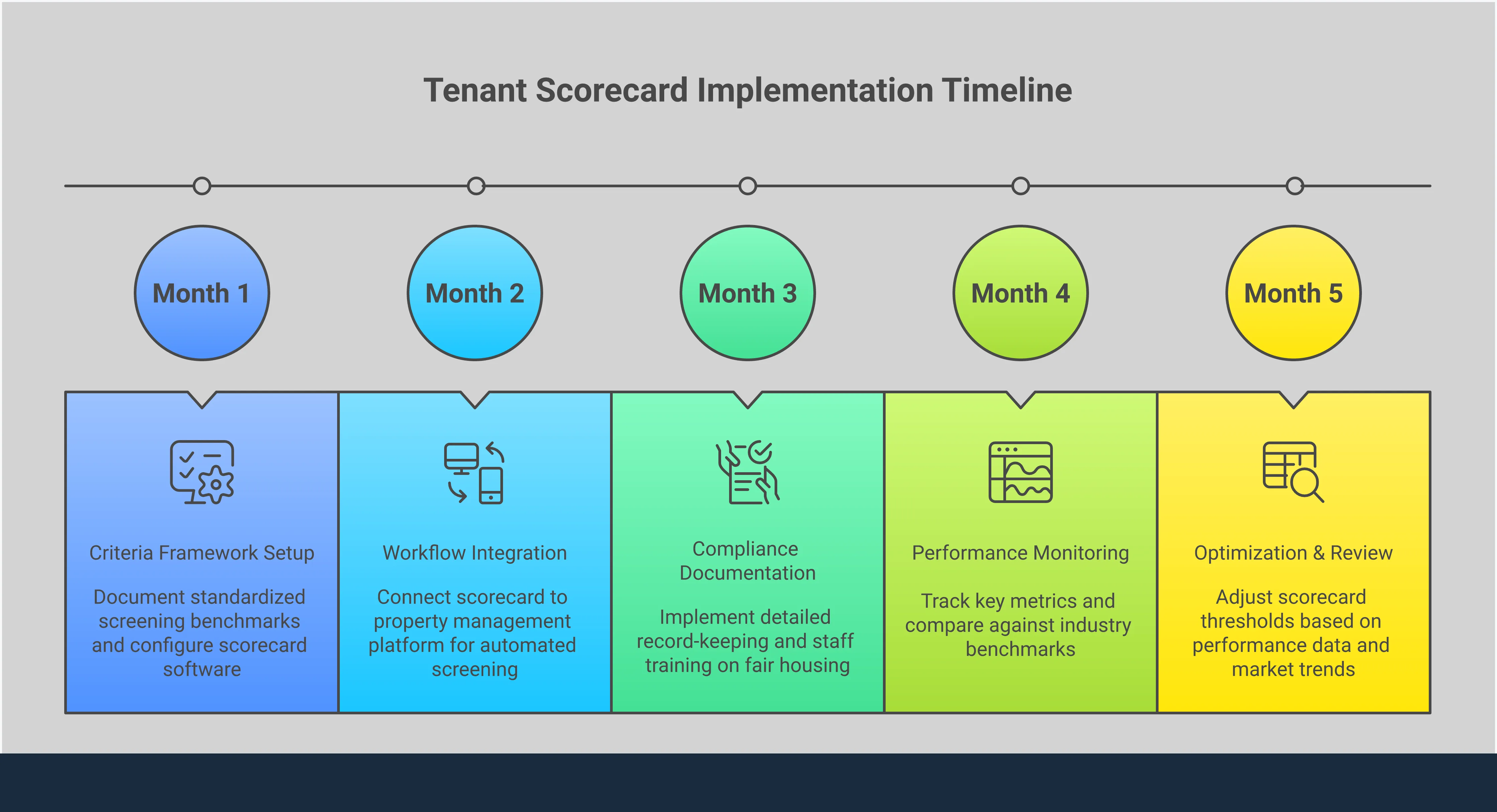
Before you even look at your first application, you need to decide what your ideal tenant looks like on paper. The first step is to create your tenant screening criteria and write it down. This document becomes your rulebook. It might include a minimum income-to-rent ratio (like 3x the monthly rent), a specific credit score range, no evictions within the last five years, and a clean criminal background check.
The most important part? You must apply these exact same standards to every single applicant, no exceptions. This consistency is what makes the process fair and objective. A scorecard helps you enforce these rules automatically, removing unconscious bias and ensuring you evaluate everyone on the same playing field. It turns a subjective feeling into a data-driven decision.
Your screening criteria shouldn’t be set in stone forever. The rental market, local laws, and best practices are always evolving. To ensure your process remains fair and effective, make it a habit to review your scorecard criteria at least once a year. Ask yourself if your standards are still serving their purpose. For example, is your credit score requirement still realistic for your local market, or is it unintentionally screening out otherwise great applicants?
Staying informed helps you move past outdated ideas and bust common myths about tenant screening that can lead to poor decisions. Regularly revisiting your policies shows that you’re a diligent and responsible landlord committed to an equitable process. This proactive approach not only helps you find better tenants but also keeps your practices compliant and current.
When you’re considering a new tool for your business, the first question is usually about the price tag. Tenant scorecard services are no different. The cost can vary depending on the provider and the depth of the report, but it’s helpful to think of it less as an expense and more as an investment in your property’s stability and your own peace of mind.
The true cost isn’t just the dollar amount you pay for a report. It’s also about the time you save and the expensive problems you avoid, like missed rent payments or the financial strain of an eviction. Let’s break down what you can expect to pay and, more importantly, the value you get in return.
You’ll find that tenant scorecard services often come bundled with a full screening package. Many providers include a scorecard at no extra charge when you purchase a credit report. This integrated approach makes sense, as the scorecard is designed to interpret the data found in the background and credit checks.
Pricing structures typically fall into a few categories. Some services charge on a per-report basis, which can be ideal if you only manage a few properties. Others might offer subscription plans for property managers with a higher volume of applicants. However, a more modern approach is emerging where the cost structure is simplified for landlords. For instance, with a portable screening report, the applicant pays a one-time fee for a report they can share with multiple landlords, meaning there’s often no direct cost to you.
The real value of a tenant scorecard comes from its ability to help you avoid costly mistakes. A single eviction can cost thousands of dollars in legal fees, lost rent, and property damages. Using a specialized scoring tool can save property owners significant money by helping them sidestep these situations. By identifying high-risk applicants from the start, a scorecard directly protects your bottom line.
Think about the time you spend manually sifting through applications. A scorecard automates the analysis, instantly flagging applicants who meet or miss your criteria. It calculates key metrics like rent-to-income and debt-to-income ratios, giving you a clear, data-backed recommendation. This efficiency frees you up to focus on other aspects of managing your properties. When you find better tenants, you reduce turnover, secure more consistent rent payments, and build a more stable rental business—a return that far outweighs the initial cost of a report.
Is a tenant scorecard just another name for a credit score? Not at all. While a credit score gives you a general look at someone's financial history, a tenant scorecard is built specifically for the rental industry. It focuses on the factors that most accurately predict rental success, like eviction history and on-time rent payments, giving you a much more relevant assessment of an applicant's reliability as a tenant.
Can I customize the scorecard to fit my property's specific requirements? Yes, and you absolutely should. The best tenant screening services allow you to set your own standards. You can establish your own rules for things like the minimum income-to-rent ratio, credit history, or other factors that are important to you. This ensures the scorecard's recommendation is perfectly aligned with your business needs and helps you find the right fit for your property.
How does using a scorecard help me stay compliant with Fair Housing laws? A scorecard is one of your best tools for maintaining fairness. It helps you apply the exact same objective criteria to every single applicant, which removes unconscious bias from your decision-making. By establishing your standards upfront and using a system to enforce them consistently, you create a documented and defensible process that shows your decisions are based on legitimate business reasons, not personal characteristics.
What should I do if a seemingly great applicant gets a "Fail" or "Conditional" recommendation? Think of the scorecard's recommendation as a powerful guide, not a final verdict. A "Fail" or "Conditional" result is a signal to look closer at the full screening report to understand exactly which of your criteria the applicant didn't meet. It allows you to move beyond a gut feeling and make a final, well-informed decision based on the complete picture provided in their report.
Does this service cost me anything as the landlord? In many cases, no. Modern screening platforms, especially those that offer portable reports, are often structured so the applicant pays a single fee for a comprehensive report. They can then share that same report with multiple landlords, which saves them money and streamlines the process. This model means you get all the benefits of a detailed screening and scorecard without any direct cost to you.