
For years, the rental application process has been stuck in the past. Renters pay separate fees for every single apartment they apply to, and landlords wait for individual background checks to process. It’s an inefficient system that costs everyone time and money. A modern rental screening report changes the game entirely. Instead of being a one-time-use document, a portable report is paid for once by the renter and can be shared securely with multiple landlords for up to 30 days. This reusable model is becoming the new standard, especially in states with laws that support it. This guide explains how this smarter approach works and why it creates a faster, more affordable, and more transparent experience for everyone involved.
Think of a rental screening report as a professional resume for your rental history. It’s a document that gives landlords a clear picture of your background, helping them make an informed decision about who to rent their property to. For renters, it’s your chance to show you’re a reliable and responsible applicant. This report is a standard part of the application process and is designed to build trust between you and a potential landlord.
A screening report pulls together key pieces of your personal history into one organized summary. Landlords use it to verify the information you provide on your application and to assess potential risks. While it might feel like you’re under a microscope, the goal is to ensure a safe and positive rental experience for everyone involved—the landlord, you, and your future neighbors. Understanding what goes into this report can help you put your best foot forward and find your next home with confidence.
A thorough screening report is more than just a quick background check. It’s a multi-faceted look at your history as a renter and consumer. Typically, it includes a credit report to show your financial responsibility, a nationwide criminal background check for community safety, and a search for any past eviction records. Landlords want to see a track record of on-time payments and responsible tenancy.
Your report will also likely include verification of your employment and income to confirm you can comfortably afford the rent. Some reports even dig into your rental history, summarizing your experiences at previous properties. A comprehensive report gives landlords the details they need to feel secure, while also giving you a chance to demonstrate your reliability.
The screening process usually kicks off right after you submit a rental application. In a traditional setup, the landlord or property manager will ask you to pay an application fee, which covers the cost of the screening report. They then use a third-party service to run the check using the personal information you’ve provided, like your Social Security number and date of birth.
Once the service compiles the data, it sends the finished report directly to the landlord. The landlord reviews your credit, criminal, and eviction history to decide if you’re a good fit for their property. This process happens for every single apartment you apply for, which means paying separate fees and having your information pulled multiple times. It’s a system that can quickly become expensive and repetitive for renters on the hunt.
The biggest difference between portable and traditional reports comes down to who is in control. With a traditional report, the landlord initiates the screening for a one-time use. You pay the fee, but you often never see the report yourself. If you apply for another place, you start the process—and pay the fee—all over again.
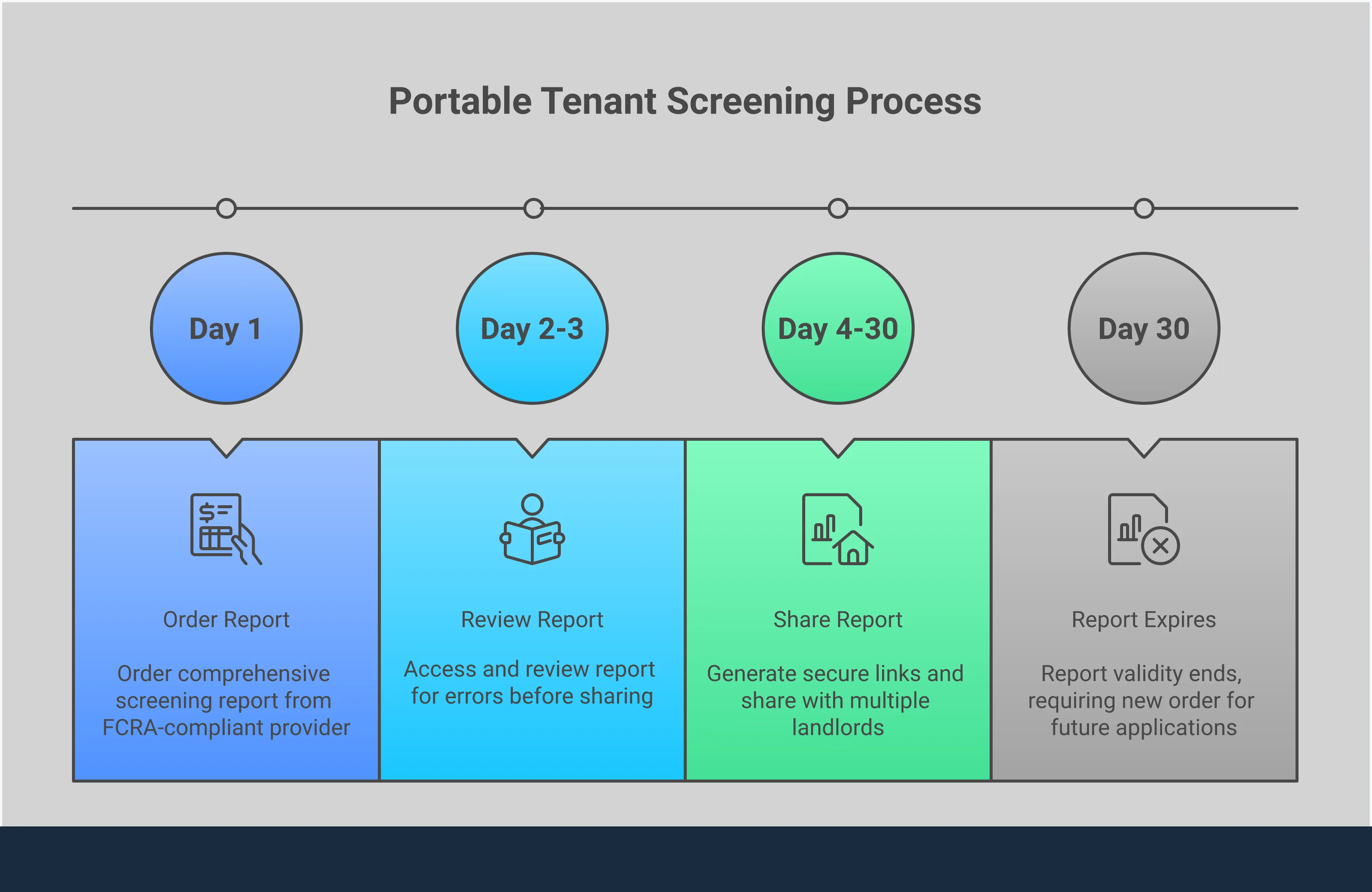
A portable tenant screening report flips the script. You, the renter, order your own report and pay for it just once. You can then share that same secure report with multiple landlords for a set period, usually 30 days. This saves you a significant amount of money and time. It also gives you transparency and control over your personal data, allowing you to see exactly what landlords see and even revoke access when you’re done.
Picking a rental screening service can feel like a big decision, whether you're a landlord trying to find the right tenant or a renter navigating the application process. The right service offers more than just a background check; it provides peace of mind, security, and efficiency for everyone involved. It’s about finding a partner that delivers accurate, comprehensive information while respecting privacy and saving you time and money. The key is to look for a service that is transparent, compliant with all relevant laws, and easy for both parties to use. A great screening service streamlines the entire rental journey, making it smoother and more secure from start to finish.
A truly effective screening service goes beyond a simple credit score. You need a complete picture to make an informed decision. Look for a service that provides a comprehensive report including a credit report, nationwide criminal and eviction histories, and income verification. For landlords, this detailed information is essential for finding reliable tenants who have a history of paying on time and taking care of a property. A good report should summarize an applicant's rental history, highlighting their reliability and compliance with past lease agreements. This helps you identify responsible tenants and reduce the risk of property damage or missed rent payments down the line.
Accuracy is everything when it comes to screening reports. An error on a report can lead to a great tenant being overlooked or a landlord making a decision based on faulty information. That’s why it’s so important to choose a service that prioritizes data verification and security. As a renter, you should always review your own screening report before you start applying to apartments. This gives you a chance to spot and correct any inaccuracies. Services that give you control over your own data offer an extra layer of security and transparency, ensuring your sensitive information is protected and only shared when you authorize it.
The cost of rental applications can add up quickly, especially for renters in a competitive market. Traditional screening services often charge a fee for every single application, which can become a significant financial burden. A more modern and cost-effective approach is the portable screening report. With a Portable Tenant Screening Report (PTSR), you pay one fee for a comprehensive report that you can reuse with multiple landlords. This model saves renters money and streamlines the process for landlords, who receive a verified report instantly. In states with portable screening laws, landlords generally cannot charge you additional fees if you provide a valid, recent report, making it a smart financial choice.
A thorough rental screening report isn't just a hurdle to jump through; it’s a tool that creates a smoother, more transparent experience for everyone involved. When done right, it builds a foundation of trust from the very beginning, benefiting both the person renting the home and the person who owns it. This process helps ensure landlords find reliable tenants while empowering renters with control over their own information, making the entire rental journey more efficient and fair for both sides.
As a landlord, your property is one of your biggest assets, and protecting it is your top priority. A comprehensive screening report is your best tool for making informed decisions. Instead of relying on a gut feeling, you get a clear, detailed picture of a prospective tenant's background, including their credit history, eviction records, and criminal history. This data allows you to assess risk accurately and choose tenants who are likely to pay rent on time and take care of your property. By using a reliable screening service, you can confidently fill your vacancies with qualified renters, minimizing the chances of future complications and creating a more stable, positive rental business.
If you've ever been on the apartment hunt, you know how quickly application fees can add up. In a competitive market, you might apply for several places at once, paying a separate fee for each background check. This is where portable screening reports change the game. Instead of paying over and over, you pay once for a comprehensive report that you can share with multiple landlords for up to 30 days. This approach not only saves you a significant amount of money but also simplifies the entire application process. You can apply for more properties you love without worrying about your budget, making your search less stressful and much more efficient.
The reusability of a portable tenant screening report (PTSR) is a major win for both sides. For renters, the value is clear: you pay a single fee for a report that’s valid for 30 days. You can reuse your verified report for every application within that window, which means no surprise costs or redundant paperwork. For landlords, this efficiency is just as valuable. You receive a complete, pre-verified report directly from the applicant, which speeds up your review process considerably. There’s no waiting around for a new background check to process. This allows you to make faster decisions and fill your vacancies sooner, reducing the time your property sits empty.
In an age where data privacy is paramount, portable screening reports put you, the renter, back in the driver's seat. You get to see your report before any landlord does, giving you the chance to review it for accuracy and address any potential errors. You have complete control over who sees your sensitive information and can even revoke access instantly. This transparency builds trust and helps you present yourself fairly. For landlords, receiving a tenant-provided report offers confidence that the information is accurate and has been reviewed by the applicant. It creates a more open and honest application experience, ensuring both parties have the information they need to move forward.
When a landlord reviews your rental application, they’re trying to get a clear picture of you as a potential tenant. They want to know if you’ll pay rent on time, take care of the property, and be a good neighbor. A screening report gathers key pieces of your personal history to help them make that decision. Understanding what’s in this report and why it matters can make your apartment hunt much smoother. It’s not just about one single number; it’s about the complete story your information tells.
Your credit history is like a financial report card, and landlords use it to gauge your reliability. They aren't just looking at your credit score; they’re also interested in the details. A report from a trusted source like Experian will show your payment history, highlighting if you consistently pay bills on time. Landlords pay close attention to late payments on rent or utilities, as well as any accounts in collections or past bankruptcies. A strong record of meeting your financial obligations suggests you’re likely to be a dependable tenant who pays rent on time, which is exactly what every landlord hopes for.
Landlords need to be confident that you can comfortably afford the rent each month. To do this, they verify your employment and income. A common guideline they use is that your gross monthly income should be at least two-and-a-half to three times the monthly rent. This isn't a strict rule, but it’s a quick way for them to assess financial stability. You’ll typically be asked to provide recent pay stubs, an offer letter for a new job, or bank statements to prove your income. Having a steady, verifiable source of income is one of the most important factors in getting your application approved. Portable Tenant makes this easy by including income verification directly in your report.
Your past rental experiences are often the best predictor of your future behavior as a tenant. Landlords will look closely at your rental history to see if you have a track record of being a responsible renter. This includes checking for any prior evictions, which are a major red flag. An eviction filing, even one that didn’t result in you moving out, can make it much harder to find housing. The report will also show your previous addresses and may include feedback from former landlords about whether you paid rent on time, maintained the property, and followed the lease terms. A positive rental history can significantly strengthen your application.
A criminal background check is a standard part of the screening process, used to ensure the safety and security of the property and its residents. Landlords are typically looking for serious convictions that could pose a risk to the community, such as violent crimes or drug manufacturing. It’s important to know that there are rules about how landlords can use this information. For example, under the Fair Housing Act, a landlord can’t have a blanket policy of denying anyone with a criminal record. They must consider the nature of the crime, how long ago it occurred, and whether it’s relevant to your ability to be a good tenant.
If you’re worried that something on your record might cause a problem, don’t panic. There are proactive steps you can take to strengthen your application. First, get a copy of your report ahead of time to check for any errors. If you find something that’s incorrect, dispute it immediately. If the negative marks are accurate, be honest with the potential landlord. You can write a brief letter explaining the circumstances, especially if your situation has since improved. Many landlords will appreciate the transparency and may be willing to work with you if you can provide excellent references, show proof of stable income, or offer a larger security deposit. Taking control of your information with a portable report lets you present your full story confidently.
Navigating the legal landscape of tenant screening can feel a bit like walking a tightrope, but it doesn't have to be intimidating. For both landlords and renters, understanding the rules is key to a fair and smooth process. These laws are in place to protect everyone involved, ensuring that screening is done accurately, transparently, and without discrimination. Let’s break down the essential legal aspects you need to know.
The Fair Credit Reporting Act, or FCRA, is the federal law that sets the ground rules for background checks. Think of it as the rulebook for how consumer information—including the details in a rental screening report—is collected and used. Under the FCRA, these reports must be accurate and up-to-date. Landlords have a responsibility to follow specific procedures, like getting your written consent before pulling your information. If a landlord decides not to rent to you based on something in the report, they are required to give you an "adverse action notice," which includes a copy of the report and information on how to dispute any errors. This ensures you have a chance to see what they see and correct any mistakes.
While the FCRA provides a federal baseline, many states have their own specific laws that add another layer of regulation. A growing number of states, including Colorado, Washington, and Maryland, have passed portable tenant screening laws. For example, Colorado's "Rental Application Fairness Act" requires most landlords to accept a reusable screening report that a renter provides, as long as it meets certain criteria. This is a game-changer for renters, saving you from paying separate application fees for every apartment you're interested in. These laws are designed to make the rental process more affordable and efficient, and services like Portable Tenant are built to meet these new legal standards.
Your personal information is exactly that—personal. A landlord can't run a background check on you without your explicit permission. This is a fundamental right protected by law. The modern approach with a Portable Tenant Screening Report (PTSR) puts you firmly in the driver's seat. Instead of a landlord pulling your data, you order your own report and then choose which landlords to share it with. This renter-controlled process means you know exactly who is seeing your information and when. Even better, you can revoke access at any time, giving you complete control and peace of mind throughout your housing search.
The federal Fair Housing Act is a landmark piece of legislation that prohibits discrimination in housing based on race, color, national origin, religion, sex, familial status, or disability. When it comes to screening reports, this means landlords must apply their rental criteria equally to all applicants. For instance, a landlord can't have a blanket policy of rejecting anyone with a criminal record. Instead, they must conduct an individual assessment, considering factors like the nature of the crime, how much time has passed, and whether it's relevant to your ability to be a good tenant. Having a consistent and fair screening process is not just good practice—it's the law.
What if my credit isn't perfect? Can I still get approved for an apartment? A less-than-perfect credit score doesn't automatically disqualify you from renting. Landlords look at your entire financial picture, not just one number. They'll review your full credit history to see if you have a pattern of paying rent and utilities on time. If you have some blemishes, you can strengthen your application in other ways. Consider writing a brief, honest letter to the landlord explaining your situation, offering a larger security deposit, or providing strong references from previous landlords to show you're a reliable tenant.
Do landlords have to accept my portable screening report? This often depends on where you live. In states with portable tenant screening laws, like Colorado and Washington, landlords are generally required to accept a valid report that you provide, which saves you from paying multiple application fees. In other areas, it's at the landlord's discretion. However, most landlords appreciate the efficiency of receiving a comprehensive, pre-verified report instantly, as it speeds up their decision-making process and helps them fill vacancies faster.
As a landlord, how do I know a report provided by a tenant is legitimate and hasn't been altered? This is a valid concern, and reputable services have built-in security to address it. When a renter shares a report from a service like Portable Tenant, you receive a secure, time-stamped link directly from the source. You aren't just getting a PDF that could be edited. This secure access ensures the information is authentic, accurate, and comes directly from the screening provider, giving you the same level of confidence as if you had ordered it yourself.
What happens to my personal information after I share my report? With a portable report, you remain in complete control of your data. You grant temporary access to a specific landlord, and you can see exactly who has viewed your information and when. Once you've found a place or the 30-day sharing window closes, you can revoke access instantly. This prevents your sensitive information from being stored indefinitely by multiple property managers, giving you security and peace of mind.
How can I prepare for the screening process if I know I have a few issues on my record? The best strategy is to be proactive and transparent. Start by ordering your own screening report so you know exactly what a landlord will see. This gives you a chance to spot and dispute any errors. If the negative information is accurate, prepare a brief explanation. Being upfront about a past eviction or a period of financial difficulty, and showing how your situation has improved, can build trust with a potential landlord and demonstrate your responsibility.