
Have you ever worried that a mistake you don't even know about could cost you a great apartment? Tenant screening reports are incredibly detailed, but they aren't always perfect. An error—like a payment incorrectly marked as late or an account that isn’t even yours—can lead to an instant rejection. This is precisely why running a tenant screening report on myself is such a crucial step. It’s a personal quality check that lets you find and dispute inaccuracies before a landlord ever sees them. It ensures the story your report tells is the true one, giving you a fair shot in your housing search.
Applying for a new rental can feel like you’re putting your life under a microscope. Landlords look at your credit, rental history, and more to decide if you’re the right fit. Instead of waiting to see what they find, why not get a sneak peek? Running a tenant screening report on yourself is one of the smartest moves you can make in your apartment search. It puts you in the driver's seat, allowing you to spot and fix potential issues before a landlord ever sees them. Think of it as proofreading your resume before a big job interview—it gives you the chance to present the best version of yourself and walk into the application process with confidence.
So, what exactly are landlords looking at? A tenant screening report is more than just a credit score. It’s a comprehensive look at your history as a renter and consumer. Most reports include a few key sections. Your credit report shows your financial habits, including payment history and any outstanding debts. A background check scans for criminal records, while an employment check confirms you have a steady income to cover the rent. Finally, your rental history details your past addresses and flags any prior evictions. Seeing all these pieces together gives you a complete picture of what a potential landlord will review when considering your application.
Getting your own screening report gives you a major advantage. First, you can catch and correct errors. Reports aren't always perfect, and an inaccuracy—like a debt that’s already been paid off—could cost you a great apartment. By reviewing your report first, you have time to dispute any mistakes. Second, it helps you prepare. If there’s a legitimate blemish on your record, like a late payment from a few years ago, you can prepare a thoughtful explanation for it. This shows landlords that you’re responsible and transparent. Having your report ready to go also speeds up the application process, showing you’re an organized and serious applicant.
Let's clear up a few common misconceptions about tenant screening. The biggest one? Many people worry that checking their own report will hurt their credit score. The good news is that it won't. When you pull your own report, it’s considered a "soft inquiry," which has no impact on your score. Another myth is that a screening report is just a simple credit check. In reality, it’s much more detailed, including your rental and criminal history. This is why seeing the full report is so important. Finally, some renters feel powerless if they find negative information, but you always have options, from disputing errors to providing context for past issues.
Alright, so you’re ready to take control of your rental search. Getting your own tenant screening report is a smart move that puts you in the driver's seat. Instead of waiting for a potential landlord to run your information, you can walk in with a complete, professional report ready to go. This shows you’re organized, serious, and have nothing to hide. It also gives you a chance to review your own information first, so you can address any potential issues head-on.
There are a few different ways to get your hands on a report. You can use a service that specializes in creating a single, reusable report you can share with multiple landlords - a real game-changer for saving time and money. You also have the right to access free reports from credit bureaus, which cover a key part of the screening process. And, of course, there are other paid services that offer comprehensive checks. Let’s walk through each option so you can decide which path is the best fit for you.
One of the smartest ways to handle your rental applications is by using a portable tenant screening report. Think of it as a one-and-done solution. Instead of paying a separate application fee to every single landlord, you pay once for a comprehensive report that you can share as many times as you need. This report includes everything landlords look for: your credit history, a nationwide criminal background check, and any past eviction records.
Services like ours at Portable Tenant are designed to give you full control. You can see exactly how our process works and share your secure report with a click. In states like Colorado and Illinois, landlords are legally required to accept these reports, which means you can avoid getting nickel-and-dimed by endless application fees. Landlords in states like California, Washington, and Maryland have to advertise it first that they are accepting PTSRs so always ask if the landlord accepts it.
You have a right to see what’s on your record. Thanks to the Fair Credit Reporting Act (FCRA), you’re entitled to a free credit report from each of the three major credit bureaus—Experian, Equifax, and TransUnion—once every year. You can request these directly from the official, government-authorized website. While this isn’t a full screening report (it won’t include criminal or eviction history), your credit history is a huge piece of the puzzle for landlords.
Getting your free report is a great first step to see where you stand. It allows you to check for errors and understand what a landlord will see when they look into your financial history. It’s a no-cost way to prepare for your rental search.
Beyond portable reports, other companies offer tenant screening services. You’ve probably heard of services like TransUnion SmartMove, which are often marketed directly to landlords but can be used by renters to run a report on themselves. These services typically provide detailed reports covering credit, criminal, and eviction histories for a one-time fee.
While they don’t always offer the reusability that saves you money in the long run, they are a valid option for getting a comprehensive look at your background. If you’re only planning to apply to one or two places, this could be a straightforward way to get the information you need before you submit an application.
No matter which service you choose, you’ll need to have some personal information ready to verify your identity and pull your records. Taking a few minutes to gather everything beforehand will make the process much smoother.
Here’s a quick checklist of what to have on hand:
Having this information organized and ready will help you get your report quickly so you can focus on finding your next home.
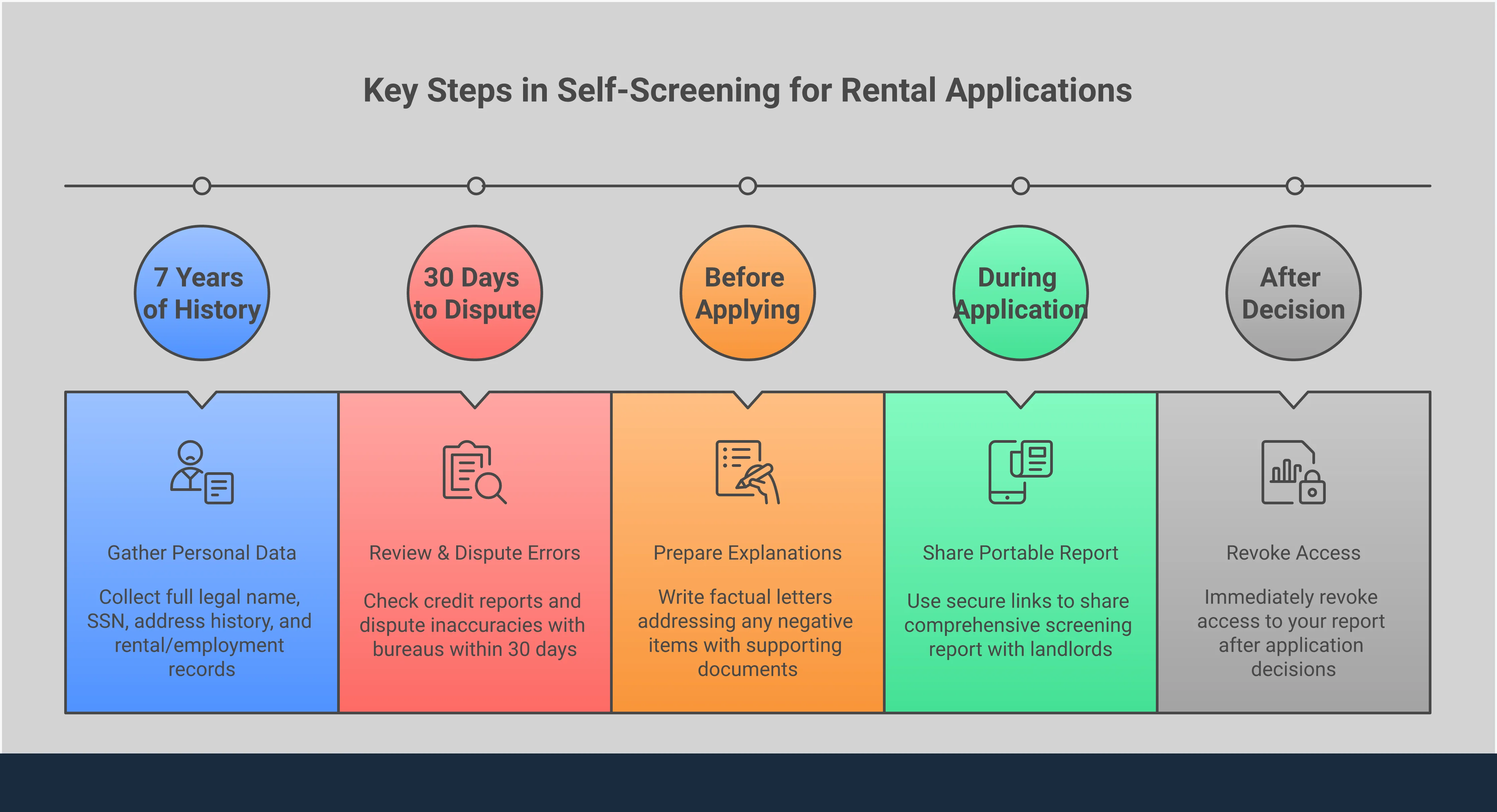
Finding a mistake on your tenant screening report can be stressful, but it’s not a dead end. This is exactly why you run the report on yourself first—to catch and fix problems before a landlord sees them. Whether it’s a debt that isn’t yours or a simple typo, you have the power to correct the record. The key is to act quickly and methodically. By tackling these issues head-on, you’re taking control of your rental journey and setting yourself up for a much smoother application process.
If you spot something that’s wrong, your first move is to contact the company that issued the report. Under the Fair Credit Reporting Act (FCRA), you have the right to dispute any information you believe is inaccurate. The screening service or credit bureau must investigate your claim, usually within 30 days. When you file a dispute, be clear about the error and provide any proof you have. If the agency doesn't correct the mistake, the FCRA allows you to add a brief written statement to your report explaining your side of the story.
What if the information is negative but true, like a past eviction? Don't try to hide it. Landlords appreciate honesty, and a background check will likely uncover it anyway. Your best strategy is to get ahead of the story. Be ready to explain the situation honestly on your application. Prepare a short, factual statement explaining the circumstances, what you learned, and the steps you’ve taken to ensure it won’t happen again. Owning your history shows maturity and responsibility, which can go a long way in building trust with a potential landlord.
Whether you’re disputing an error or explaining a past issue, documentation is your best friend. Before you start, get your paperwork in order. Make a list of all your past addresses, how long you lived there, and contact information for your previous landlords. If you’re disputing a payment issue, find bank statements or receipts that prove you paid on time. If you’re explaining an eviction, have any relevant court documents on hand. Having this information organized and ready to go will make the process much smoother and show that you’re a prepared and responsible applicant.
Patience is key when correcting official records. After you file a dispute, the reporting agency generally has 30 days to investigate and respond. During this time, keep a detailed record of every email, phone call, and letter. Note the date, the person you spoke with, and what was discussed. You have the right to request a copy of your own records to check for mistakes, so don't hesitate to do so. Follow up politely but persistently if you don’t hear back within the expected timeframe. Staying organized will help you get the resolution you need.
Thinking about the cost of a tenant screening report can feel like just another expense in a long list of moving costs. But it’s helpful to reframe it: this isn't just a fee, it's a strategic investment in your housing search. The price can range from $35 to around $60, depending on the level of detail the landlord needs and whether the report is re-usable (portable). Full portable report will run around $60. Understanding what you get for your money helps you choose the right option and approach your applications with total confidence.
Running a screening report on yourself is one of the smartest moves you can make before you even start touring apartments. It gives you a sneak peek into what landlords will see, allowing you to spot and correct any errors that could sink your application. Think of it as proofreading your resume before a big job interview. When you understand the process, you can fix inaccuracies, prepare explanations for any dings on your record, and show up to a viewing as a prepared, transparent applicant. This small upfront cost can save you from the stress and disappointment of a surprise rejection.
You have a few options when it comes to getting your report. Thanks to the Fair Credit Reporting Act (FCRA), you’re entitled to a free credit report from each of the three major bureaus (Experian, TransUnion, and Equifax) every year. These are great for checking your credit score and history. However, they don't include everything a landlord looks for, like eviction or criminal history. Paid services bundle all of this information—credit, criminal, and eviction records—into one comprehensive report. This makes it much easier for both you and the landlord to get a complete picture. You can learn more about your consumer protections directly from the Consumer Financial Protection Bureau.
So, should you pay for a report? If you're applying in a competitive market or want to present the most professional application possible, the answer is usually yes. A comprehensive, paid report shows landlords you're serious and have nothing to hide. For them, a thorough screening helps them find reliable tenants and avoid costly problems down the line. A service that offers a reusable report gives you the best of both worlds. You pay a single, transparent screening fee and can share your verified report with multiple landlords, saving you time and money on application fees. It’s an efficient way to manage your search.
Running your own tenant screening report is a powerful first move. It gives you a clear picture of what landlords will see and puts you in the driver's seat. Instead of waiting to be surprised, you can get ahead of any potential issues and present the strongest application possible. Think of it as proofreading your resume before a big job interview. A little preparation can make all the difference in landing the home you want.
Your credit report is a major piece of your rental application puzzle. Landlords look at it to get a sense of your financial responsibility. Before you even start applying, get a copy of your report and check it for accuracy. You might find errors like accounts that aren't yours or payments incorrectly marked as late. If you spot a mistake, you have the right to dispute the information with the credit bureaus. Correcting these errors can improve your score and your chances. Even if everything is accurate, taking steps to pay down balances and ensure all your payments are on time can show landlords you’re a reliable choice.
A great track record as a renter is one of your best assets. Your screening report will show your rental history, but you can make it even stronger by gathering your own documentation. Reach out to previous landlords who can speak to your reliability and ask if you can list them as a reference. It’s also smart to keep your own records, like copies of rent checks or digital payment confirmations, to prove your history of on-time payments. Having this information ready to go shows potential landlords that you’re organized, responsible, and serious about being a great tenant. It’s your story to tell, so make sure you have the details to back it up.
Life happens, and sometimes our reports reflect that. Whether it’s a past eviction, a low credit score from a period of unemployment, or a criminal record, it’s always better to address it head-on. Hiding from it won’t work, but explaining it can. If you know there’s a red flag on your report, prepare a brief, honest letter of explanation to submit with your application. Don’t make excuses, but do provide context. Explain the situation, what you learned from it, and the steps you’ve taken to get back on track. This kind of transparency shows maturity and can build trust with a landlord, turning a potential rejection into an opportunity.
Navigating the rental market can feel like you’re constantly trying to prove yourself. But it’s important to remember that the screening process is a two-way street, and you have rights designed to protect you. Understanding these rights helps you spot red flags, avoid unfair practices, and approach your apartment search with confidence. From federal laws that ensure accuracy to local rules about fees, being informed is your best tool for a smooth and fair application experience.
Think of the Fair Credit Reporting Act (FCRA) as your personal data’s bodyguard. This federal law ensures that the information consumer reporting agencies collect about you is accurate and handled with care. When it comes to tenant screening, the FCRA gives you several key protections. You have the right to know what’s in your report and to dispute any information you believe is inaccurate.
Most importantly, if a landlord decides to deny your application based on something in your screening report, they can’t just ghost you. They are legally required to give you an "adverse action notice." This notice must state the reason for the denial and provide the name and contact information of the screening company they used. This gives you the power to get a copy of the report and correct any errors you find. You can learn more about your rights directly from the Federal Trade Commission.
Application fees can add up quickly, turning an apartment hunt into a major expense. The good news is that many states have put rules in place to keep these costs in check. For example, some states don't allow application fees at all, while others cap them at a specific amount, like $20. Other states, including Washington and Colorado, only permit landlords to charge for the actual cost of the screening itself.
Because these regulations vary so much, it’s a smart move to look up the specific landlord-tenant laws in your city and state. This is also where a portable screening report becomes a game-changer. By using a single, reusable report that you can share with multiple landlords, you avoid paying separate screening fees for every application. This approach, which is central to how Portable Tenant works, saves you money and simplifies the entire process.
Sharing your own tenant screening report puts you in the driver's seat. Instead of waiting to see what a landlord might find, you can review your information first. This gives you a chance to make sure everything is accurate and up-to-date before you even apply. If you find a mistake, you can start the dispute process. If there’s a negative but accurate item, you can prepare a thoughtful explanation to share with the landlord.
When you use a service like Portable Tenant, you’re not just emailing a PDF. You’re providing secure, controlled access to your information. You decide who sees your report and for how long, and you can revoke access at any time. This method is not only safer for you but also provides landlords with a compliant and verified report they can trust, making it a win-win for everyone involved.
Will checking my own tenant screening report lower my credit score? Not at all. When you pull your own report, it’s considered a "soft inquiry," which has no effect on your credit score. A "hard inquiry," which can temporarily dip your score, only happens when a lender or landlord pulls your credit as part of an official application for credit or housing. Checking it yourself is a completely safe way to see what they'll see.
What's the difference between a portable report and the free annual credit report? Your free annual credit report is an excellent tool for reviewing your financial history, but it’s just one piece of the puzzle. A comprehensive screening report, like the kind you get with a portable service, includes the other critical information landlords need to see, such as nationwide criminal background checks and eviction histories. It packages everything together into a single, verified report.
What should I do if a landlord won't accept my portable report? First, it’s helpful to know the law in your area. In states like Colorado, Washington, and Illinois, landlords are required to accept portable reports. If you're elsewhere, you can explain that your report is from a trusted, third-party source and provides all the same information they would get themselves. Ultimately, some landlords have rigid processes, but presenting a complete, professional report upfront often shows you’re a serious and organized applicant.
I found a mistake on my report. How long will it take to get it fixed? Once you file a dispute with the reporting agency, they generally have 30 days to investigate and resolve the issue under the Fair Credit Reporting Act (FCRA). This is why it’s so important to review your report well before you start seriously applying for places. Giving yourself that buffer allows time for any corrections to be made so you can put your best foot forward.
How do I know my sensitive information is secure when I share a report? Using a professional portable screening service is far more secure than emailing sensitive documents. These platforms use bank-level security to protect your data. Instead of sending an attachment, you share a secure link with a potential landlord. This gives you complete control over who views your information and for how long, and you can revoke access at any time.