
The traditional rental application process can be a headache for everyone involved. Landlords spend time and money screening multiple applicants for a single unit, while renters pay repeated fees for reports that say the same thing. It doesn't have to be this complicated. Modern screening solutions are making the process more efficient, affordable, and transparent for both sides. By using a high-quality, reusable tenant background and credit report, you can streamline your workflow and create a better experience for potential tenants. In this article, we’ll compare different screening services, highlight common mistakes to avoid, and show you how to build a process that attracts the best applicants and fills your vacancies faster.
Think of a tenant screening report as your go-to tool for making confident leasing decisions. It’s a detailed look into a prospective renter's background that helps you verify they are reliable, financially stable, and a good fit for your property. When an applicant looks perfect on paper, a thorough screening report gives you the full picture, helping you spot potential red flags before you hand over the keys. It’s not about being invasive; it’s about being diligent and protecting your investment.
The process involves gathering key information to assess whether an applicant can meet their lease obligations. A comprehensive report gives you all the puzzle pieces—from credit history to income verification—so you can choose a responsible tenant who will care for your property and pay rent on time. By using a consistent and fair screening process for every applicant, you set a professional tone from the start and ensure you’re treating everyone equally. Modern services have streamlined this entire screening process, making it faster and easier for both you and your potential tenants.
A comprehensive tenant screening report is designed to give you a clear, multi-faceted view of an applicant. It typically includes four key components. First is the credit report, which details their financial history, including credit score, payment patterns, and outstanding debts. Next, you’ll see a nationwide criminal background check, which flags any relevant criminal history. The report also includes a rental and eviction history, showing you if the applicant has a record of being evicted from previous properties. Finally, it provides income and employment verification to confirm they have a stable source of income to cover the rent. Together, these pieces help you build a complete profile of your applicant.
Skipping the screening process is one of the biggest mistakes a landlord can make. It’s a critical step in property management that helps you avoid costly problems and future headaches. Even if an applicant comes highly recommended by someone you trust, it’s essential to run every potential tenant through the same screening process. This consistency is key to ensuring that only qualified candidates are approved, and it also helps you stay compliant with fair housing laws. By making screening a non-negotiable part of your application process, you protect your property, your finances, and the community you’re building for your other tenants. It’s a simple step that provides invaluable peace of mind for landlords.
When you receive a tenant screening report, you’re getting much more than a simple pass/fail grade. Think of it as a detailed profile that gives you a well-rounded view of your applicant. A comprehensive report pulls together several key pieces of information, allowing you to make a confident and informed decision about who you trust with your property. Tenant background checks provide you with the information you need to evaluate potential tenants and ensure they’re a good fit for your rental.
This isn’t about being nosy; it’s about responsible property management. A comprehensive screening helps ensure that an applicant can consistently pay rent, will take care of your property, and won’t pose a risk to the community. It’s your best tool for verifying the information on a rental application and spotting potential red flags before you hand over the keys. A thorough report looks at four main areas: financial health, criminal history, past evictions, and income stability. Each piece tells a part of the story, helping you understand an applicant’s track record and reliability. By looking at the complete picture, you can protect your investment and create a safe, stable environment for all your tenants. Let’s break down what you’ll find in each section.
This section gives you a snapshot of an applicant’s financial habits. A credit score offers a look into an applicant’s financial responsibility, showing how they’ve managed debt in the past. You’ll see their payment history on loans and credit cards, any outstanding debts, and public records like bankruptcies. This isn’t about judging someone’s spending habits, but about assessing risk. A consistent history of on-time payments is a strong indicator that they’ll also be diligent about paying rent. It helps you gauge their reliability and see if they are financially stable enough to handle their rental obligations without issue.
A criminal background check is a crucial step in protecting your property and your community. This part of the report searches national and local databases for any criminal convictions. The goal is to identify any history that might suggest a risk to the safety of other tenants or the property itself. It’s important to follow all Fair Housing Act guidelines when considering this information, ensuring you apply your criteria consistently to every applicant. A comprehensive screening helps you create a secure living environment for everyone involved, giving you and your other tenants peace of mind.
Past behavior is often the best predictor of future behavior, and that’s especially true when it comes to rental history. An eviction history search shows if an applicant has ever been legally removed from a property for violating their lease terms, such as non-payment of rent or causing significant damage. An eviction on someone’s record is a major red flag. A tenant background check helps landlords confirm if an applicant is a reliable tenant who respects their lease agreement. Reviewing this history is a fundamental step in finding someone who will be a good steward of your property.
Simply put, you need to know that your tenant can afford the rent. Employment and income verification confirms that an applicant has a stable source of income sufficient to cover their monthly payments. This process typically involves verifying their employer, job title, and salary. It’s a straightforward way to ensure they have the financial means to meet their obligations consistently. Most landlords look for an income-to-rent ratio of around 3:1, meaning the applicant’s gross income is at least three times the rent. This check provides a clear, objective measure of their ability to pay.
With so many screening services available, picking the right one can feel like a chore. The best choice really depends on your specific needs, your location, and the kind of experience you want to create for your applicants. Most services offer similar core reports, but they differ in their process, cost structure, and compliance features. Let's break down a few popular options to help you find the perfect fit for your rental business.
A Portable Tenant Screening Report, or PTSR, flips the traditional screening model on its head. Instead of you initiating and paying for a report on every single applicant, the renter purchases one comprehensive, reusable report and shares it with multiple landlords. This approach saves everyone time and money. Services like Portable Tenant provide FCRA-compliant reports powered by Experian that include credit, criminal, and eviction history. This model is especially useful in states like Colorado with laws that mandate the acceptance of PTSRs, ensuring you stay compliant while streamlining your application process and offering a friendlier experience for potential tenants.
SmartMove is a popular online service backed by TransUnion, one of the major credit bureaus. It's a more traditional, landlord-driven screening tool. You create an account and send an invitation to your applicant, who then fills out their information to authorize the check. SmartMove delivers credit, criminal, and eviction reports directly to you, giving you a detailed look at an applicant's history. Because the reports come straight from TransUnion, many landlords trust the accuracy of the data. It’s a solid choice if you prefer to manage and initiate the screening for each applicant yourself.
TenantBackgroundSearch is another online service that offers screening for landlords, property managers, and other businesses. It positions itself as a quick, straightforward, and affordable option. You can order different packages that include background checks and credit history reports to get the information you need on potential renters. Their platform is designed to be easy to use, allowing you to get the reports you need without much hassle. For landlords looking for a simple, pay-per-use service, TenantBackgroundSearch provides the essential checks to help you evaluate applicants effectively.
The right service for you depends on what you value most. If you’re managing multiple properties or are located in a state with portable screening laws, a PTSR can simplify your workflow and ensure compliance. For a complete picture, always opt for a service that provides credit reports, criminal records, and eviction history. Also, consider the applicant’s experience. A difficult or expensive application process can deter great tenants. Choosing a landlord-friendly service that is also considerate of the renter can give you a competitive edge and help you fill your vacancies faster.
Finding the right tenant feels great, but how you get there matters just as much. A solid screening process isn't just about ticking boxes; it's about creating a system that is fair, efficient, and legally sound. When you have clear, consistent steps, you protect yourself from potential legal issues and show applicants that you’re a professional and trustworthy landlord. It also helps you make confident decisions based on objective information rather than gut feelings. By following a few key best practices, you can streamline your workflow, attract great tenants, and start every new lease on the right foot.
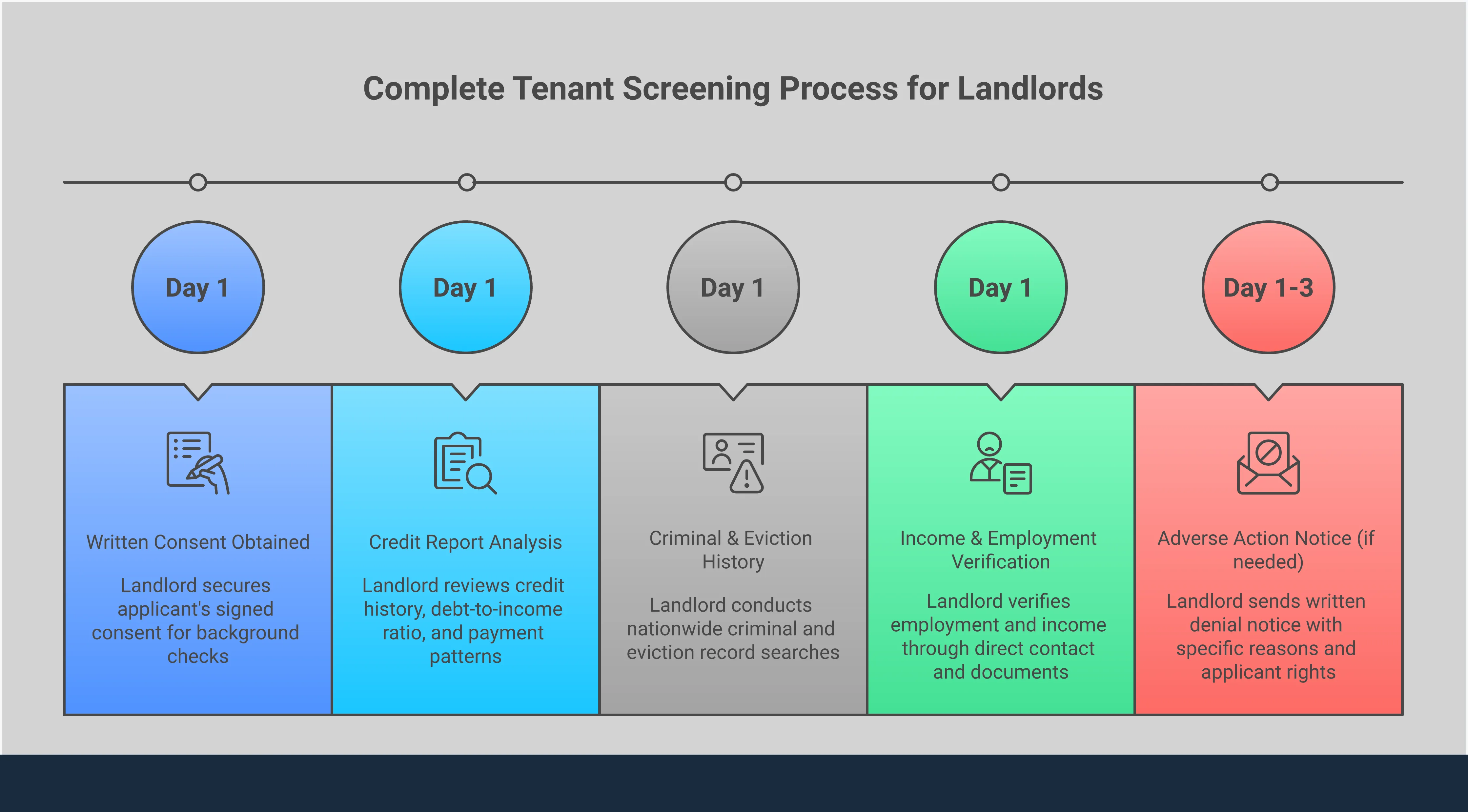
First things first: you always need an applicant's permission before you pull their background and credit information. This isn't just a courtesy—it's a legal requirement under the Fair Credit Reporting Act (FCRA). Most background check companies will take care of this step and record the consent. Getting written consent ensures that applicants know you'll be reviewing their personal history and have agreed to the process. This simple step builds trust from the very beginning and is your first line of defense in staying compliant. Make your consent form a standard part of your application packet so you never miss it. It’s a foundational piece of a fair and transparent screening process.
To treat every applicant fairly, you need to evaluate them using the same yardstick. Establishing a consistent application process is key to avoiding any claims of discrimination. This means you should decide on your rental criteria — like income requirements and what you look for in a rental history — before you even list your property. Then, apply those criteria uniformly to every single person who applies. A standardized process, supported by a comprehensive report, gives you all the pieces to the puzzle. It ensures you’re making an informed decision based on the same type of information for everyone, which is crucial for a smooth and equitable system.
Not all screening services are created equal. The partner you choose can make a huge difference in the quality and compliance of your screening reports. A reliable service will provide comprehensive, accurate information that is fully compliant with federal and state laws. Look for a partner that gives you a complete picture, from credit checks to eviction history, so you can make your decision with confidence. Using a reputable screening service like Portable Tenant ensures you have the detailed, legally sound information you need, helping you find the best fit for your property while staying on the right side of the law. It’s an investment in peace of mind for landlords.
Your screening criteria should be directly related to an applicant's ability to be a good tenant. This means focusing on things like paying rent on time and taking care of the property. It’s important to set these standards in advance and stick to them for every applicant. If you decide to reject someone based on information in their screening report, you are required to let them know. This is typically done through an adverse action notice. Following fair standards and procedures not only helps you comply with housing laws but also reinforces your reputation as a responsible landlord. The FTC offers excellent guidance on using consumer reports properly.
Running a background check is a standard part of the rental process, but it’s not a free-for-all. A web of federal, state, and local laws governs what you can look into and how you can use that information. Staying on the right side of these laws isn’t just about avoiding fines; it’s about running a fair, ethical, and professional business that treats all applicants with respect.
Think of these regulations as the rulebook for a fair game. They ensure that every applicant gets an equal shot and that your decisions are based on legitimate, business-related criteria. Getting familiar with the key players—like the Fair Credit Reporting Act and the Fair Housing Act—is non-negotiable. Using a compliant screening service can take a lot of the guesswork out of the process, but as the landlord, the ultimate responsibility for a lawful screening process rests on your shoulders. Let’s walk through the essential laws you need to know.
The Fair Credit Reporting Act, or FCRA, is a federal law that sets the rules for how consumer credit and background information is handled. For landlords, its most important rule is about permission. Following the Fair Credit Reporting Act, you must get written consent from an applicant before you run any kind of credit or background check. This isn’t a step you can skip.
This consent gives you the green light to review their report, but the FCRA also gives rights to the applicant. They have the right to know what information is in their file and to dispute any inaccuracies they find. It’s a system of checks and balances designed to make the screening process transparent and fair for everyone involved.
The Fair Housing Act (FHA) is a landmark piece of civil rights legislation that prohibits discrimination in housing-related transactions. As a landlord, this means you cannot make a decision based on an applicant's race, color, religion, national origin, sex, disability, or familial status. Your screening criteria must be objective and applied consistently to every single person who applies for your property.
For example, you can't deny an applicant just because they don't have a social security number. According to the Fair Housing Act, doing so could be seen as discriminatory, as it may disproportionately affect non-citizens. The key is to establish clear, business-related standards—like income requirements or credit history thresholds—and stick to them for every applicant, no exceptions.
While federal laws like the FCRA and FHA set the national standard, your compliance journey doesn’t end there. Many states and even individual cities have their own landlord-tenant laws that add another layer of rules you need to follow. These can dictate everything from the maximum application fee you can charge to how you’re allowed to consider an applicant’s criminal history.
For instance, staying compliant with California’s tenant screening laws is essential for landlords there to maintain fair and legal rental practices. The same goes for states like Colorado, Washington, and Illinois, which have specific rules around portable screening reports. Because these regulations can change, it’s crucial to stay informed about the laws in your specific area to ensure your process is always up to date.
What happens when you have to deny an applicant? If your decision was based, even in part, on information from their background or credit check, the FCRA requires you to take a specific step. You must provide the applicant with an adverse action notice. This applies whether you’re denying their application, requiring a co-signer, or charging a higher security deposit.
This notice is a formal communication that informs the applicant of your decision. It must include the name and contact information of the screening company you used, a statement that the screening company did not make the rental decision, and a notice of their right to obtain a free copy of their report and dispute its accuracy. Sending this notice is a legal requirement and a critical part of a transparent screening process.
A credit report can feel like a dense financial document, but it tells a crucial story about an applicant's reliability. Looking past the summary and understanding the details helps you make a fair and informed decision for your property. It’s not just about finding a tenant who can pay rent, but one who has a history of meeting their financial obligations. A comprehensive report gives you the full picture, showing you patterns of behavior over time. By learning to read these reports effectively, you can better assess risk and choose tenants who are a great fit. Let's walk through the three key areas you should focus on: the credit score, payment history, and debt-to-income ratio.
A credit score offers a look into an applicant’s financial responsibility. Think of it as a quick summary of their credit report, condensed into a single number. Scores typically range from 300 to 850, and a higher score generally indicates a lower risk. While there are no hard-and-fast rules, you can use general ranges to guide your assessment. For example, scores above 700 are often considered good to excellent. However, a score is just a snapshot in time. It’s important to view it as one piece of the puzzle and consider it alongside the other details in the report to understand the full context of an applicant's financial health.
Payment history is a crucial component of a credit report, indicating whether the applicant has made payments on time, which can reflect their reliability as a tenant. This section shows you if there are patterns of late payments, accounts in collections, or major events like bankruptcies. One or two late payments from a few years ago might not be a major concern, especially if the applicant has been on time with everything since. What you’re really looking for are recent or recurring issues that suggest a current struggle to meet financial commitments. A consistent record of on-time payments is one of the strongest indicators that an applicant will handle their rent responsibly.
Understanding an applicant's debt-to-income (DTI) ratio is essential, as it helps you assess whether they can truly afford the rent. This figure compares their total monthly debt payments (like car loans, student loans, and credit card payments) to their gross monthly income. A high DTI suggests that a large portion of their income is already committed to other debts, leaving less room for rent and other living expenses. While every situation is different, many landlords look for a DTI below 43%. This calculation gives you a more realistic picture of an applicant’s financial capacity than income alone.
A screening report is more than just a pass/fail document; it’s a detailed story about a potential tenant. Learning to read between the lines helps you spot potential issues before they become problems. While one small issue might not be a dealbreaker, a pattern of red flags can signal that an applicant isn’t the right fit for your property. Here’s what to keep an eye on.
A healthy income is great, but it doesn't tell the whole story about an applicant's ability to pay rent on time. A comprehensive report gives you a much clearer picture. Look for a history of late payments, accounts in collections, or a high debt-to-income ratio, as these can indicate financial stress. While a low credit score can be a concern, it's important to consider the context. Someone building their credit is different from someone with a long history of missed payments. Relying only on a credit score and income can lead you to overlook other factors that show a tenant's financial reliability.
An applicant's past rental behavior is often the best predictor of their future actions. A major red flag is a previous eviction, as this indicates a serious breach of a past lease agreement. You should also look for frequent, unexplained moves or gaps in their rental history, which could be hiding a negative experience. It’s crucial to verify this information by contacting previous landlords. Even if an applicant comes highly recommended, you should still run them through the same consistent screening process to ensure fairness and protect your investment. Skipping this step is a common mistake.
Verifying an applicant's employment and income is a critical step that confirms they can afford the rent. Be wary of information that doesn’t add up. For example, if you can't reach the employer listed or if the income details on their pay stubs don't match the application, it’s worth a closer look. Unstable employment history, like frequent job hopping, can also be a concern. A proper background check gives you all the puzzle pieces, and income verification is a big one. It provides the confidence you need to move forward with a lease agreement.
Even the most experienced landlords can make missteps during the tenant screening process. The good news is that most of these errors are entirely preventable. By being aware of common pitfalls, you can create a smoother, fairer, and more effective screening system that protects your investment and helps you find great tenants.
It can be tempting to skip the formal screening process, especially when an applicant seems perfect on paper or you’re in a hurry to fill a vacancy. But this is one of the biggest risks you can take as a landlord. Without a thorough background check, you’re essentially guessing about an applicant's financial responsibility and rental history. This can lead to late rent payments, property damage, or even costly evictions down the road. A consistent, professional screening process is your best defense. Using a streamlined service makes it easy to get the information you need, so there’s no reason to cut corners and leave your property vulnerable.
A high credit score is a good sign, but it doesn’t tell the whole story. A common mistake is placing too much emphasis on this single number while ignoring other critical information. A comprehensive report gives you a much clearer picture. For example, someone with a lower score due to past medical bills or student loans might still have a perfect rental history and a stable income. Conversely, a person with a high score could have a recent eviction or a criminal record that you’d otherwise miss. Always review the full report, including their eviction history, income verification, and criminal background, to make a well-rounded decision.
Clear and consistent communication is key to a smooth and fair application process. From the very beginning, let every applicant know what your screening criteria are and what steps are involved. When you’re consistent, you not only avoid misunderstandings but also ensure you’re treating every applicant equally, which is essential for compliance. Failing to communicate clearly can make applicants feel like they’re in the dark and can lead to frustration. A standardized process, where every applicant goes through the same steps and receives the same information, helps set clear expectations and builds a foundation of trust from the start.
Landlord-tenant laws can be complex and vary significantly from one place to another. While federal laws like the Fair Housing Act set a national standard, you also need to be an expert on your state and local regulations. Forgetting this step can lead to serious legal trouble. For instance, states like Colorado and Washington have specific rules about accepting a Portable Tenant Screening Report (PTSR). Staying informed about the laws in your area isn’t just good practice—it’s a fundamental part of being a responsible landlord. Always make sure your screening process is fully compliant to protect yourself and be fair to your applicants.
Having to deny a rental applicant is never an easy conversation, but it’s a necessary part of being a landlord. How you handle this discussion matters—not just for maintaining a professional reputation, but for staying compliant with the law. The key is to be direct, consistent, and transparent. By communicating clearly and respectfully, you can explain your decision in a way that minimizes confusion and potential disputes, ensuring the process is fair for everyone involved.
This isn't about being confrontational; it's about providing clarity. When an applicant understands why they weren't approved, they can take steps to address any issues for their next application. A straightforward approach protects you legally and treats every applicant with the dignity they deserve, even when you have to deliver bad news.
If you decide not to rent to someone based on information in their screening report, you are legally required to send them an adverse action notice. This isn’t just a courtesy—it’s a mandate under the Fair Credit Reporting Act (FCRA). The notice must clearly state the reason for the denial, like information from their credit history or a past eviction. It also needs to include the name and contact information of the screening company that provided the report and clarify that the screening company did not make the rental decision. This formal step ensures applicants know their rights and can dispute any inaccuracies in their report.
While the adverse action notice covers the legal bases, offering a simple summary of your findings can provide helpful context. A comprehensive screening report gives you a full picture of an applicant, and sharing the specific information that influenced your decision helps them understand where they fell short of your criteria. For example, you could mention that their reported income didn't meet your required threshold or that their credit report showed a pattern of late payments. This transparency can empower them to correct errors or improve their standing for future applications, especially when using a portable tenant screening report that they can update and reuse.
The best time to explain your screening process is before you even accept an application. Being upfront about your rental criteria—such as minimum credit scores, income-to-rent ratios, and policies on criminal history—sets clear expectations for everyone. When you have to deny an applicant, you can refer back to these pre-established standards. This demonstrates that your decision was objective and based on a consistent process applied to all applicants. It reinforces that you are operating fairly and in compliance with the Fair Housing Act, which prohibits discrimination. This proactive communication builds trust and shows that you run a professional operation.
It’s natural for an applicant to have questions or feel disappointed after being denied. Your job is to handle these interactions with professionalism and patience. Listen to their concerns, but stick to the facts and the criteria you’ve established. Avoid getting drawn into an argument or a debate about their personal circumstances. If they believe the information in their report is inaccurate, direct them to the screening company to file a dispute. The adverse action notice you sent provides all the necessary contact information for them to do so. By remaining calm and respectful, you can manage a difficult conversation while protecting your business.
What if an applicant has a great income but a low credit score? This is a common situation, and it’s a great example of why you need to look at the entire report, not just one number. A high income shows they can afford the rent, but their credit history tells the story of their financial habits. Look deeper into their credit report to see what’s causing the low score. Is it from past medical debt or student loans, or is it a recent pattern of missed payments on credit cards? A consistent rental history with positive landlord references can often outweigh a less-than-perfect credit score.
How do I create fair screening criteria for all my applicants? The best way to ensure fairness is to decide on your rental criteria before you even list your property. Your standards should be objective and directly related to an applicant's ability to be a good tenant. Focus on things like a minimum income-to-rent ratio, a consistent history of on-time payments, and a clean rental history. Once you set these rules, apply them uniformly to every single person who applies. This consistency is your best tool for complying with fair housing laws and making sound business decisions.
Do I really need to send an adverse action notice if I just tell the applicant they were denied? Yes, absolutely. If your decision to deny an applicant was based on anything you found in their screening report, a verbal notice isn't enough. The Fair Credit Reporting Act (FCRA) legally requires you to provide a written adverse action notice. This formal letter informs the applicant of the decision, provides the contact information for the screening agency you used, and lets them know they have the right to see their report and dispute any errors. It’s a crucial step in maintaining a transparent and legally compliant process.
An applicant offered to pay extra rent upfront to skip the screening. Should I accept? You should politely decline this offer. While it might seem tempting, an offer to pay a large sum upfront is often a major red flag. It could mean the applicant is trying to hide something they know will appear on a background check, such as a prior eviction, a poor credit history, or a criminal record. Sticking to your standard screening process for every single applicant is the best way to protect your property and ensure you’re placing a reliable tenant.
Do I have to accept a portable screening report if an applicant provides one? This depends entirely on your location. A growing number of states, including Colorado, Washington, and Illinois, have laws that require landlords to accept a portable tenant screening report (PTSR) if an applicant provides one. These laws are designed to save renters money and streamline the application process. If you're in a state with these regulations, you must accept a valid report. It’s always a good idea to check your specific state and local laws to ensure you are fully compliant.