Handing over your Social Security number and other sensitive data to multiple strangers during an apartment search can feel unsettling. A Portable Tenant Screening Report (PTSR) fundamentally changes that dynamic by putting you in charge of your own information.
If you've ever applied for a rental, you know the drill: you find a place you love, fill out an application, and pay a fee for a background and credit check. A Portable Tenant Screening Report (PTSR) changes that. Think of it as your personal, reusable rental application packet. You order one comprehensive screening report for yourself and can then share it with multiple landlords for a set period, usually 30 days.
This puts you, the renter, in the driver's seat. Instead of landlords pulling your information each time, you provide them with a secure, verified report. It contains all the same information a landlord would look for in a traditional screening—credit history, criminal background, and eviction records—but you control who sees it and when. This approach not only saves you money on repeated application fees but also streamlines the entire process. You can learn more about how the process works and see how it simplifies your apartment search from start to finish. It’s a smarter, more efficient way to apply for your next home.
The biggest difference between a portable report and the traditional method comes down to who initiates the screening and who pays for it repeatedly. In a traditional screening, each landlord runs their own background check on you, and you pay a separate application fee every single time. You often don't even get to see the report they pull.
With a PTSR, you pay a one-time fee to a trusted provider to generate your own report. This single report can be used for multiple applications within its 30-day validity period. The information inside is just as thorough, including everything from income verification to eviction history. The key shift is that you own the report and control its distribution, making the process more transparent and cost-effective for you.
Portability is a huge win for everyone involved in the rental process. For renters, the most obvious benefit is saving money. In a competitive market, application fees can add up quickly, and a PTSR eliminates that recurring cost. It also speeds things up, allowing you to submit a complete application package on the spot. Plus, you have full transparency and control over your personal data.
For landlords, accepting PTSRs helps them streamline their screening process and fill vacancies faster. They receive a comprehensive, pre-verified report directly from the applicant, reducing their administrative workload. As more states adopt new rental laws that support or mandate the acceptance of PTSRs, using them also ensures landlords stay compliant and attract well-prepared applicants.
So, what exactly does a landlord see when you hand them a Portable Tenant Screening Report (PTSR)? Think of it as your complete rental resume, all bundled into one secure, verified document. It’s designed to give landlords a clear and comprehensive picture of you as a potential tenant, covering all the essential bases they need to make an informed decision. Unlike the old way of filling out separate applications and paying for multiple background checks for every apartment you like, a PTSR consolidates everything into a single, easy-to-read report that you control.
This isn't just a simple summary; it's a detailed look at your financial responsibility, background, and rental history, all pulled from trusted sources. Each section provides a different piece of the puzzle, helping landlords feel confident while giving you a fair and transparent way to present yourself. It puts you in the driver's seat of your rental search, saving you from application fee fatigue and giving you a professional edge. Let's walk through the five key components you'll find inside a sample report, so you know exactly what information you’re sharing and why it matters.

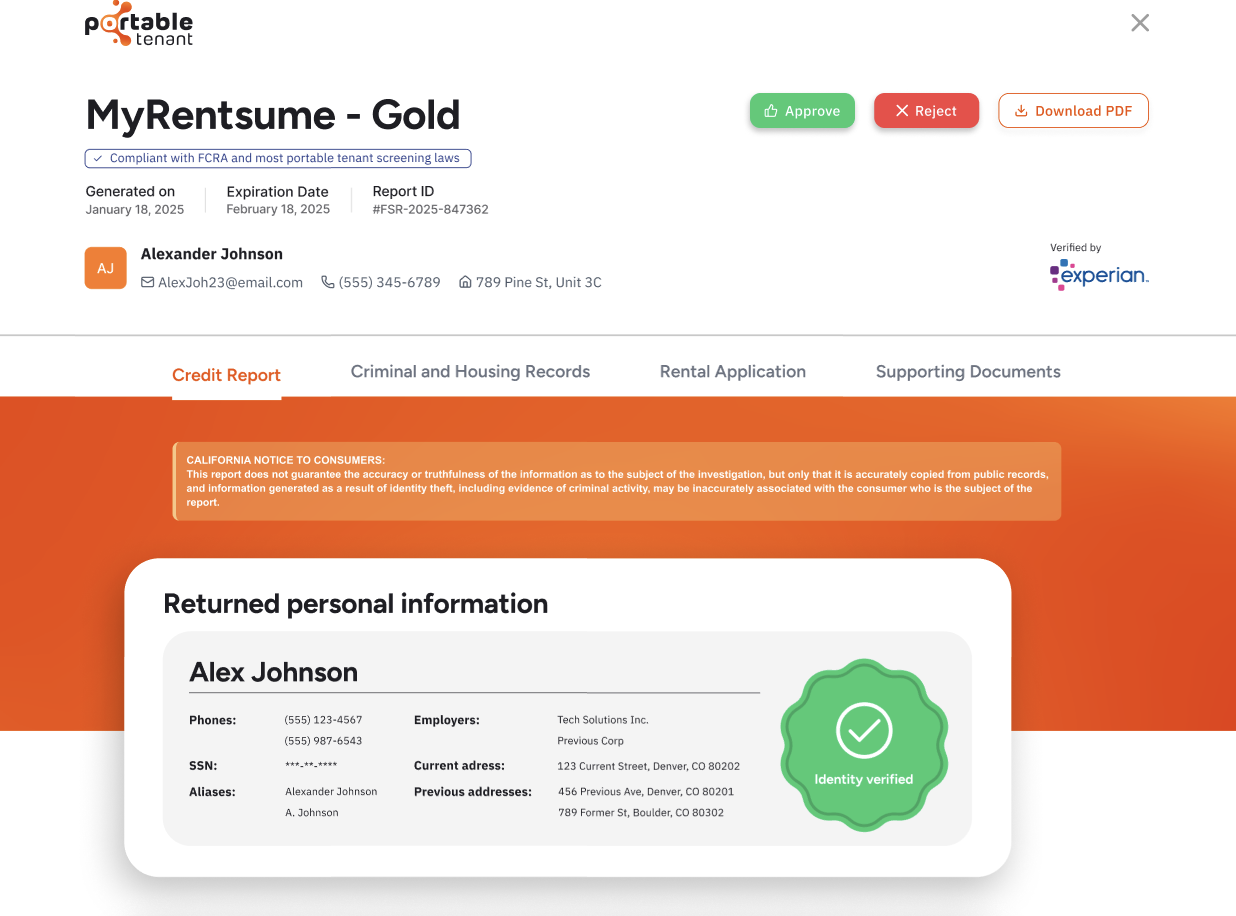
Once you get your portable tenant screening report, the potential landlord will look at is your financial reliability, and your credit report tells that story. This section of the PTSR includes a detailed credit history and score from a trusted source like Experian. It shows how you’ve managed payments for things like credit cards, loans, and other bills in the past. For landlords, this is a crucial indicator of whether a potential tenant is likely to pay rent on time. For you, it’s a straightforward way to demonstrate your financial responsibility without having your credit pulled multiple times, which can negatively impact your score.
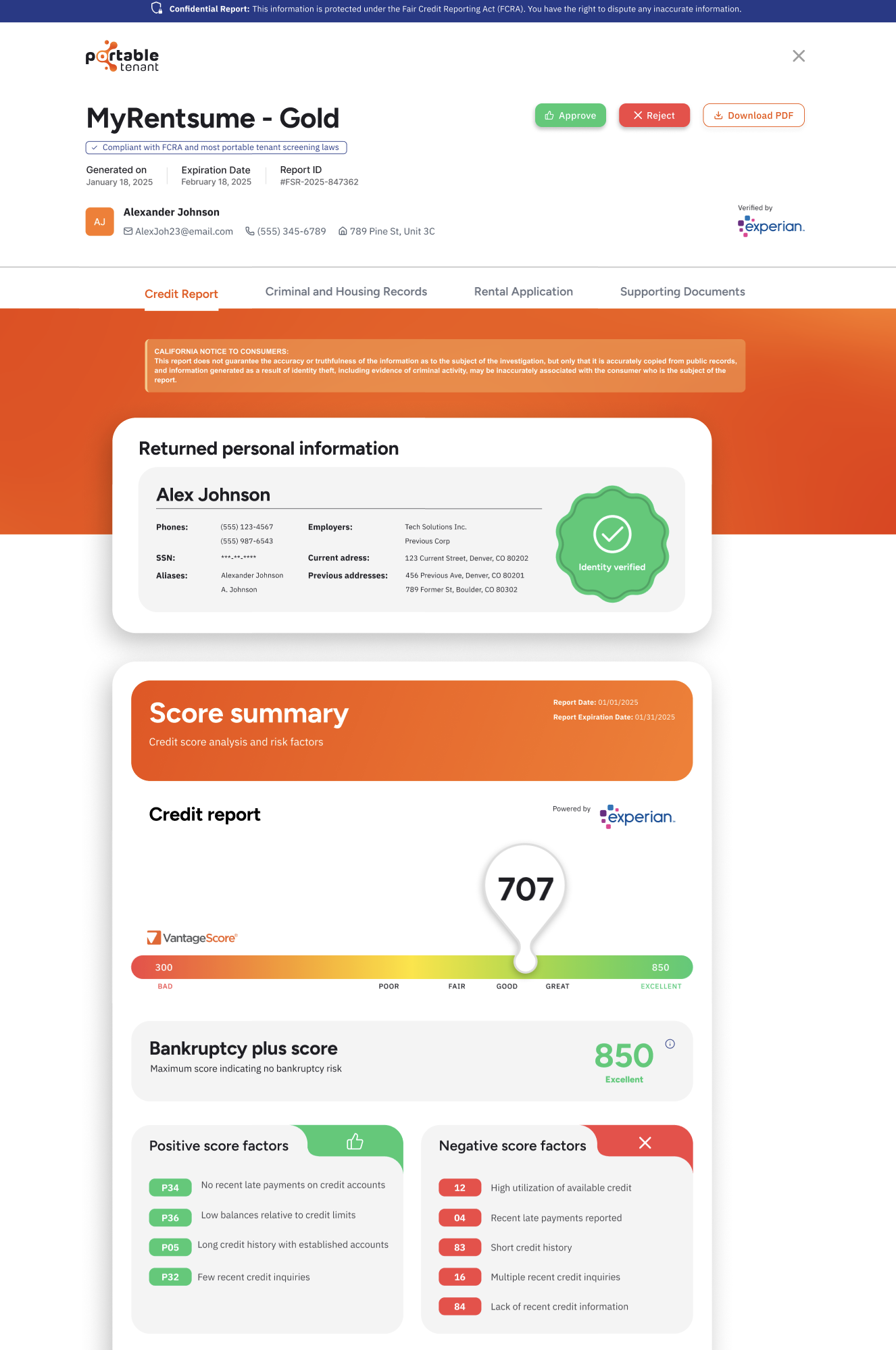
Safety is a top priority for any rental community, which is why a PTSR includes a nationwide criminal background check. This search is conducted in full compliance with legal regulations and provides a comprehensive look at an applicant's history across the country. It helps landlords ensure they are creating a safe environment for all their tenants. This isn't about being invasive; it's a standard part of the screening process that gives property managers peace of mind and helps maintain a secure community for everyone who lives there.
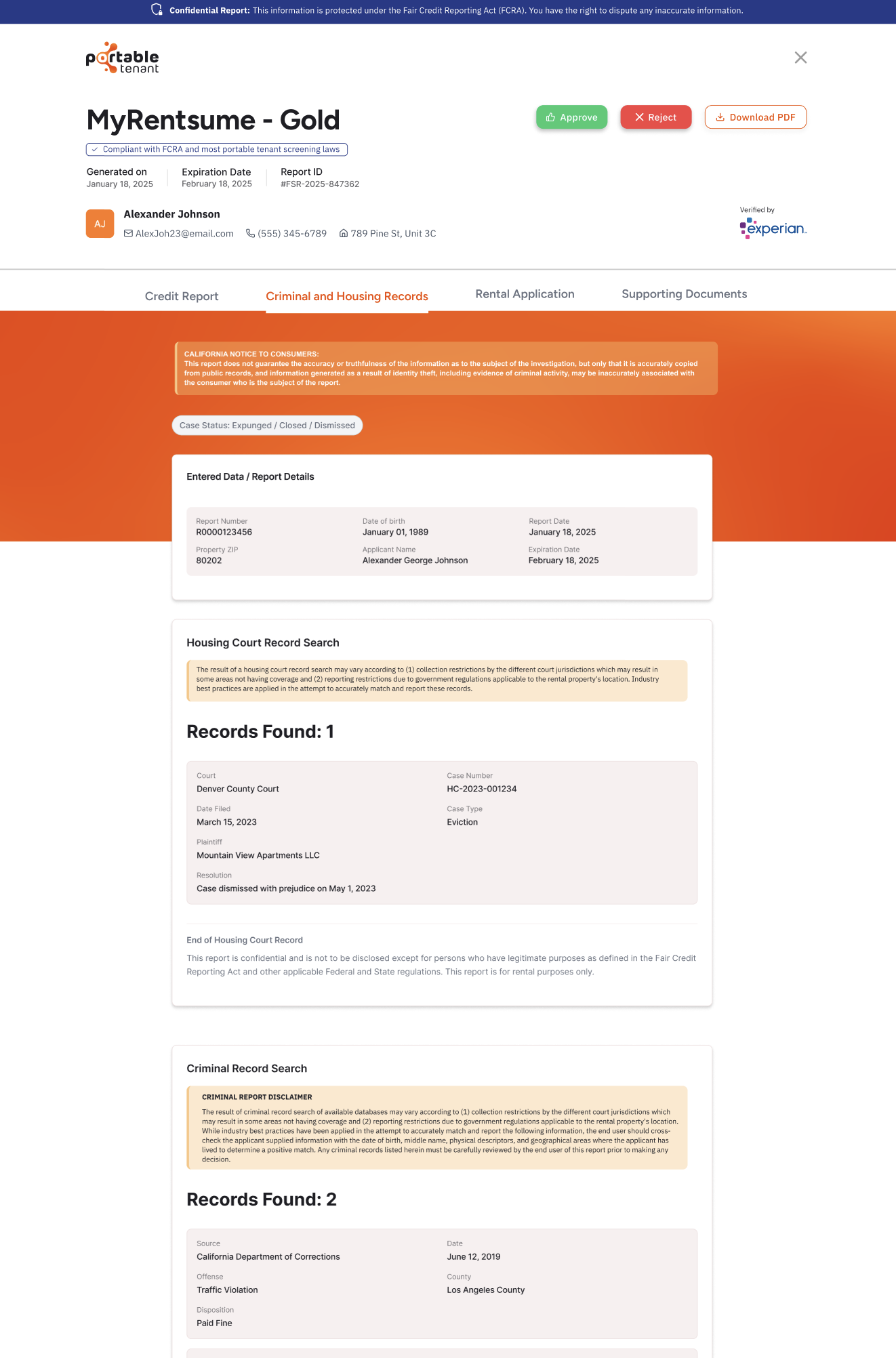
Your rental history is another key piece of the puzzle. The report includes a search for any past eviction records, typically covering the last seven years. This gives landlords insight into your previous rental experiences and helps them understand your track record as a tenant. While an eviction on your record can be a red flag, a PTSR gives you the chance to be upfront about your history and provide context if needed. It’s all about creating a transparent process where landlords have the information they need to make a fair assessment.
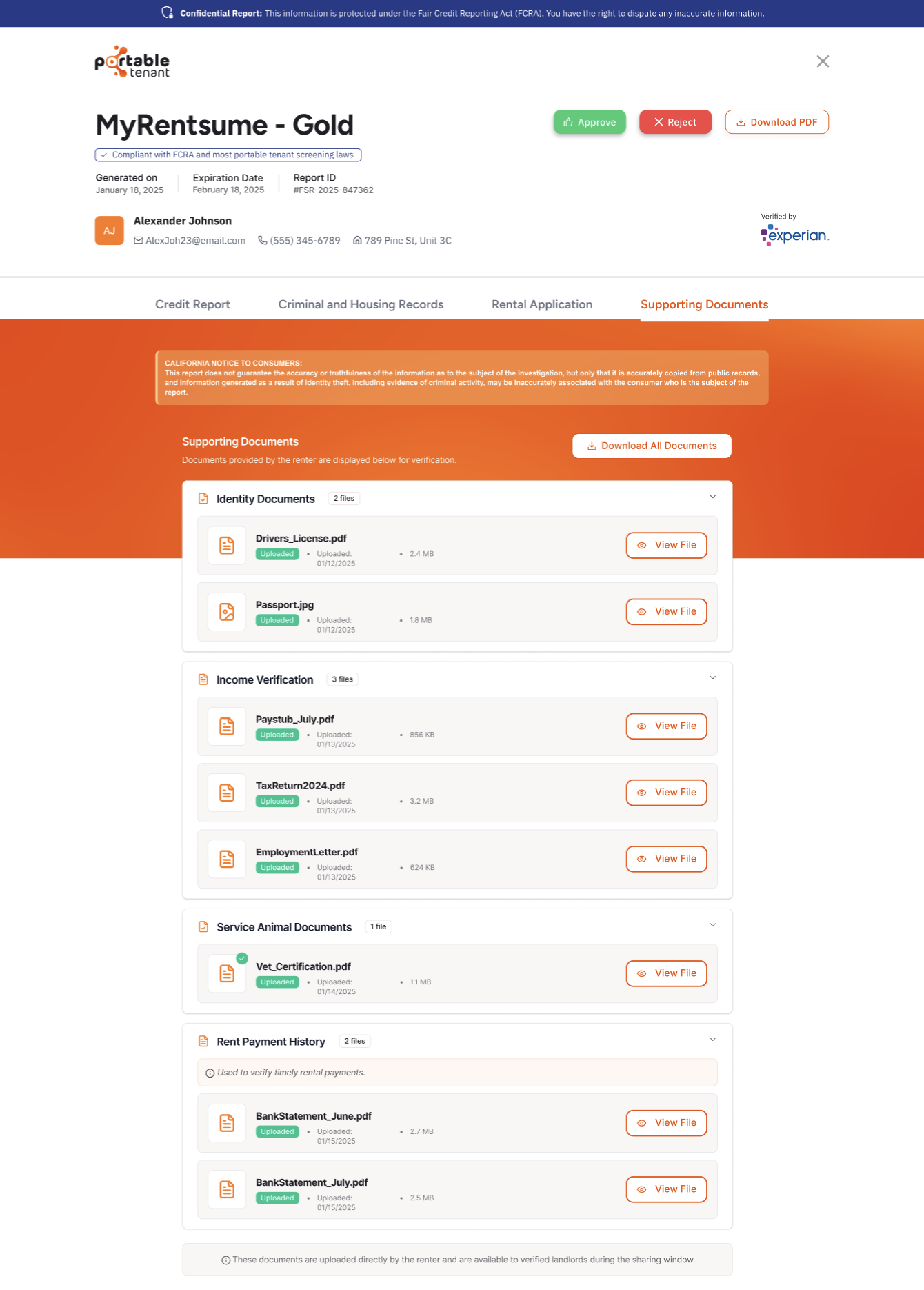
Can you comfortably afford the rent? That's a fundamental question every landlord needs to answer. The income section of your PTSR confirms your employment and income details, showing that you have the financial means to cover your monthly rent payments. Adding any documents that show proof of income adds a strong layer of trust to your application, as it proves your income is stable and sufficient. It saves everyone time by eliminating the need for back-and-forth emails to share pay stubs and other financial documents. You can see exactly how it works to streamline this step.
Finally, the PTSR wraps everything up by including all the information you’d find on a traditional rental application. This includes personal details, proof of identity, rental history, and references. By combining the application with the screening reports, the PTSR becomes a complete package that you can submit to multiple properties. It ensures that landlords and property managers have all the necessary documentation in one place, making their evaluation process faster and more efficient while simplifying your apartment hunt.

Think of a portable screening report as your rental application passport. Instead of starting from scratch with every new apartment you like, you have one comprehensive, verified report that you control. This simple shift changes the dynamic of apartment hunting, making it faster, cheaper, and more secure for everyone involved. Let's break down exactly how it works.
Traditionally, every time you applied for a rental, the landlord would run their own background check. This meant you were handing over your sensitive information and a new application fee each time. A Portable Tenant Screening Report (PTSR) flips that script. You order your own comprehensive report from a trusted provider. This means you see exactly what potential landlords will see, and you get to decide who you share it with. You’re no longer just a passive applicant; you’re an active participant in how the process works, with full control over your personal data.
Apartment hunting can feel like a race, especially in a competitive market. Paying a separate application fee for every place you're interested in adds up quickly and can limit your options. With a PTSR, you pay a single, affordable fee for a report that’s typically valid for 30 days. You can share that same report with as many landlords as you like within that window. This lets you apply to multiple properties without the financial strain, giving you a much better chance of finding the right home without draining your savings on endless application fees.
Handing over your Social Security number and other private details to multiple strangers is nerve-wracking. A PTSR adds a crucial layer of security to your search. Instead of sharing your raw data, you provide landlords with a secure, verifiable link to your report. For landlords, it’s just as important to ensure the report is legitimate. That's why verifying the report's authenticity by using a trusted, FCRA-compliant service is key. A secure provider ensures the information is accurate and hasn't been tampered with, protecting both the renter's data and the landlord's investment.
The rental application process can often feel like a tug-of-war, with renters and landlords on opposite sides. Portable Tenant Screening Reports (PTSRs) change that dynamic by creating a system that’s fair, efficient, and transparent for everyone involved. Instead of a one-sided process where renters pay fee after fee and landlords wait for slow background checks, PTSRs offer a balanced approach. Renters gain more control over their personal information and save money, while landlords get the reliable, verified information they need without the usual delays. It’s about streamlining the experience by aligning everyone’s interests, turning a potentially adversarial process into a collaborative one. This modern approach respects the time and resources of both parties, making it easier to connect great tenants with great homes. By putting a comprehensive, reusable report in the renter's hands, the power dynamic shifts. It fosters trust from the very beginning, as landlords receive a complete picture of an applicant instantly, and renters feel secure knowing their sensitive data isn't being duplicated and stored across multiple platforms. It’s a win-win that reduces friction and gets leases signed faster.
Apartment hunting is stressful enough without the mounting application fees. Paying for a new background check every time you find a place you like adds up quickly, often costing hundreds of dollars. A PTSR flips the script. You pay once for a comprehensive report and can then share it with multiple landlords for up to 30 days. This not only saves you a significant amount of money but also speeds up your search. In a competitive market, being able to submit your application and verified report instantly can be the thing that lands you your dream apartment. It puts you in the driver's seat of your rental journey.
Waiting for traditional background checks to clear can slow down your entire leasing process, leaving units vacant longer than necessary. With a PTSR, you receive a complete, verified report from a prospective tenant the moment they apply. These reports contain all the essential information you need to make an informed decision, including a full credit report from Experian, nationwide criminal and eviction histories, and income verification. This allows you to fill vacancies faster with qualified tenants, reducing administrative headaches and lost revenue. It’s a more efficient way to screen without sacrificing the thoroughness you need to protect your investment.
In a typical rental application, you hand over your sensitive personal information and lose all say in how it's used or stored. PTSRs fundamentally change this by giving you ownership of your data. You purchase your own report and decide which landlords can see it. With a service like Portable Tenant, you can even revoke access at any time, ensuring your information remains secure. This transparency is empowering. If a landlord denies your application based on the report, you have the right to see exactly what they saw, giving you a chance to spot and correct any inaccuracies. It’s a more secure and respectful way to handle your personal data.
Getting your hands on a portable tenant screening report is a straightforward process that puts you in the driver's seat of your rental search. Instead of filling out endless applications and paying separate fees for each one, you complete the process once and get a comprehensive report you can share with any landlord. Here’s how to get started.
First things first, you'll need to find a company that offers portable tenant screening reports. A portable report, or PTSR, is a background and credit check that you, the renter, order for yourself. The key is to choose a provider that is reputable and compliant with consumer reporting laws. You're looking for a service that partners with major credit bureaus, like Experian, and provides a secure way to handle your sensitive information. The whole point is to get one comprehensive report that you can use for multiple applications, saving you a ton of time and money on application fees. This single report becomes your key to applying for different properties.
To make the application process as smooth as possible, it helps to have your information ready to go. Think of it like gathering your ingredients before you start cooking. You’ll typically need to provide standard details to verify your identity and financial standing, much like a traditional rental application. This includes your Social Security number, proof of income (like pay stubs), and your employment and rental history. A trusted provider will compile this into a comprehensive report for landlords that covers your credit history, a nationwide criminal background check, and any eviction records. Having everything on hand will help you get your report back quickly so you can start your apartment hunt.
One of the biggest perks of a PTSR is the cost savings. Instead of paying a $30 to $50 application fee for every apartment you like, you pay a single fee for a report that’s valid for 30 days. You can check out a clear breakdown of the cost for a portable report to see how it compares. Once you submit your information, the timeline is usually very fast—many providers can generate your report almost instantly. You can then immediately start sharing it with landlords or property managers. Just remember that the report has a 30-day lifespan, so it’s best to get it right when you’re actively searching for a new place.
Portable Tenant Screening Reports are designed to make your life easier, but it’s still so important to handle them correctly. Using these reports legally is all about protecting yourself, your business, and your potential tenants. Think of it as a partnership: the renter provides a comprehensive, verified report, and you follow a few key rules to ensure the process is fair and compliant. This not only keeps you on the right side of the law but also helps you build a reputation as a trustworthy landlord, which is a huge plus in a competitive market.
The main legal framework you’ll be working with is the Fair Credit Reporting Act (FCRA), but state and local laws are also adding new layers to the rental process. Getting familiar with these rules isn’t just about checking boxes; it’s about creating a smooth, transparent system that attracts great tenants. When you understand your responsibilities, you can confidently use PTSRs to fill your vacancies faster without worrying about legal headaches down the road. It’s a win-win that saves time and reduces risk for everyone involved.
The Fair Credit Reporting Act (FCRA) is the federal law that regulates how consumer credit information is collected, shared, and used. As a landlord, you’re considered a user of this information, so compliance is non-negotiable. The easiest way to stay compliant is to only accept reports from a trusted provider that follows FCRA guidelines, like Portable Tenant. This ensures the information is accurate and obtained legally.
You should also be on the lookout for fake or altered reports. Take a moment to review any report you receive. Check for odd formatting or anything that looks out of place. A report from a reputable source will look professional and be easy to read. Using a verified service protects you from fraud and ensures you’re making decisions based on legitimate, comprehensive information.
While the FCRA is a federal law, many states have their own rules for portable screening reports. These laws are becoming more common, so it’s a good idea to stay informed about your local regulations. For example, in several states, if you accept a PTSR from a prospective tenant, you typically cannot charge them an additional application fee. This is a key detail that can impact how you structure your application process.
In Colorado, a new law taking effect on January 1, 2026, will require landlords to accept PTSRs, provided the report is less than 30 days old and comes from an FCRA-compliant company. Knowing the specifics for your area helps you stay compliant and offer a better experience for applicants. You can find more information on our page for landlords.
Even with a PTSR, you might decide an applicant isn’t the right fit. If you choose to run your own screening report and then deny an applicant based on its contents, the FCRA requires you to provide them with an adverse action notice. This is simply a written notice that explains your decision.
The notice must include the reason for the denial, the name and contact information of the screening company you used, and a statement informing the renter of their right to dispute any inaccurate information in the report. This step is crucial for transparency and gives the applicant a chance to correct potential errors. It’s a straightforward process that ensures you’re treating every applicant fairly and legally.
Portable Tenant Screening Reports are a fantastic tool for modernizing the rental process, but like any new technology, there's some confusion floating around. It's easy for myths to spread, which can make both renters and landlords hesitant. Let's clear the air and tackle some of the most common misconceptions about PTSRs. Getting the facts straight helps everyone feel more confident and ensures the process is smooth, fair, and efficient for you, whether you're looking for a new home or filling a vacancy.
This is a big one, and the answer is: it depends. Whether a landlord is required to accept a PTSR is determined by state and local laws. In states with specific PTSR legislation, like Colorado, landlords generally must accept a report from a qualified provider if it meets the legal requirements. However, in other areas, it might be at the landlord's discretion. For renters, it’s always a good idea to ask a potential landlord upfront if they accept portable reports. For landlords, understanding your local obligations is key to staying compliant and making the application process easier for everyone involved.
It would be nice if you could run one report and use it for years, but that’s not how it works. A PTSR is a snapshot of your financial and rental history at a specific moment in time. Because things like your credit score, income, and public records can change, these reports have an expiration date. Typically, a portable screening report is valid for 30 days. This timeframe ensures that landlords receive current, relevant information to make an informed decision, while still giving you plenty of time to apply to multiple properties without paying for a new report each time.
While a PTSR provides a comprehensive, verified look at your background, it doesn't replace a landlord's due diligence. Think of it as a powerful, pre-vetted foundation for your application. Landlords should still take steps to confirm the information is accurate and belongs to the applicant standing in front of them. This might include checking your ID, verifying your employment, or speaking with your previous landlords. Following these best practices for tenant screening helps protect against fraud and ensures that the landlord is making a sound decision based on a complete picture. It’s a crucial step for a secure and trustworthy rental process.
The rules around portable tenant screening reports are changing quickly, and what’s required can vary from one place to the next. While more states are adopting these renter-friendly laws, a few have led the charge. Understanding the specific regulations in your area is key, whether you’re a renter trying to save on application fees or a landlord aiming to stay compliant. These laws are designed to make the rental process fairer and more efficient for everyone involved. They create a standard that helps good tenants stand out and helps landlords fill vacancies with qualified applicants faster.
It’s a shift away from the old, repetitive, and expensive way of doing things, where every application meant another fee and another hard pull on your credit. Instead, PTSRs put control back in the hands of the renter while giving landlords the verified information they need. This legislative trend reflects a broader understanding that the traditional application process can be a significant barrier for many renters. By standardizing the information and making it reusable, states are helping to level the playing field. For landlords, this means a more streamlined process and access to a wider pool of applicants who aren't deterred by endless fees. Let’s break down what’s happening in some of the key states and what you can expect if your state hasn’t made the move yet.
If you're renting in Colorado, big changes are on the horizon. Starting January 1, 2026, landlords will be required to accept a Portable Tenant Screening Report (PTSR) as long as it meets state guidelines. To be valid, your report must be less than 30 days old and come from a company that complies with the Fair Credit Reporting Act (FCRA). It needs to cover the essentials: your income, employment, rental history, credit history, and any relevant criminal background. The best part for renters? If you provide a qualifying PTSR, the landlord cannot charge you an application fee. This law simplifies the process for landlords and saves renters from paying multiple fees.
Washington state already allows landlords to accept PTSRs. Landlords must inform potential tenants in writing about their screening criteria and whether they accept portable reports. If they do accept your PTSR, they are not allowed to charge you a separate screening fee. Meanwhile, California is rolling out new rules on January 1, 2025, that require landlords to review applications in the order they’re received. If your application isn't chosen, your fee must be refunded. These laws show a clear trend toward a more transparent and standardized application process, which is exactly what PTSRs do help with.
Even if your state hasn’t passed specific PTSR legislation, you can still prepare for the future. As a landlord, it’s a good practice to state clearly in your rental listings whether you accept portable reports. This transparency helps attract well-prepared applicants. For both renters and landlords, the most important step is to ensure any report you use comes from a reputable, FCRA-compliant provider. Using a trusted service protects everyone involved and ensures the information is accurate and secure. Getting familiar with the process now means you’ll be ready when these common-sense laws arrive in your state.
A Portable Tenant Screening Report is a powerful tool, but like any tool, you have to know how to use it correctly. For renters, it’s about presenting yourself as a prepared, top-tier applicant. For landlords, it’s about streamlining your process while still doing your due diligence. When both sides understand their roles, the PTSR system works beautifully, creating a faster, more transparent rental experience for everyone involved. Let’s walk through the best practices for making your report work for you and you know what to look for in PTSR.
Think of your PTSR as your rental resume. It’s a comprehensive background and credit check that you purchase for yourself, allowing you to apply to multiple properties without paying a new application fee each time. When you walk into a showing with your report ready to go, you immediately signal to the landlord that you’re serious, organized, and transparent. Before you start sharing it, take a moment to review the details yourself. Understanding your own credit, rental, and criminal history helps you anticipate any questions a landlord might have and address them proactively. Presenting your report with confidence shows you’re a responsible applicant who has nothing to hide, putting you a step ahead of the competition.
While PTSRs save you and your potential tenants a lot of time, it’s still crucial to verify every report you receive. Your first step should always be to confirm the report comes from a reputable, FCRA-compliant company. A legitimate report from a service like Portable Tenant will have professional formatting and clear sourcing for its data. Be on the lookout for anything that seems unusual, like typos, blurry text, or inconsistent formatting, as these can be signs of alteration. Taking a moment to ensure the PTSR is authentic is a non-negotiable step in protecting your investment and ensuring you’re making a decision based on accurate, verified information.
Going a step further, landlords should have a standard process for preventing fraud. The best way to do this is to verify key details directly. With the applicant’s consent, which is typically part of the application process, you can contact their employer to confirm their employment status and reach out to previous landlords to ask about their rental history. If a potential tenant is hesitant to let you perform these basic reference checks, it could be a red flag. Using a trusted PTSR provider adds a significant layer of security, as the information is pulled directly from verified sources. However, pairing that secure report with your own direct verification creates an airtight screening process.
What if my report has something negative on it, like a low credit score?
Getting a portable report is actually a great move in this situation. It allows you to see exactly what a landlord will see before you even start applying. This gives you the chance to prepare an explanation or provide context for any issues, like a past medical bill that hurt your credit or a difficult rental situation. Being upfront and transparent is always better than letting a landlord discover it on their own, and it shows you’re a responsible and proactive applicant. Read our guide on PTSR mistakes renters should avoid.
How can I be sure the report a renter gives me is authentic and not altered?
This is a valid concern, and the best way to protect yourself is to only accept reports from a trusted, FCRA-compliant provider. A legitimate service will provide a secure, verifiable link to the report rather than a simple PDF that could be easily faked. When you receive a report, check that it comes directly from the provider's platform. This ensures the information is pulled from verified sources and hasn't been tampered with, giving you the confidence to make a sound decision.
Does ordering my own screening report hurt my credit score?
No, it doesn't. When you request your own report, it’s considered a "soft inquiry" on your credit history. Soft inquiries are only visible to you and do not affect your credit score at all. This is a major advantage over the traditional application process, where each landlord runs a separate check, resulting in multiple "hard inquiries" that can actually lower your score over time.
What happens if a landlord refuses to accept my portable report?
This depends on where you live. In states with specific PTSR laws, like Colorado and Washington, landlords are often required to accept a qualifying report and cannot charge you an application fee. If you're in an area without these laws, it's ultimately the landlord's choice. The best approach is to ask upfront before you tour a property if they accept portable reports. This saves everyone time and ensures you're focusing your search on properties with a modern, streamlined process.
Can I still use a PTSR if my state doesn't have a specific law about them?
Absolutely. Even without a legal requirement, many landlords appreciate the efficiency of receiving a comprehensive, pre-verified report. It saves them time and administrative work. For you as a renter, it still offers the primary benefits of saving money on application fees and keeping your personal data secure. It positions you as an organized and serious applicant, which is a plus in any market.