
Handing over your Social Security number and other private details to multiple strangers is a nerve-wracking part of any apartment search. A Portable Tenant Screening Report (PTSR) puts you back in control of your sensitive information. Instead of giving your data away repeatedly, you provide it once to a secure service and receive a single, shareable report. You decide which landlords see it and can even revoke access instantly. This process not only protects your privacy but also saves you money. We’ll show you how the free portable tenant screening report Colorado law empowers you to secure your data while simplifying your rental applications. Before we dive into it, you should know that no portable tenant screening report is truly free. The data in the report is costly to the consumer reporting agency and every time you request a report, the agency incurs cost. However, your PTSR comes with only one investment and all subsequent rental applications and shares will be free for 30 days, which makes it the perfect tool for savvy renters.
If you’ve ever felt the frustration of paying application fee after application fee while apartment hunting, you’re going to love this. A Portable Tenant Screening Report (PTSR) is a reusable background check that you, the renter, purchase once and can share with multiple landlords. Think of it as your rental passport—instead of starting from scratch with every property you like, you simply present your comprehensive, verified report. This saves you a significant amount of money and time during your search.
This streamlined process is designed to make how it works simple for everyone involved. You get one detailed report that covers all the bases, and landlords get the verified information they need to make a decision. It’s a modern solution that puts you in control of your personal information while making the application process much more efficient. In states with PTSR laws, like Colorado, this isn't just a nice-to-have; it's a core part of the rental landscape.
A PTSR makes the rental application process smoother for both you and the landlord. In Colorado, landlords are legally required to accept a valid PTSR if you provide one. This means they can't charge you an additional application fee or force you to pay for their preferred screening service unless they have a specific, valid reason. This levels the playing field and removes a major financial barrier for renters who are applying to multiple places.
For landlords, accepting a PTSR simplifies their workflow and ensures they are complying with state law. Instead of running their own reports, they receive a complete, pre-verified package directly from a prospective tenant. This helps them fill vacancies faster with qualified applicants, making the entire experience more efficient and transparent.
A verified portable tenant screening report is much more than just a credit score. A compliant PTSR provides a complete picture of your rental and financial history, giving landlords the confidence they need. It typically includes a credit report to show your payment history, a nationwide criminal background check, and a search of eviction records.
To round out the report, it also includes income and employment verification to confirm you can afford the rent, along with your rental history. This comprehensive approach debunks common myths about tenant screening by offering a full, fair, and accurate look at you as a potential tenant. It’s all the information a landlord needs, bundled into one secure and shareable document.
Getting your Portable Tenant Screening Report (PTSR) is a straightforward process that puts you in the driver's seat of your apartment search. While the report itself has a one-time cost, Colorado law says that landlords must accept it, which means you don't have to pay a new application fee for every property you apply to. This is how you get your report, all other applications are free and you start saving money.
Think of your PTSR as your rental application passport. You get it once and can use it multiple times within a 30-day window. The process is simple and designed to make your life easier. First, you’ll choose a trusted, compliant screening service to generate your report. Next, you’ll provide your personal details to run the necessary background and credit checks. Once your report is ready, you can securely share it with any landlord or property manager in Colorado. This simple process lets you apply for multiple homes quickly without racking up fees, giving you a huge advantage in a competitive rental market. You can see exactly how it works from start to finish.
To generate a complete and accurate report, you’ll need to have some key information ready. This ensures the process is quick and seamless. Be prepared to provide your full legal name, date of birth, Social Security number, and current and previous addresses. You will also need to supply details about your income and employment history. This information is used to pull your credit report, run a nationwide criminal and eviction history check, and verify that you can afford the rent. Gathering these details beforehand helps you move fast when you find a place you love and gives landlords the information they need to make a decision.
Choosing the right company to generate your report is the most important step. You need a provider that is fully compliant with both Colorado’s specific PTSR laws and the federal Fair Credit Reporting Act (FCRA). A compliant company will provide a comprehensive report that includes your credit, criminal, and eviction histories. Look for a service that prioritizes your data security and gives you complete control over who sees your information and for how long. Companies like Portable Tenant are built specifically for this, ensuring your report meets all legal standards while keeping your sensitive data safe, secure, and entirely under your control.
A Portable Tenant Screening Report (PTSR) is your complete rental resume, all in one secure package. It gives landlords a clear and fair picture of your financial and rental history, helping them make informed decisions without you having to fill out a new application every single time. Each section provides a different piece of the puzzle. Let’s break down exactly what’s inside.
Think of your credit report as a snapshot of your financial habits. It shows landlords how you’ve managed payments and debt in the past, giving them a good idea of your reliability. The report includes your credit score and details on your payment history, current debts, and how you use your credit. For a landlord, this information is key to feeling confident that you can consistently handle your financial responsibilities, including rent. A comprehensive screening report gathers this information securely, so you only have to share it when you’re ready.
A criminal background check is a standard part of the screening process that helps landlords ensure a safe environment for all their tenants. This report scans national databases for any past criminal convictions. It’s a straightforward way for property managers to do their due diligence and maintain a secure community. For you as a renter, it’s good to know what’s on your record. A PTSR provides this information transparently, so there are no surprises when you apply for a new home. This helps build trust from the very beginning of your rental journey.
Your eviction history gives a landlord a glimpse into your past rental experiences. This report specifically looks for any formal eviction proceedings you may have been involved in. It’s one of the most direct ways for a landlord to understand your track record as a tenant and assess potential risks. An eviction-free history shows that you have a reliable track record of upholding your lease agreements. This section helps landlords find dependable tenants who will take care of the property and be a positive addition to the community, making the decision process much simpler for them.
This part of the report answers the landlord’s most practical question: can you comfortably afford the rent? Income and employment verification confirms that you have a steady source of income to cover your monthly payments. The report verifies your current job and income level, giving the landlord or property manager the assurance they need. Instead of you having to track down pay stubs or tax forms for every application, a PTSR bundles this verified information, making the process smoother and faster for everyone involved. It’s a simple way to prove your financial stability upfront.
If you’re renting in Colorado, it’s helpful to know the law is on your side when it comes to portable screening reports. The state has specific rules to make the rental application process fairer and more efficient. These regulations outline what landlords can and can’t do when you hand them your Portable Tenant Screening Report (PTSR). Understanding these requirements empowers you as a renter and ensures you’re treated fairly. For landlords, following these rules isn’t just good practice—it’s the law. Let’s walk through what Colorado law says so you can feel confident in your apartment search.
In Colorado, landlords are legally required to accept a valid PTSR. This is a big deal. It means if you provide a complete report generated within the last 30 days, they must accept it as part of your application. They can't refuse it and demand you pay for their preferred screening service without a legitimate reason. This law prevents you from paying for a new background check for every apartment you apply for. It’s a core part of what makes the rental process smoother for landlords and renters alike.
The law also protects you from redundant fees. If you give a landlord a valid PTSR, they cannot charge you a rental application fee. Since the report covers the cost of screening, this rule ensures you aren't paying twice for the same service. The law also states that consumer reporting agencies can't charge landlords to access or use your report. This removes any financial barrier for a landlord to accept your PTSR, making it an easy choice. The system is designed to streamline applications and reduce the costs for everyone involved.
For your PTSR to be valid, it must have been completed within the previous 30 days. This ensures the landlord receives current and accurate information. There’s also a critical protection for applicants who receive housing assistance, like a Section 8 voucher. In these cases, a landlord is not allowed to consider your credit history, credit score, or any past negative credit information. This provision ensures fair housing opportunities and prevents discrimination based on financial circumstances, a key part of how the process works to support all renters.
Finding a new place to live can be stressful enough without worrying about the application process. Thankfully, Colorado law gives you specific rights that make renting fairer and more transparent. Understanding these protections is key to a smoother apartment hunt. It’s all about giving you more control over your personal information, ensuring the details landlords see are accurate, and providing a level playing field, especially for those receiving housing assistance. The introduction of the Portable Tenant Screening Report (PTSR) is a cornerstone of these rights, fundamentally changing the dynamic of applying for a rental.
Instead of paying separate application fees and submitting your sensitive data to every property you're interested in, the law empowers you to use a single, comprehensive report for multiple applications. This not only saves you money but also puts you in charge of your own data. You decide who sees your information and for how long. This shift is about more than just convenience; it’s about security, privacy, and fairness. When you know that your report is accurate and that landlords must follow specific rules when reviewing it, you can approach your housing search with confidence. Knowing your rights isn't just about understanding legal jargon; it's about feeling secure and empowered as you find your next home.
In a typical rental search, you might hand over your Social Security number and other sensitive details to multiple landlords, hoping for the best. A Portable Tenant Screening Report (PTSR) changes that dynamic completely. Instead of sharing your raw data over and over, you provide it just once to a secure screening company. You then get a single, reusable report to share with landlords. This simple shift puts you in the driver's seat, significantly reducing the risk of your private information falling into the wrong hands. With a service like Portable Tenant, you can even revoke access to your report instantly, giving you total control over who sees your information and when.
Imagine being denied an apartment because of a mistake on your background check. It happens more often than you’d think. Under Colorado law, if a landlord denies your application based on your screening report, you have the right to review it. This is your chance to make sure everything is correct. An old eviction that was legally sealed or a debt that belongs to someone with a similar name shouldn't stop you from getting a home. Always take the opportunity to check your report for errors. If you find something wrong, you have the right to dispute the information and get it corrected, ensuring your applications are judged on accurate facts.
If you use a housing voucher, like Section 8, Colorado law provides an extra layer of protection to ensure you’re treated fairly. Landlords are not allowed to consider your credit history, credit score, or any past negative credit events when reviewing your application. This means they can't hold things like old debts or late payments against you. This rule is designed to prevent discrimination and ensure that your application is evaluated based on your ability to be a good tenant, not on past financial difficulties. It’s a critical protection that helps level the playing field and makes sure that housing assistance programs work as intended—to help people secure stable housing.
One of the most common questions about Portable Tenant Screening Reports (PTSRs) is about their shelf life. You’ve gone through the steps to get your report, and now you’re ready to start applying for apartments. So, how long do you have?
In Colorado, a PTSR is designed to be a current snapshot of your rental and financial history. The law specifies a set timeframe to ensure the information is recent enough for landlords to make a fair decision while giving you enough time to apply to multiple properties. This balance is key to making the entire rental process smoother for everyone involved. Let's break down exactly what that timeline looks like and how you can make the most of it.
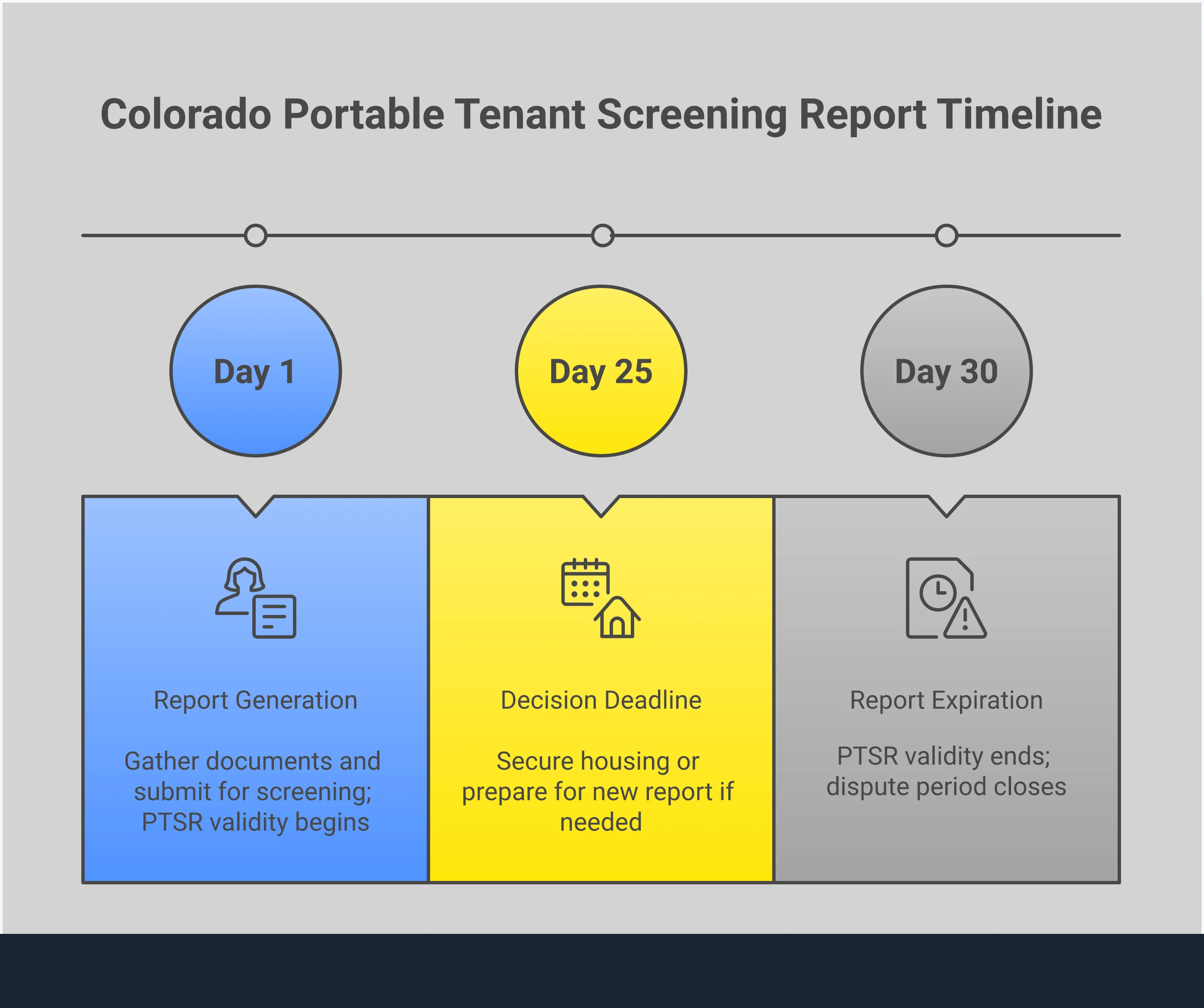
Your Portable Tenant Screening Report is valid for 30 days from the date it’s generated. Think of this as the active window where you can use your report. The clock starts the moment you receive your completed screening results. This 30-day period ensures that landlords are reviewing information that is fresh and relevant, like your current credit status and recent rental payment history.
Once that 30-day window closes, the report is considered expired. If you’re still apartment hunting after that, you’ll need to get a new one. The process is straightforward, and understanding how it works from the start helps you plan your apartment search effectively and make sure you always have a current report ready to go.
This is where the "portable" part of the PTSR really shines. Within that 30-day validity period, you can share your single report with as many landlords as you want. This is a game-changer. Instead of paying a separate application and screening fee for every apartment that catches your eye—which can add up quickly—you pay once for a report that you can reuse.
This feature saves you both time and money, especially in a competitive rental market where you might be applying to several places at once. It streamlines your search, allowing you to submit applications quickly without waiting for a new background check each time. This efficient approach is a core benefit of the PTSR system, putting you in control of your application costs.
Finding an error on your screening report can feel like a major setback, especially when you’ve found the perfect apartment. But don’t panic. Mistakes happen, from simple typos to mixed-up public records, and there’s a clear process for getting them fixed. An inaccurate report doesn’t have to stop your apartment search in its tracks. The good news is that federal law is on your side.
The Fair Credit Reporting Act (FCRA) gives you the right to an accurate report and the power to dispute any information you believe is wrong. By law, the screening company and the entity that provided the information are both responsible for correcting inaccuracies. Taking a few simple steps can help you clean up your report, protect your rental prospects, and ensure landlords see a fair and complete picture of your history. Think of it as a routine check-up for your rental reputation—it’s a manageable process that puts you back in control.
The first step is to carefully review your report. If a landlord denies your application based on information in your PTSR, you have the right to ask for a copy of the report they used. Go through it line by line, comparing it to your own records. Look for anything that doesn’t seem right, such as misspelled names, incorrect previous addresses, or accounts you don’t recognize. Pay close attention to the public records section for any eviction or criminal history that doesn’t belong to you. It’s crucial to identify these issues quickly, as even small errors can have a big impact. Catching these common report mistakes ensures your application is judged on accurate information.
Once you’ve identified an error, your next move is to file a dispute directly with the screening company that issued the report. You’ll need to explain in writing what information is inaccurate and include copies of any documents that support your claim. The screening company must investigate your dispute, usually within 30 days. The Federal Trade Commission provides clear guidance on this process, which can help you structure your dispute letter. A correct and verified PTSR gives landlords the confidence to approve your application faster, so taking the time to fix errors is one of the most important things you can do for your rental search.
The rental application process can feel like a marathon for everyone involved. Renters are juggling multiple applications and fees, while landlords are sifting through piles of paperwork. A Portable Tenant Screening Report (PTSR) is designed to make this entire experience smoother, faster, and more secure for both sides. It’s about working smarter, not harder, to find the perfect match between a renter and a new home.
If you’re a renter, you know how quickly application fees add up. A PTSR is a complete background check that you can reuse for multiple rental applications within a 30-day period. This means you pay once and can apply to as many places as you need, saving you a significant amount of money. For landlords, this means you get a comprehensive report from a serious applicant without delay. With reforms like Colorado’s tenant screening law, a single, verified Portable Tenant report can be used across many applications, which cuts down on frustration and keeps the process consistent and compliant for everyone.
PTSRs are built to make life easier. As a renter, you can get your screening done ahead of time and have it ready to share instantly with any landlord. This puts you ahead of the competition and shows you’re a proactive, organized applicant. The service protects your personal information while providing landlords with everything they need to know, from credit history to income verification. For landlords, accepting a PTSR means you receive a standardized, easy-to-read report from a compliant screening company. It simplifies your workflow, helps you make faster decisions, and fills your vacancies with qualified tenants more efficiently.
One of the biggest advantages of a PTSR is the control it gives you over your personal data. You decide which landlords see your report and can revoke access at any time. This level of privacy is a huge step forward in the rental process. For landlords, especially in states like Colorado, accepting a valid PTSR isn't just a good idea—it's the law. You must accept a PTSR from a prospective tenant, which removes any guesswork about your legal obligations. This ensures you’re following fair housing laws while still getting the detailed information you need to choose the right tenant for your property.
Portable Tenant Screening Reports (PTSRs) make the rental process smoother for everyone, but like any system, you might encounter a few hiccups. The most common issues usually stem from landlords who aren't familiar with the law or from widespread myths about how these reports work. Don't worry—a little preparation goes a long way. Knowing how to handle these situations will keep your apartment search on track and stress-free.
The key is to be informed and confident. When you understand your rights and the facts about your PTSR, you can address challenges directly and effectively. Whether you're dealing with a hesitant landlord or just trying to separate fact from fiction, we've got you covered. Let's walk through some of the most frequent challenges and the simple steps you can take to resolve them.
It can be frustrating when a landlord refuses to accept your PTSR. The good news is that Colorado law is on your side. In most cases, landlords are legally required to accept a portable rental application. If you run into this issue, start with a friendly conversation. The landlord may simply be unaware of their legal responsibilities. You can calmly explain the law and direct them to resources that clarify their obligations.
Using a trusted service ensures that your report is compliant and that the landlord receives a copy, which is a legal requirement for them to accept it. If a landlord still refuses to comply after you've provided a valid report, you may want to contact a local tenant rights organization for further guidance.
A few common myths about PTSRs can cause confusion during your rental search. One major misconception is that these reports are only about your credit score. In reality, a verified Portable Tenant Screening Report gives landlords a complete picture, including your rental and criminal history, which shows you’re a proactive and trustworthy applicant.
Another myth we often hear is that PTSRs are valid for 60 days in Colorado. This is incorrect; the law specifies a 30-day validity period. Finally, don't make the mistake of waiting until you apply to get your report. Requesting it beforehand allows you to review the information for accuracy and address any potential issues, ensuring you put your best foot forward with every application.
What if a landlord insists I pay their application fee anyway? If a landlord in Colorado pushes back, it's often because they aren't familiar with the law. You can start by politely explaining that under state law, they are required to accept your valid Portable Tenant Screening Report and cannot charge an application fee when you provide one. If they still refuse, it might be a sign that they aren't the right landlord for you. You can always seek guidance from a local tenant rights organization if you feel your rights are being ignored.
Is my sensitive information secure when I get a PTSR? Yes, your security is the top priority. Instead of handing your Social Security number and other private details to multiple landlords, you provide them just once to a secure, compliant screening company. These services use bank-level encryption to protect your data. You then share the finished report, not your raw information, and you maintain control over who can see it and for how long.
Can I still get an apartment if my report isn't perfect? Absolutely. A screening report is meant to provide a complete picture, not a perfect one. Landlords understand that life happens. The benefit of getting your report ahead of time is that you can see what's on it and prepare to address any potential concerns. Being upfront and honest about a past late payment or a lower credit score can go a long way in building trust with a property manager.
Do I have to get a new report for every apartment search? You only need one report for each 30-day search period. If you find your new home within that month-long window, you're all set. However, if your apartment hunt takes longer than 30 days, you will need to generate a fresh report. This ensures that any landlord you apply with receives the most current and accurate information, which is a key part of the law.
Can I use this report in a state other than Colorado? The legal requirement for landlords to accept a PTSR is specific to states with portable screening laws, such as Colorado, Washington, and Illinois. While a landlord in a state without these laws isn't obligated to accept your report, many will still appreciate it. Providing a comprehensive, pre-verified report shows that you are a serious and organized applicant, which can give you an advantage no matter where you're looking.